
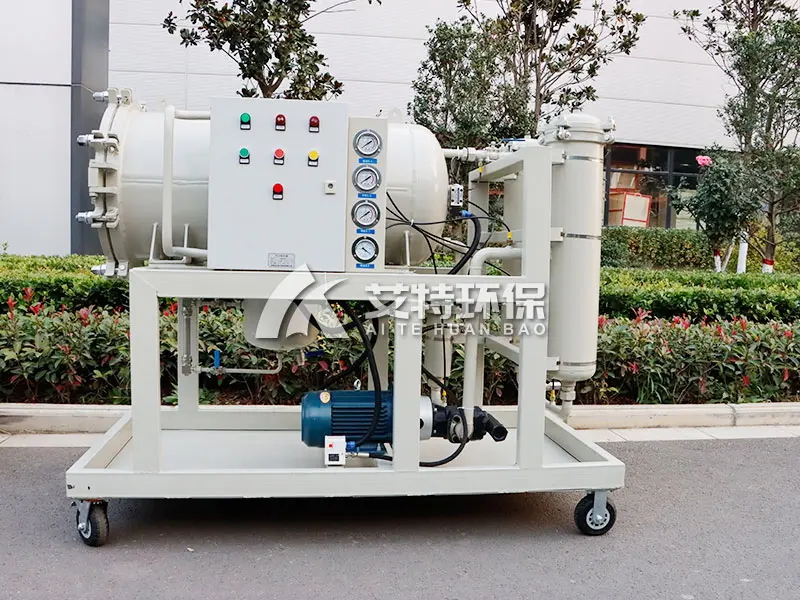
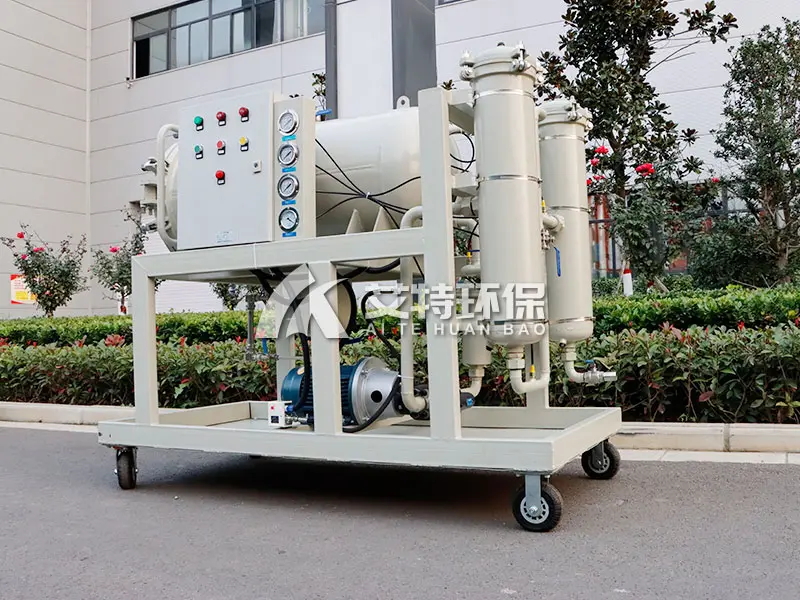
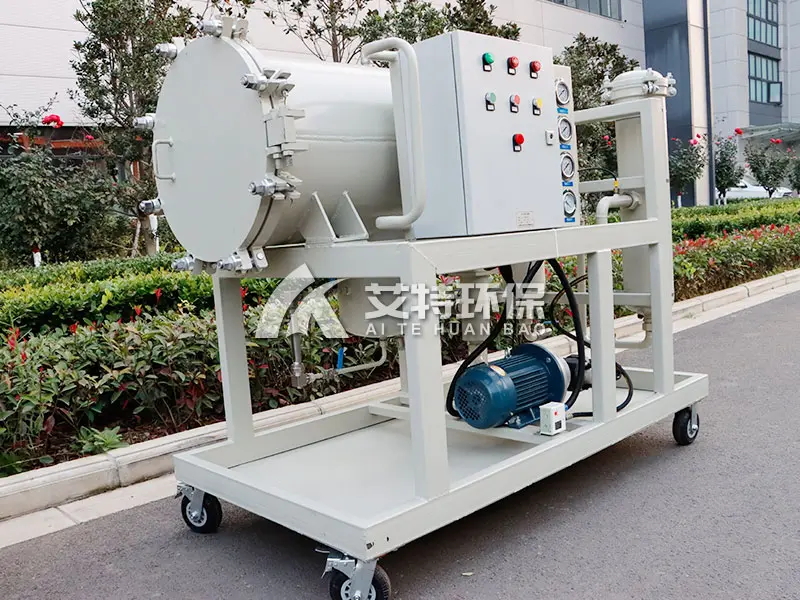
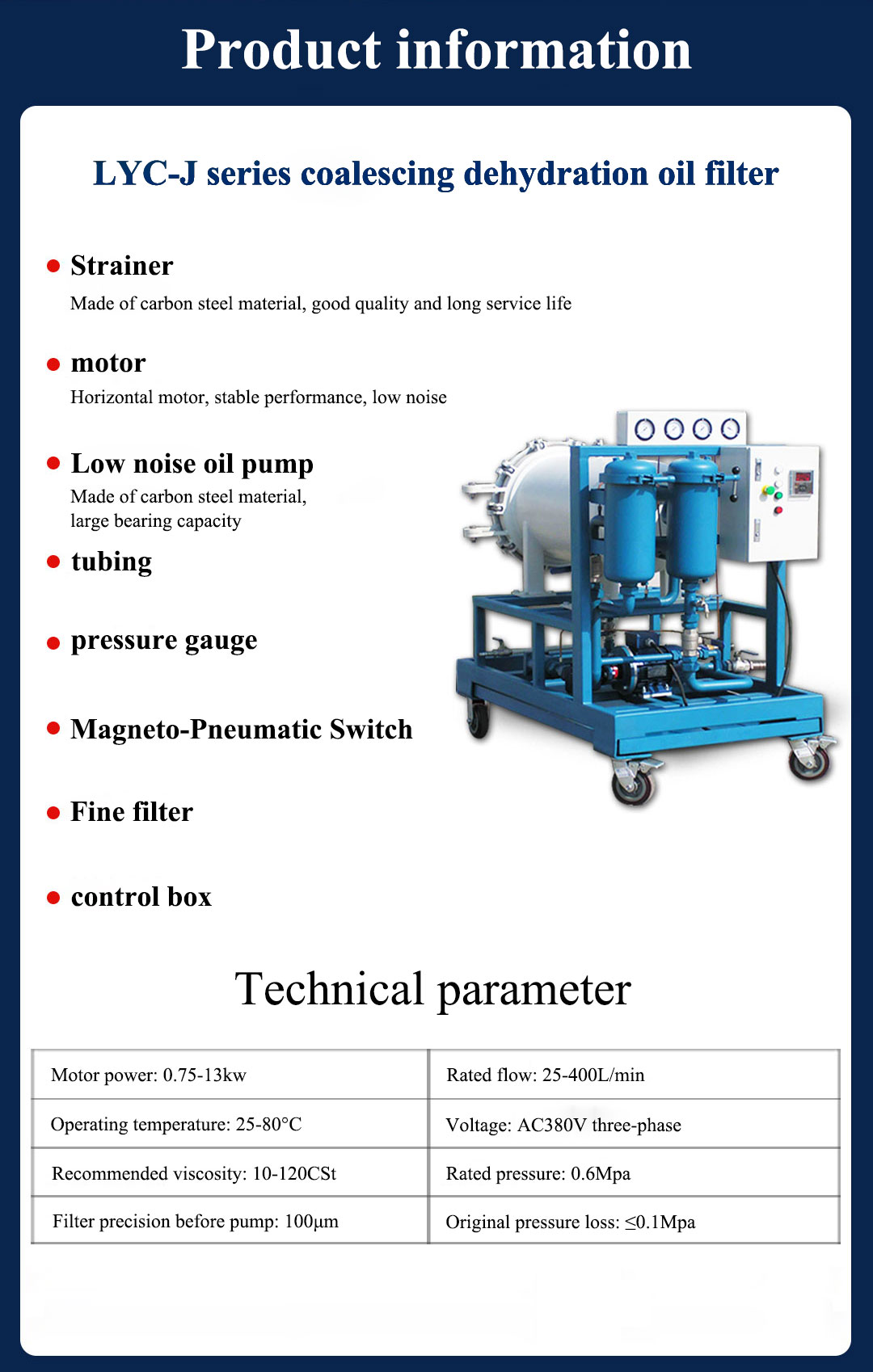
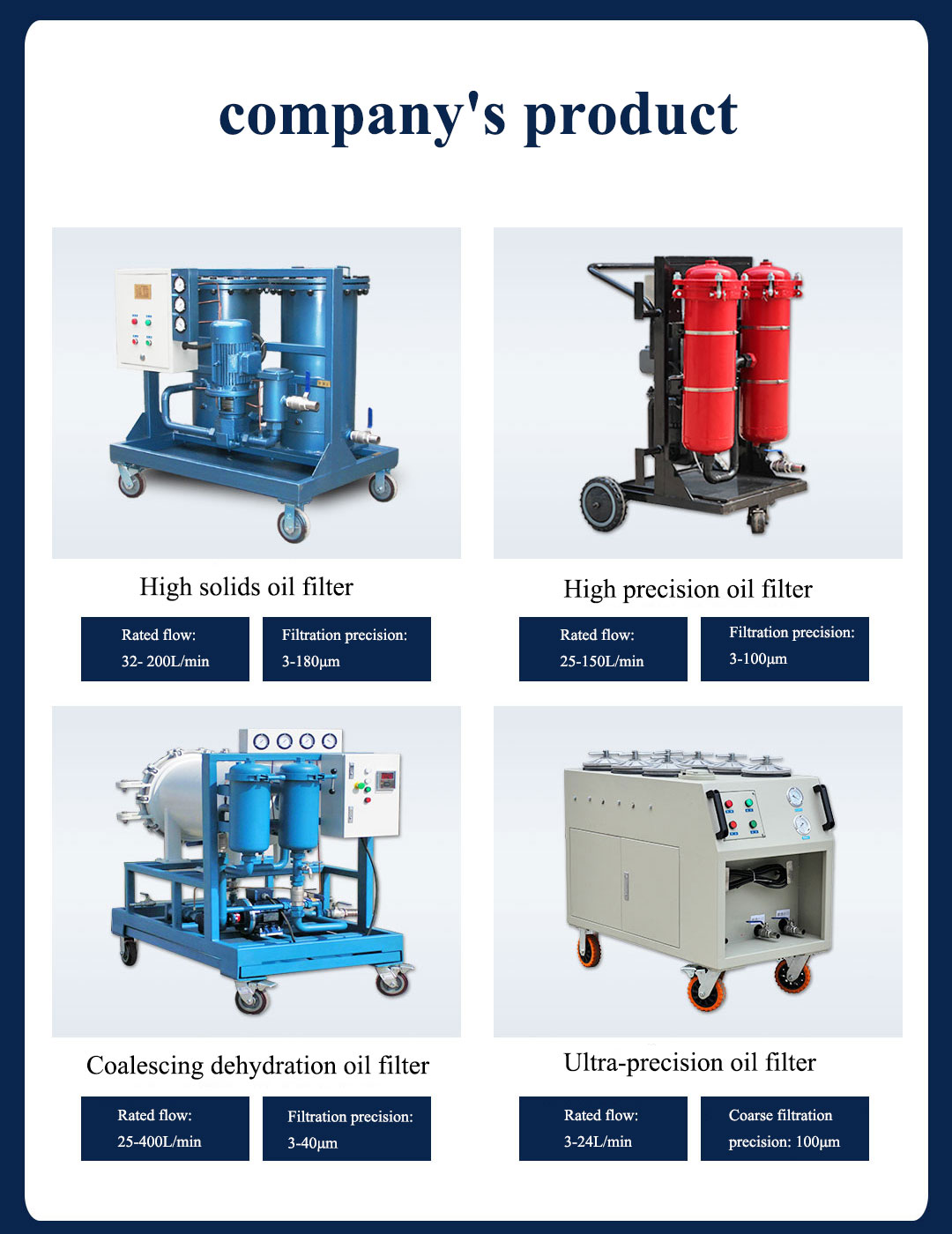
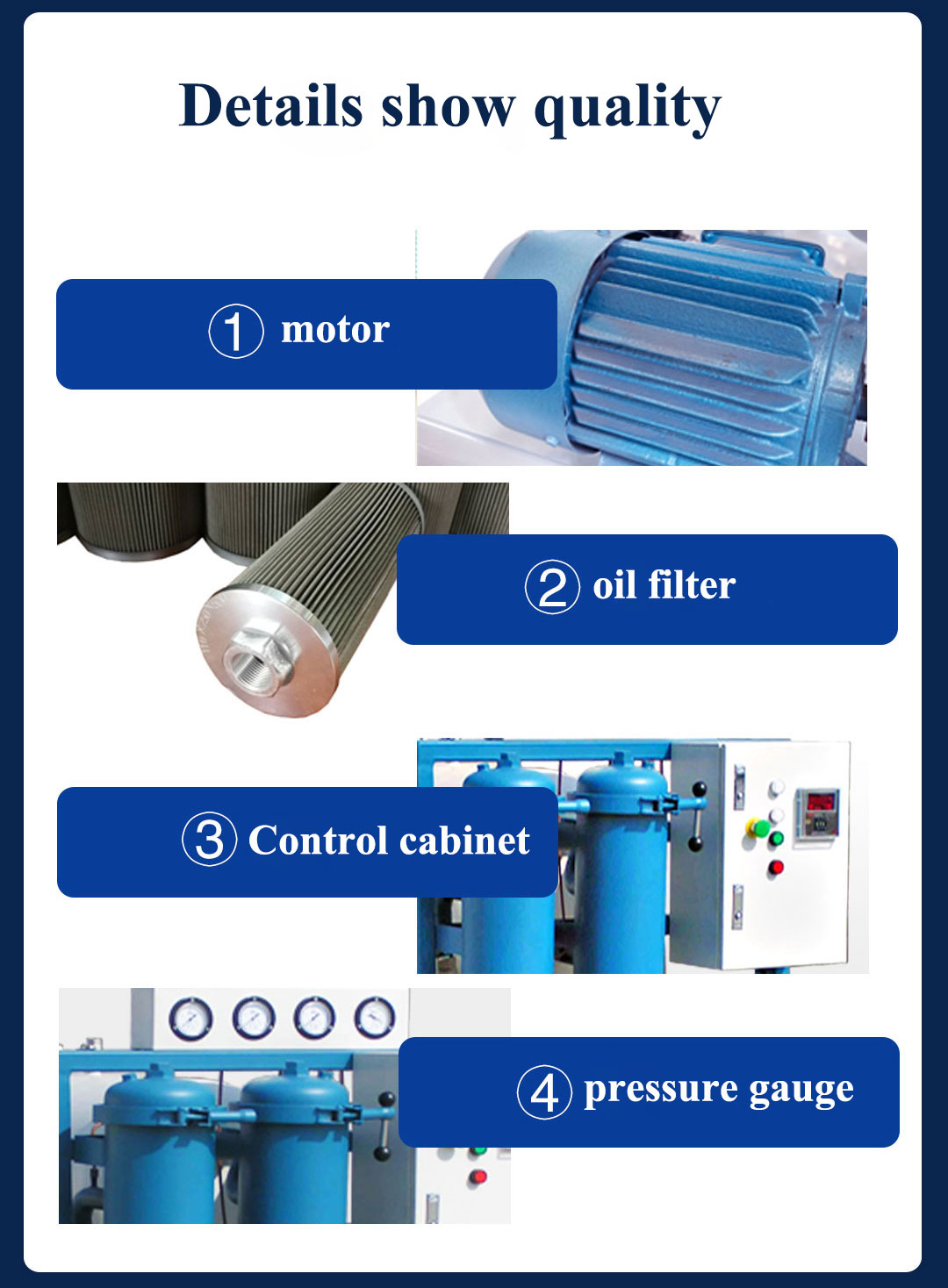
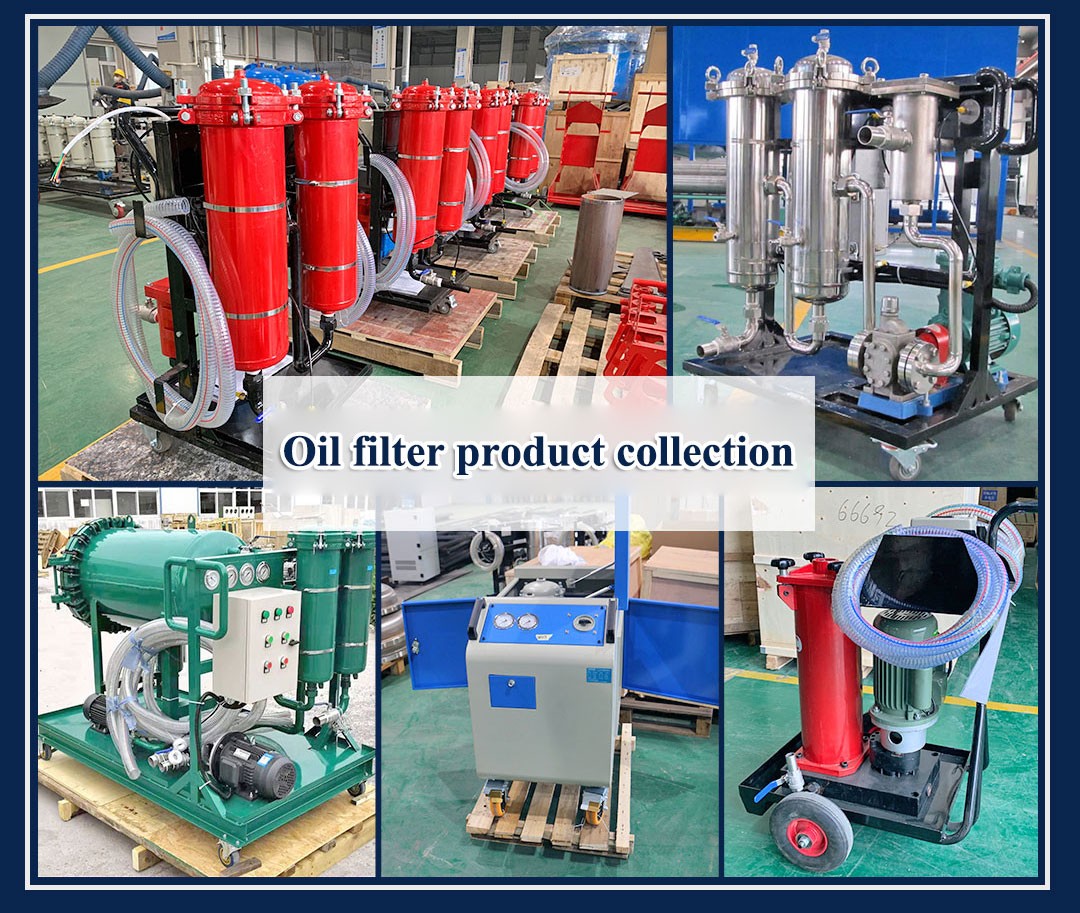
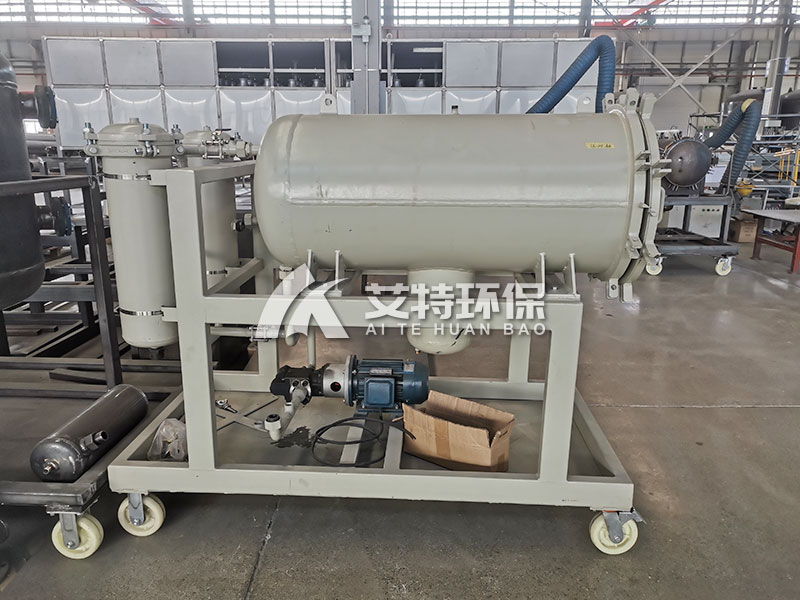
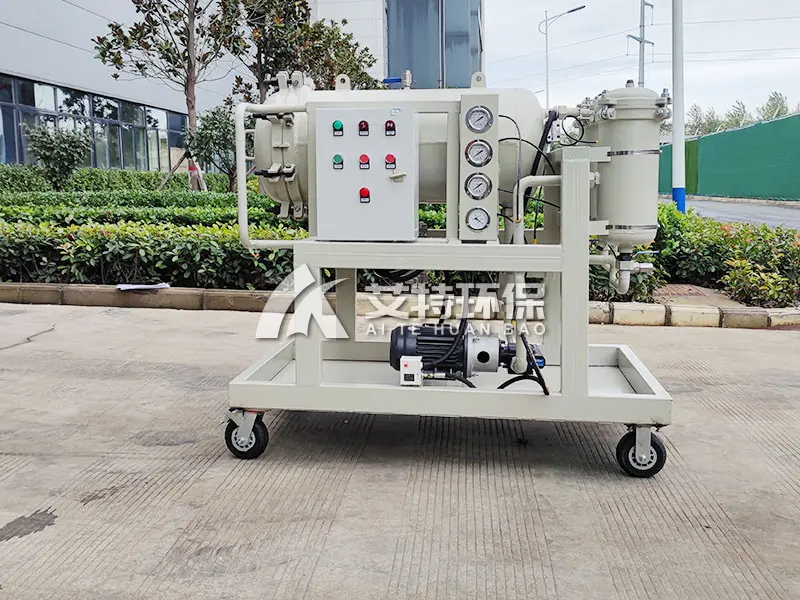
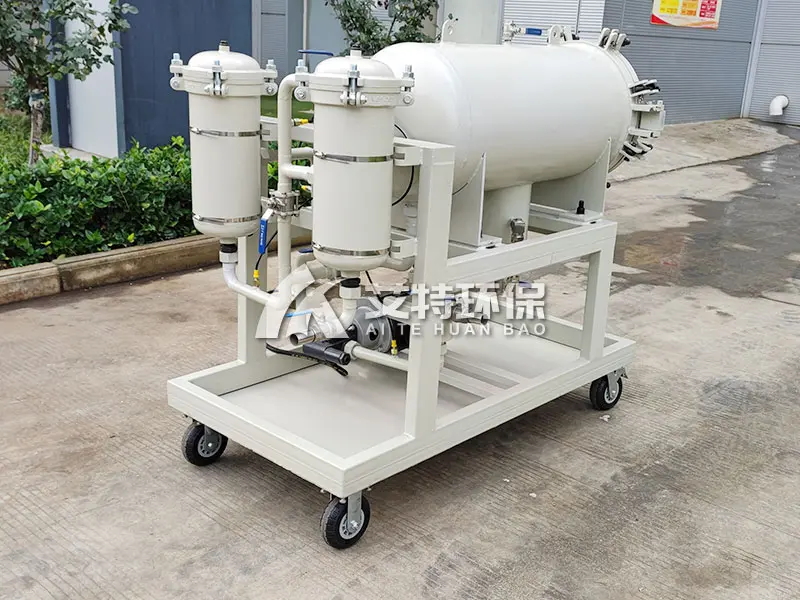
The LYC-25J coalescing dewatering oil filter efficiently removes particles, free water, and emulsified water without altering oil quality. It is ideal for turbine, transformer, and hydraulic systems requiring high cleanliness.
Filtration Principles
1. Particle Filtration System
The system features a large filtration area designed to capture extremely fine particles and contaminants.
This ensures that the oil achieves a high degree of cleanliness, protecting sensitive downstream components
from abrasive wear.
2. Coalescing System
The coalescing stage consists of a set of specially designed coalescing filter elements. As oil passes through,
free water and emulsified water are merged into larger water droplets. These enlarged droplets then settle
by gravity into the water collection reservoir.
3. Separation System
The separation filter element is manufactured from hydrophobic (water-repellent) material.
When oil flows through this element, water droplets are repelled and blocked on the outer surface,
where they coalesce with one another until they become heavy enough to settle into the water storage tank under gravity.
4. Drainage System
Separated water accumulates in the storage tank. When the water-oil interface reaches a preset level,
an automatic or manual valve opens to discharge the water. Once the level drops to the lower set point,
the valve closes to stop drainage, ensuring continuous, unattended operation.
Applications
· Purification of turbine oil and transformer oil in power generation and substation equipment.
· Removal of water and particulate impurities from hydraulic and lubrication system oils.
· Installation as a bypass or offline filtration unit to continuously improve and maintain system cleanliness
in hydraulic and lubrication circuits.
FAQ
Q1: What is the maximum water content the LYC-25J can handle?
A: The LYC-25J is highly effective even for oils with significant water contamination. It can reduce free water
content to below 100 ppm (0.01%) and significantly lower emulsified water levels. For extreme cases,
pre-treatment may be recommended.
Q2: Does the coalescing process affect oil additives or viscosity?
A: No. The coalescing and separation processes are purely physical, using surface tension and gravity.
They do not chemically alter the oil, so additives, viscosity, and other critical properties remain intact.
Q3: How often should the coalescing and separation filter elements be replaced?
A: Replacement intervals depend on the contamination level and operating hours. Typically,
the coalescing element is replaced every 6–12 months, and the separation element every 12–24 months.
We recommend monitoring differential pressure and water content to determine the optimal schedule.
Q4: Can this unit be used for both mineral oils and synthetic fluids?
A: Yes, the LYC-25J is compatible with most mineral-based and synthetic hydraulic and lubricating oils.
For aggressive fluids or special formulations, please consult our technical team to verify material suitability.
Q5: Is the drainage system fully automatic?
A: The unit can be equipped with either automatic level-sensing drainage or manual drain valves,
depending on your configuration. The automatic option is recommended for continuous unmanned operation.
Q6: What is the typical flow rate and operating pressure of this model?
A: The LYC-25J operates at a nominal flow rate of 25 L/min and is designed for low-pressure suction/discharge applications.
Please refer to the specific nameplate or technical datasheet for your unit's exact pressure rating.
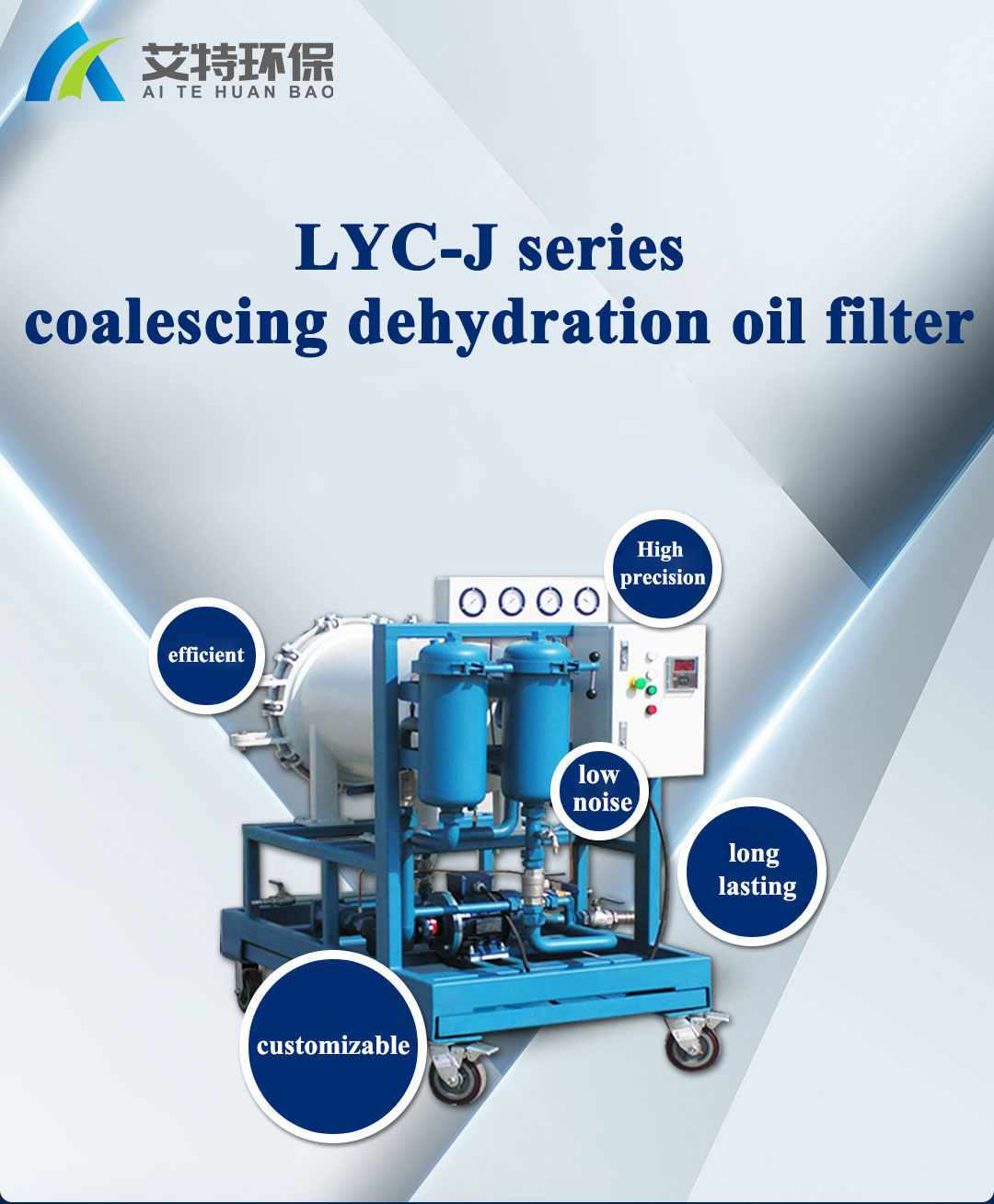
Coalescence dehydration oil filter LYC-25J
Similar ProductsVIEW MORE >

WhatsApp / Wechat: +8613273719759
Factory Address: Zhengshang Navigation Square, South Hanghai Road, Erqi District, Zhengzhou City, Henan Province P.R.China.


 Export01@aiteeps.com
 ++8613273719759
