
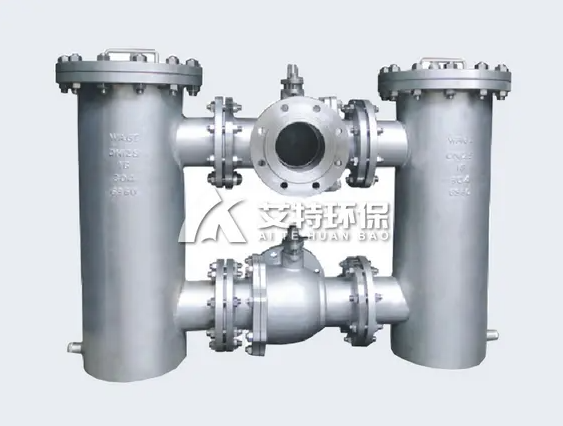
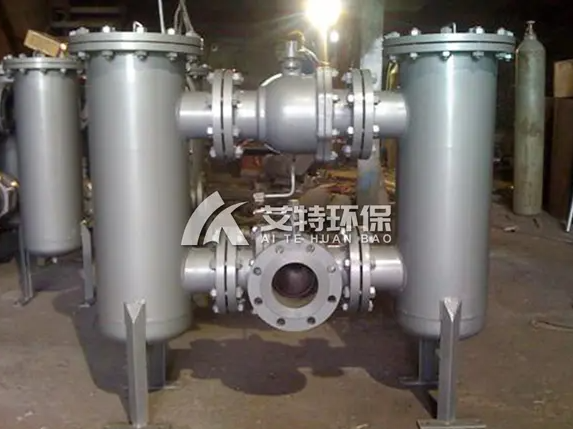
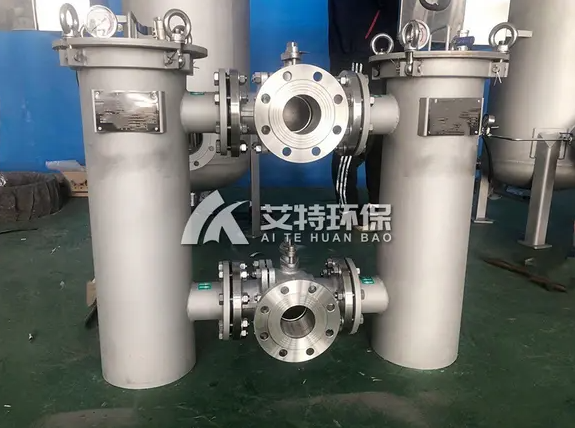
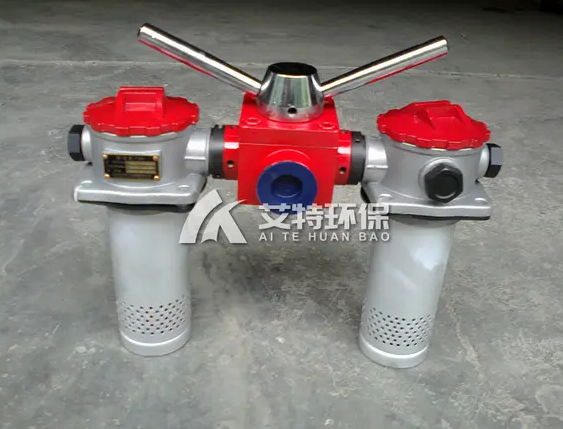
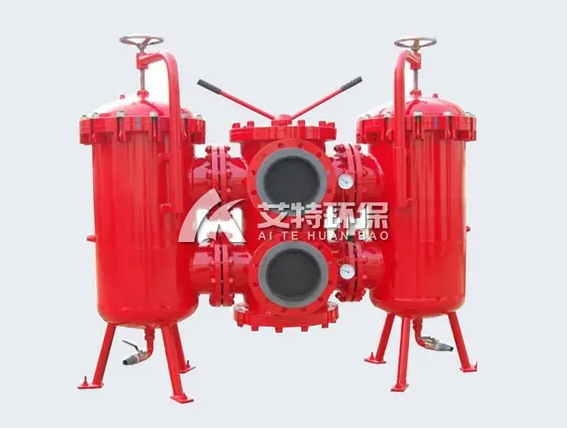
Double switch filter is a kind of multipurpose filter equipment made of two stainless steel filters in parallel, which has many advantages such as novel and reasonable structure, good sealing, strong flow capacity, easy operation and so on.
Product Overview
The double-switch filter, also known as a parallel-switching filter, is a versatile and high-performance filtration
solution engineered from two stainless steel filter vessels arranged in a parallel configuration. This innovative
design combines the reliability of basket-type filtration with the operational flexibility of continuous, uninterrupted service.
The double-switch filter offers numerous advantages, including a novel and rational structural design, exceptional sealing
integrity, strong flow capacity, and user-friendly operation. Its adaptability across a wide spectrum of industrial applications
makes it an indispensable asset for processes requiring consistent filtration without production interruptions.
The fundamental principle behind the double-switch filter is its ability to maintain continuous filtration even during element
cleaning or replacement. By integrating two identical filter chambers with a three-way ball valve switching system,
operators can isolate one chamber for maintenance while the other chamber continues to process the full flow.
This "changeover without shutdown" capability is particularly valuable in continuous production environments where
downtime carries significant cost implications.
Scope of Application
The double-switch filter demonstrates remarkable versatility across diverse industrial sectors, accommodating a broad
range of media and operating conditions:
Chemical and Petrochemical Industries: Effectively handles weak corrosive materials commonly encountered in
petrochemical production, including water, ammonia, mineral oils, hydrocarbons, and various organic solvents.
The stainless steel construction ensures long-term reliability even when processing moderately aggressive fluids.
Corrosive Material Processing: Specifically engineered to withstand corrosive chemicals in chemical manufacturing,
such as caustic soda, concentrated sulfuric acid, carbonic acid, acetic acid, and other acidic solutions.
The corrosion-resistant materials and specialized seals provide safe containment and effective filtration of these
challenging media.
Low-Temperature and Cryogenic Applications: Well-suited for refrigeration systems and cryogenic processing,
handling materials such as liquid methane, liquid ammonia, liquid oxygen, and various coolants. The filter maintains
structural integrity and sealing performance across extreme temperature ranges.
Food, Beverage, and Pharmaceutical Industries: Meets stringent hygiene requirements for light industry food, beverage,
and pharmaceutical production. Applications include beer, soft drinks, dairy products, food pulps, medical supplies,
and other consumable products where sanitary conditions are paramount. The polished internal surfaces and sanitary
connections facilitate thorough cleaning and prevent product contamination.
Structural Characteristics and Design Features
The double-switch filter incorporates several engineering innovations that distinguish it from conventional single-basket
filters:
Parallel Switching Configuration: The filter assembly comprises two individual basket filter units mounted on a common stand,
connected through two three-way ball valves. This configuration allows seamless flow diversion from one chamber to the other,
enabling filter element cleaning or replacement without interrupting the filtration process. This "non-stop" filtration capability
is essential for 24/7 production lines where continuous operation is mandatory.
Flexible Filter Element Options: While stainless steel filter elements are standard, the system can also accommodate
high-quality honeycomb skim fiber cotton elements for applications requiring finer filtration. When equipped with fiber
cotton elements, the filter can achieve particle retention down to 1 micron or less, providing exceptional clarity for sensitive
processes. The filter can also be operated in single-cylinder mode by removing the common frame, offering additional
operational flexibility without changing the unit's dimensional footprint.
Superior Surface Finish: Both the internal and external surfaces of the double-switch filter undergo meticulous polishing.
This smooth surface finish minimizes particle adhesion, facilitates cleaning, and enhances corrosion resistance.
For food and pharmaceutical applications, the polished interior prevents product entrapment and bacterial growth,
supporting compliance with sanitary standards.
Stainless Steel Strainer and Support Basket: Each filter cylinder is equipped with a durable stainless steel strainer and a
robust support basket that maintains the filter element's structural integrity under differential pressure. The support
basket prevents element collapse and ensures uniform flow distribution across the entire filtration surface.
Top-Mounted Air Release Valve: Each filter cylinder features a top-mounted air release valve that allows operators to
vent trapped air during initial filling or after maintenance. Proper air venting prevents air binding, ensures full utilization
of the filtration area, and eliminates the risk of pump cavitation downstream.
Quick-Opening Cover Design: The upper cover connects to the filter cylinder via a quick-opening structure, significantly
simplifying element cleaning and replacement procedures. This design reduces maintenance time from hours to minutes,
minimizing operator exposure to process fluids and enhancing overall safety.
Adjustable Support Feet: Three adjustable support feet ensure stable placement on uneven floors, accommodating various
installation environments and simplifying leveling during setup.
Versatile Connection Options: The connecting pipeline employs loose connections or clamp-type couplings, while the inlet
and outlet valves utilize three-way ball valves. These valves offer excellent pressure and temperature resistance,
flexible and convenient operation, and secure sealing that prevents fluid leakage—ensuring a cleaner, more sanitary
working environment.
Operational Benefits
The double-switch filter delivers measurable advantages to plant operators:
Zero-Downtime Maintenance: The switching capability eliminates production interruptions for filter servicing, maximizing
equipment utilization and throughput.
Reduced Labor Costs: Simplified maintenance procedures and quick-opening covers reduce the time and skill level required
for element changes.
Process Consistency: Continuous filtration ensures product quality remains stable without start-up or shut-down transients.
Versatile Media Compatibility: One filter system handles multiple fluid types with appropriate element selection,
reducing equipment inventory requirements.
Frequently Asked Questions
Q1: What is the primary advantage of a double-switch filter over a single-basket filter?
The main advantage is the ability to clean or replace filter elements without stopping the filtration process. By switching
flow from one chamber to the other, maintenance can be performed while production continues uninterrupted.
This is critical for continuous manufacturing processes where downtime is costly or impractical.
Q2: What is the maximum filtration accuracy achievable with this filter?
With standard stainless steel filter elements, accuracies typically range from 10 to 200 microns. When equipped with
high-quality honeycomb skim fiber cotton elements, the filter can achieve particle retention down to 1 micron or less,
making it suitable for applications requiring very high fluid clarity.
Q3: What materials are used in the construction of this filter?
The filter vessels, strainers, support baskets, and wetted components are constructed from stainless steel
(typically 304 or 316L grade) to ensure corrosion resistance and sanitation. Seals and gaskets are available in various
elastomers (NBR, FKM, EPDM, PTFE) to match specific fluid compatibility requirements.
Q4: How do I know when to switch to the other filter chamber?
The decision to switch is based on differential pressure monitoring. As the filter element captures contaminants,
the pressure drop across the chamber increases. When the differential pressure reaches a predetermined change-out
value (typically 0.1–0.3 MPa above clean pressure drop), it is time to switch chambers and service the saturated element.
Q5: Is the filter suitable for high-temperature applications?
The temperature rating depends on the seal material selected. With appropriate seals, the filter can operate at
temperatures up to 200°C. For cryogenic applications, the stainless steel construction maintains integrity at temperatures
as low as -196°C (liquid nitrogen range). Always specify your operating temperature when ordering.
Q6: Can the filter be fully drained after use?
Yes, each filter chamber is equipped with a bottom drain port. The quick-opening top cover also allows access for
complete internal inspection and cleaning. Proper draining prevents fluid retention and cross-contamination when switching
between different process media.
Q7: What maintenance is required for the three-way ball valves?
The three-way ball valves require periodic inspection and lubrication according to the manufacturer's recommendations.
In normal service with clean, non-abrasive fluids, valve maintenance intervals typically align with filter element replacement
schedules. For abrasive or corrosive services, more frequent inspection is recommended.
Q8: Does the filter comply with food and pharmaceutical hygiene standards?
Yes, the filter's stainless steel construction, polished internal surfaces, sanitary connections, and smooth weld finishes
support compliance with FDA, EHEDG, and other food/pharmaceutical hygiene requirements. Please specify your industry
standard when ordering to ensure appropriate documentation and material certifications.
Q9: What is the maximum flow rate for this filter?
Flow capacity depends on the selected element type and fluid viscosity. Standard configurations handle flow rates from
10 to 200 m³/h. For specific flow requirements, please consult our engineering team with your process parameters.
Q10: Can the filter be automated for remote switching?
Yes, the manual three-way ball valves can be replaced with actuated valves (pneumatic or electric) to enable remote or
automated switching control. This option is ideal for unmanned plants or processes requiring precise switching based on
differential pressure setpoints.
For customized configurations, special material requirements, or application-specific engineering support, please contact
our technical team. Specifications are subject to improvement and may change without prior notice.
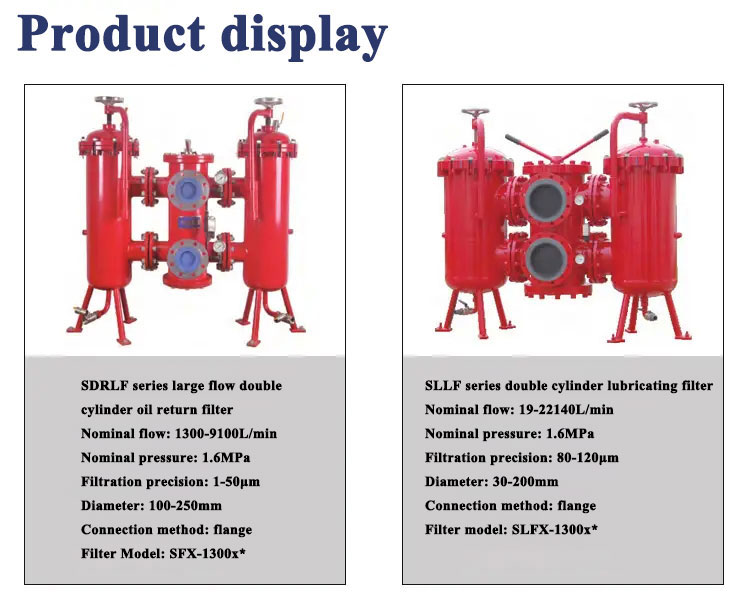
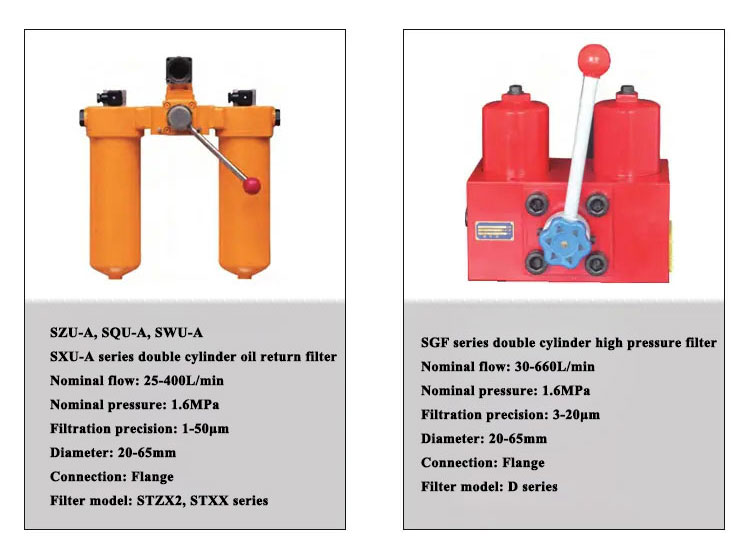
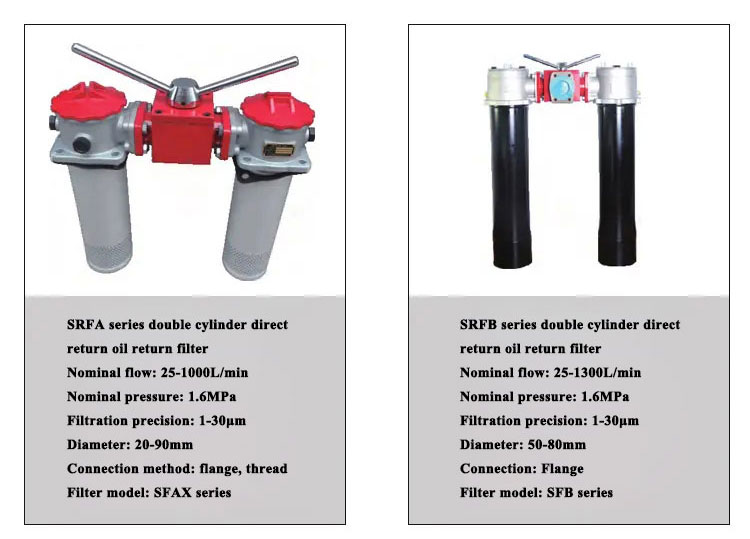
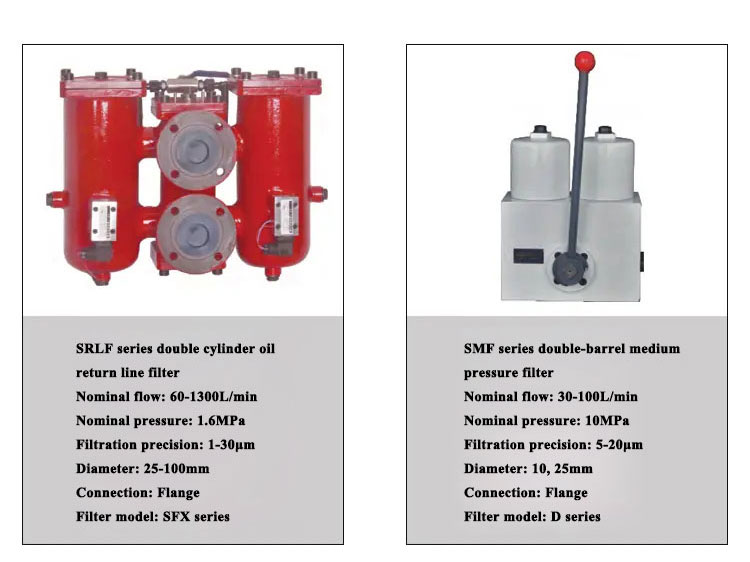
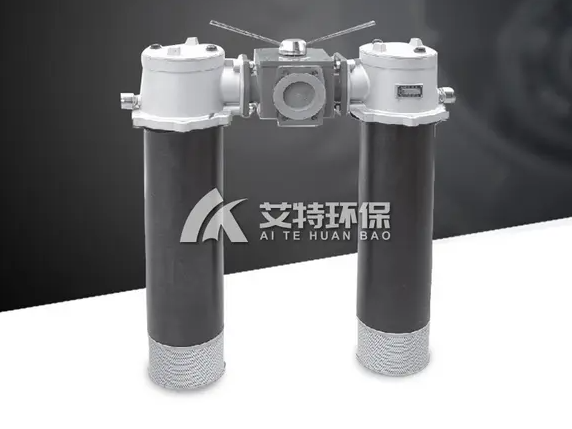
Double switch filter
Similar ProductsVIEW MORE >

WhatsApp / Wechat: +8613273719759
Factory Address: Zhengshang Navigation Square, South Hanghai Road, Erqi District, Zhengzhou City, Henan Province P.R.China.


 Export01@aiteeps.com
 ++8613273719759
