
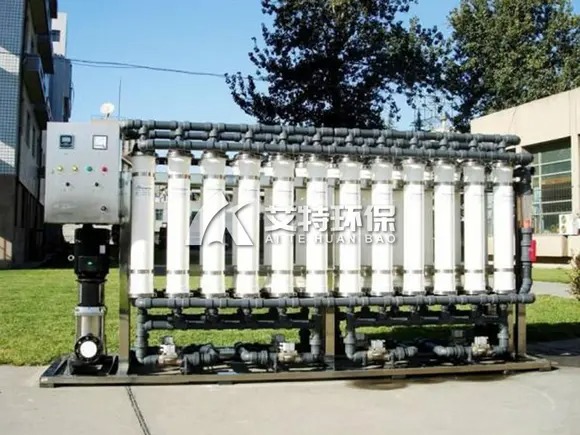
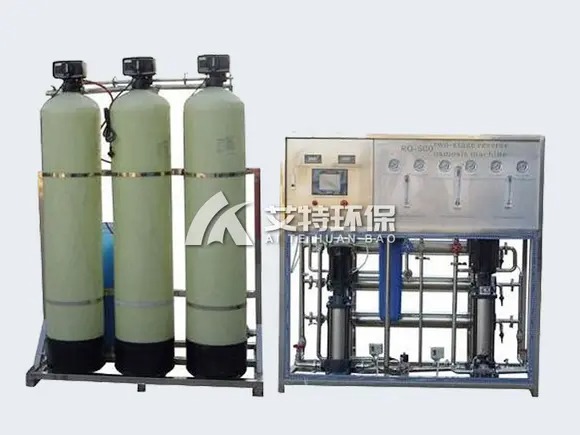
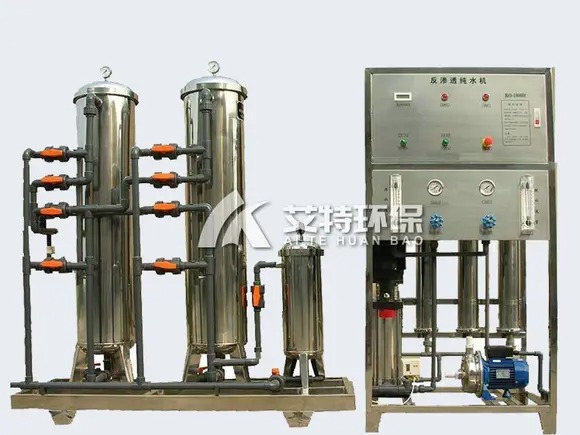
Reverse osmosis pure water equipment is a membrane separation technology that can be driven by pressure by selecting through (semi-permeable) membrane working force.
1. Product Overview
Reverse Osmosis Pure Water Equipment is an advanced membrane separation technology that operates on the principle
of selective permeation through a semi-permeable membrane under applied pressure. When the pressure within the reverse
osmosis system exceeds the osmotic pressure of the feedwater solution, water molecules continuously permeate through the
membrane, flowing along the permeate channel into the central collection tube. Simultaneously, impurities in the
water – including dissolved ions, organic compounds, bacteria, viruses, and other contaminants – are rejected at the membrane
surface and discharged through the concentrate outlet. This process achieves the dual objectives of separation and purification,
delivering high-purity water for a wide range of industrial, pharmaceutical, and commercial applications.
Reverse Osmosis Pure Water Equipment is widely recognized as one of the most efficient and environmentally friendly water
treatment technologies available today. Its physical separation mechanism eliminates the need for chemical additives during
normal operation, while its continuous production capability ensures a reliable, consistent supply of purified water.
2. Working Principle
Reverse Osmosis Pure Water Equipment operates on a straightforward yet highly effective physical principle. Raw water is
pressurized by a high-pressure pump and directed across the surface of the reverse osmosis membrane. The applied pressure
overcomes the natural osmotic pressure, forcing pure water molecules through the membrane's microscopic pores (typically
0.0001 microns in size). These pores are so small that they effectively reject:
· Dissolved salts and minerals (ions)
· Organic compounds and macromolecules
· Bacteria, viruses, and other microorganisms
· Pyrogens and endotoxins
The purified water (permeate) passes through the membrane and is collected for use, while the rejected contaminants
(concentrate) are continuously flushed from the membrane surface and discharged to drain. This cross-flow design minimizes
fouling and allows Reverse Osmosis Pure Water Equipment to operate continuously with stable performance.
3. Performance Characteristics – What Sets Our Reverse Osmosis Pure Water Equipment Apart
Reverse Osmosis Pure Water Equipment delivers a comprehensive range of performance advantages:
1. High Desalination Rate: Reverse Osmosis Pure Water Equipment utilizes ultra-thin composite membrane elements achieving
desalination rates of >99.5% . This exceptional removal efficiency ensures that the treated water meets the most stringent purity
requirements for pharmaceutical, electronic, and industrial applications.
2. Energy-Efficient Operation: Reverse Osmosis Pure Water Equipment operates at ambient temperature using only water
pressure as the driving force – with no phase change required. This makes it one of the most energy-efficient desalination and
purification processes available, significantly reducing operating costs compared to thermal distillation methods.
3. Imported High-Quality Membranes: Reverse Osmosis Pure Water Equipment is equipped with imported reverse osmosis
membranes from leading global manufacturers – offering high desalination rates, long service life, and low operating costs.
4. Fully Automatic Pretreatment System: Reverse Osmosis Pure Water Equipment features an integrated automatic pretreatment
system that removes suspended solids, chlorine, and other foulants before water reaches the RO membranes – protecting the
membranes and enabling unattended operation.
5. Premium Booster Pumps: Reverse Osmosis Pure Water Equipment uses imported Grundfos booster pumps – delivering high
efficiency, low noise, and stable, reliable performance even under variable operating conditions.
6. Online Water Quality Monitoring: Reverse Osmosis Pure Water Equipment incorporates continuous online monitoring of key
water quality parameters (conductivity, flow, pressure, and pH) – providing real-time visibility into water quality changes and
ensuring product water safety.
7. Intelligent Control System: Reverse Osmosis Pure Water Equipment features an automated electronic control program – with
optional touchscreen HMI for easy operation, data logging, and system diagnostics.
8. Customized Design: Reverse Osmosis Pure Water Equipment is tailored to your local feedwater quality and specific application
requirements – ensuring optimal performance and full compliance with your process needs.
9. Low Maintenance & Operating Costs: Reverse Osmosis Pure Water Equipment requires minimal routine maintenance.
Its automated operation reduces labor costs, and the robust design minimizes downtime and repair expenses.
10. Environmentally Friendly: Reverse Osmosis Pure Water Equipment does not require large quantities of chemical agents or
acid/alkali regeneration. No chemical waste discharge means Zero environmental pollution – making it a green
technology solution.
11. Continuous Operation: Reverse Osmosis Pure Water Equipment supports continuous, uninterrupted water production – with
simple operation and consistently stable product water quality.
12. Compact Footprint: Reverse Osmosis Pure Water Equipment features a space-saving design that requires minimal floor area
and small operating space – ideal for facilities with limited room.
4. Technical Parameters – Updated Specifications
Reverse Osmosis Pure Water Equipment conforms to the following technical specifications:
Parameter Specification
Desalination Rate ≥99.5% (ultra-thin composite membrane)
Operating Pressure 0.5 – 2.5 MPa (depending on feedwater TDS)
Operating Temperature 5 – 45°C
Feedwater pH Range 3 – 11
Feedwater SDI ≤5 (SDI – Silt Density Index)
Residual Chlorine ≤0.1 ppm
Product Water Conductivity <5 μS/cm (typical – depends on feedwater)
Recovery Rate 50 – 75% (customizable)
Control Mode Fully automatic PLC with optional touchscreen
Booster Pump Imported Grundfos (high efficiency, low noise)
Membrane Type Spiral-wound thin-film composite (TFC)
Power Supply 380V / 50Hz (three-phase)
System Design Customized per project requirements
5. Application Fields
Reverse Osmosis Pure Water Equipment is widely deployed across diverse industries:
· Pharmaceutical Industry:
· Pharmaceutical preparation and formulation
· Large-volume infusions (LVP) and small-volume injections (SVP)
· Natural substance extraction and purification
· Traditional Chinese medicine (TCM) drinks and concentrates
· Active pharmaceutical ingredient (API) washing
· Electronics & Semiconductor:
· Ultra-pure water for wafer rinsing
· Component cleaning and etching
· Cooling water for precision equipment
· Power Generation:
· Boiler make-up water treatment
· Cooling tower feedwater
· Food & Beverage:
· Process water for brewing and bottling
· Beverage formulation water
· CIP rinse water
· Chemical & Petrochemical:
· Process water for chemical synthesis
· Reactor cooling and washing
· Municipal & Commercial:
· Drinking water treatment
· Desalination of brackish/sea water
· Centralized water supply systems
6. Why Choose Our Reverse Osmosis Pure Water Equipment?
Reverse Osmosis Pure Water Equipment is the preferred choice for customers seeking reliable, high-purity water treatment
because:
· Highest Purity: ≥99.5% desalination rate meets the most demanding water quality specifications.
· Operational Economy: Low energy consumption, minimal chemical usage, and automated operation reduce operating costs.
· Proven Reliability: Imported membranes and Grundfos pumps ensure long service life and consistent performance.
· Environmental Compliance: Zero chemical waste discharge – environmentally sustainable solution.
· Custom Engineered: Designed specifically for your feedwater quality and production requirements.
· Comprehensive Support: Full after-sales service, spare parts availability, and technical expertise.
---
7. Conclusion
Reverse Osmosis Pure Water Equipment offers a reliable, efficient, and environmentally sustainable solution for high-purity
water production across pharmaceutical, electronic, industrial, and commercial applications. With its high desalination rate,
low energy consumption, fully automatic operation, and compact design, it represents the optimal choice for facilities requiring
consistent, high-quality purified water.
8. FAQ – Frequently Asked Questions
Q1: What is the desalination rate of Reverse Osmosis Pure Water Equipment?
A1: Reverse Osmosis Pure Water Equipment achieves a desalination rate of ≥99.5% using ultra-thin composite membrane
elements. This means that over 99.5% of dissolved salts and minerals are removed from the feedwater – producing water
of exceptional purity.
Q2: How does Reverse Osmosis Pure Water Equipment differ from distillation?
A2: Reverse Osmosis Pure Water Equipment operates at ambient temperature using pressure as the driving force – with no
phase change (boiling/condensation) required. This makes it significantly more energy-efficient than distillation, which requires
large amounts of thermal energy. Additionally, RO is simpler to operate and maintain.
Q3: What is the typical recovery rate of Reverse Osmosis Pure Water Equipment?
A3: The recovery rate of Reverse Osmosis Pure Water Equipment is typically 50–75% , meaning that 50–75% of the feedwater
is
converted to purified permeate. The recovery rate can be customized based on feedwater quality and specific application
requirements. Higher recovery rates reduce waste but require more careful feedwater pretreatment.
Q4: What pretreatment is required for Reverse Osmosis Pure Water Equipment?
A4: Reverse Osmosis Pure Water Equipment requires effective pretreatment to protect the RO membranes from fouling and
scaling. Typical pretreatment includes: (a) Multimedia filtration; (b) Activated carbon filtration (for chlorine removal); (c) Water
softening or antiscalant dosing; (d) Cartridge filtration (5μm). Our system includes an integrated automatic pretreatment system
for seamless operation.
Q5: What is the recommended feedwater SDI for Reverse Osmosis Pure Water Equipment?
A5: Reverse Osmosis Pure Water Equipment requires feedwater with an SDI (Silt Density Index) of ≤5 to ensure reliable
membrane performance. SDI values above 5 indicate excessive fouling potential and require upgraded pretreatment.
Our technical team can assess your feedwater quality and recommend appropriate pretreatment.
Q6: How often do the RO membranes need to be replaced?
A6: Under proper pretreatment and operating conditions, the membranes in Reverse Osmosis Pure Water Equipment typically
last 3–5 years. Membrane life depends on feedwater quality, operating conditions, and maintenance practices. Regular cleaning
(CIP – Clean-in-Place) and monitoring of normalized permeate flow and salt rejection are essential for maximizing membrane life.
Q7: How is Reverse Osmosis Pure Water Equipment cleaned?
A7: Reverse Osmosis Pure Water Equipment includes a Clean-in-Place (CIP) system for periodic membrane cleaning. Chemical
cleaning is performed when normalized permeate flow drops by 10–15% or when salt rejection decreases. Standard cleaning
uses appropriate chemical formulations (acids for scale removal, alkalines for organic fouling) followed by thorough rinsing.
Q8: Does Reverse Osmosis Pure Water Equipment remove bacteria and viruses?
A8: Yes, Reverse Osmosis Pure Water Equipment effectively removes bacteria (≥99.99%) and viruses due to the membrane's
0.0001-micron pore size – which is significantly smaller than bacteria (0.2–10μm) and viruses (0.02–0.3μm). This makes RO
water microbiologically safe for pharmaceutical and food applications.
Q9: What is the power consumption of Reverse Osmosis Pure Water Equipment?
A9: Power consumption of Reverse Osmosis Pure Water Equipment depends on system capacity and feedwater TDS. Typical
energy consumption ranges from 3–8 kWh per 1,000 gallons of permeate produced. This is significantly lower than thermal
distillation processes (typically 10–20 kWh per 1,000 gallons).
Q10: Can Reverse Osmosis Pure Water Equipment handle high-TDS feedwater?
A10: Yes, Reverse Osmosis Pure Water Equipment can handle feedwater with TDS up to 5,000–10,000 ppm (brackish water).
For seawater applications (35,000 ppm TDS), we offer a high-pressure seawater RO variant with specialized membranes and
pumps. Please consult our technical team for proper system selection.
Q11: What is the typical product water conductivity from Reverse Osmosis Pure Water Equipment?
A11: Product water from Reverse Osmosis Pure Water Equipment typically achieves conductivity of <5 μS/cm for municipal
feedwater sources. For applications requiring ultra-pure water (e.g., semiconductor, pharmaceutical), the RO permeate is
further polished by mixed-bed ion exchange or EDI (electrodeionization).
Q12: Does Reverse Osmosis Pure Water Equipment require chemical addition?
A12: During normal operation, Reverse Osmosis Pure Water Equipment does not require chemical addition for the separation
process itself. However, chemical addition may be used for: (a) Antiscalant dosing (to prevent scaling); (b) Membrane cleaning
(periodic CIP); (c) Feedwater pH adjustment (for optimal membrane performance). These are minimal and carefully controlled.
Q13: Can Reverse Osmosis Pure Water Equipment operate unattended?
A13: Yes, Reverse Osmosis Pure Water Equipment is fully automated and can operate unattended for extended periods. The
PLC-based control system manages startup, operation, shutdown, and cleaning cycles. Alarms and automatic shutdown protect
the system in the event of abnormal conditions.
Q14: What is the warranty coverage for Reverse Osmosis Pure Water Equipment?
A14: We provide a 12-month warranty on Reverse Osmosis Pure Water Equipment components against manufacturing defects.
The warranty covers the RO vessels, piping, control system, and pumps. Membrane elements are warranted for 6 months.
The warranty does not cover fouling, scaling, or damage resulting from inadequate pretreatment or operation outside specified
parameters.
Q15: Do you offer custom design for Reverse Osmosis Pure Water Equipment?
A15: Yes, we offer fully customized Reverse Osmosis Pure Water Equipment based on your feedwater quality analysis,
production capacity requirements, site conditions, and specific application needs. Contact our technical team with your
project parameters for a tailored system design and quotation.
Q16: Is Reverse Osmosis Pure Water Equipment environmentally friendly?
A16: Yes, Reverse Osmosis Pure Water Equipment is one of the most environmentally friendly water treatment technologies
available. It operates without large quantities of chemical agents, requires no acid/alkali regeneration, produces no chemical
waste discharge, and has low energy consumption. The concentrate stream (waste) contains only the concentrated feedwater
impurities – with no added chemical pollutants.
Q17: What is the installation footprint of Reverse Osmosis Pure Water Equipment?
A17: Reverse Osmosis Pure Water Equipment features a compact, skid-mounted design that minimizes floor space requirements.
The exact footprint depends on system capacity – typically ranging from 3–5m² for small systems (1–5 m³/h) to 20–50m² for
large industrial systems (>50 m³/h). Our engineers can provide detailed layout drawings for your specific site.
Q18: How quickly can I receive Reverse Osmosis Pure Water Equipment?
A18: Standard Reverse Osmosis Pure Water Equipment units ship within 4–6 weeks. Custom-engineered systems may require
8–12 weeks depending on complexity, component availability, and site-specific requirements. Expedited delivery may be
available for urgent projects – please inquire with our sales team.
This updated product introduction positions the Reverse Osmosis Pure Water Equipment as a reliable, high-performance,
and environmentally sustainable solution for high-purity water production across pharmaceutical, industrial, and commercial
applications, with comprehensive technical details and practical support information. Let me know if you need any further
adjustments.
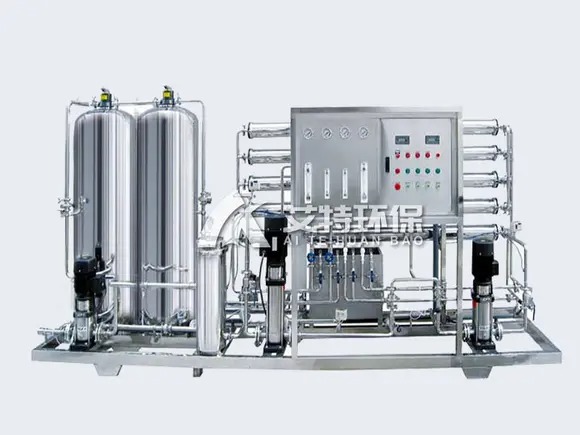
3 tons reverse osmosis pure water equipment
Similar ProductsVIEW MORE >
WhatsApp / Wechat: +8613273719759
Factory Address: Zhengshang Navigation Square, South Hanghai Road, Erqi District, Zhengzhou City, Henan Province P.R.China.


 Export01@aiteeps.com
 ++8613273719759
