
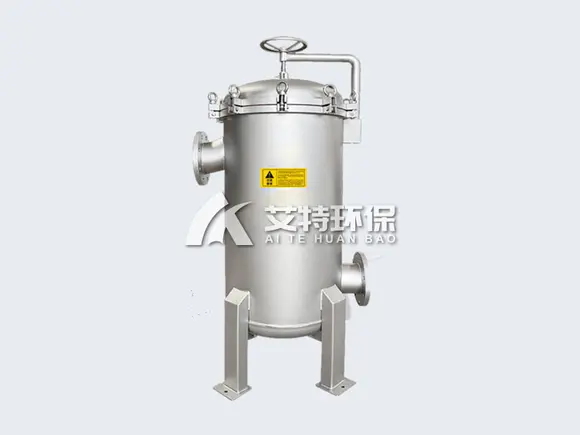
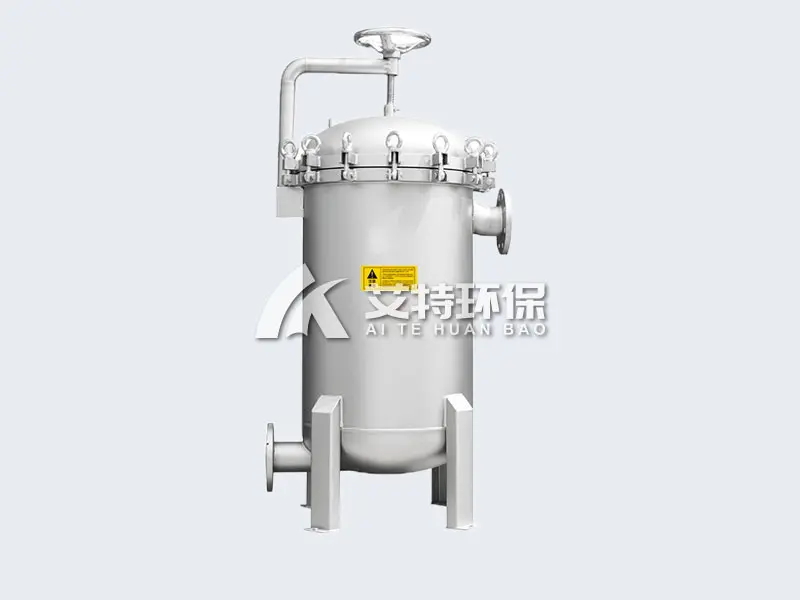
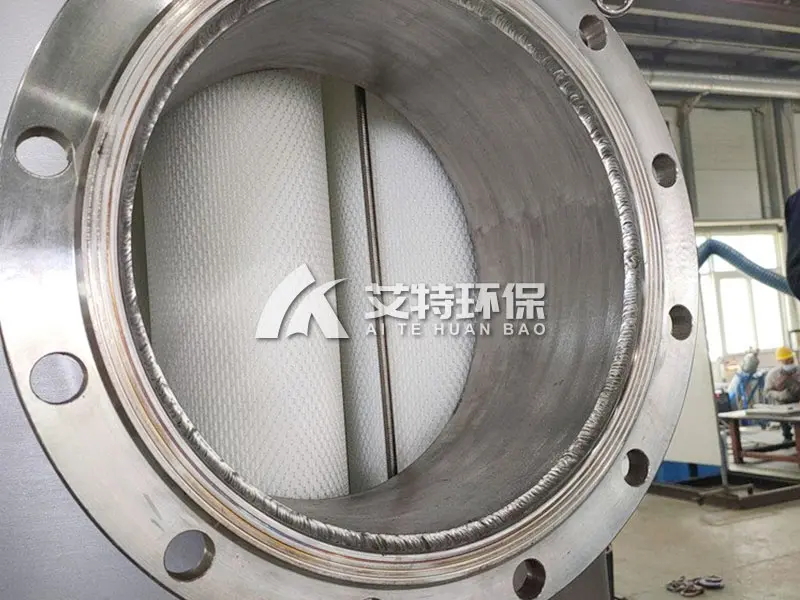
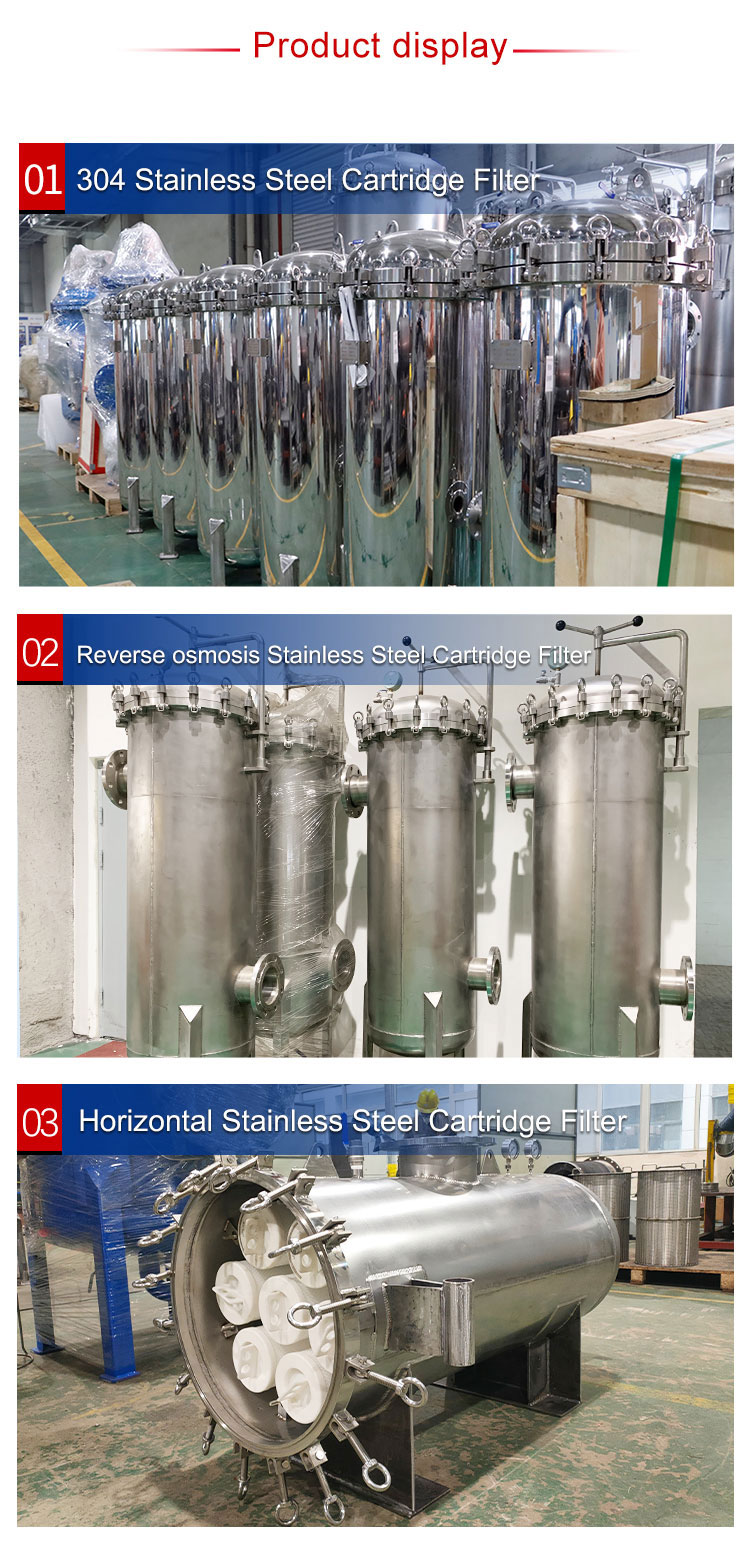
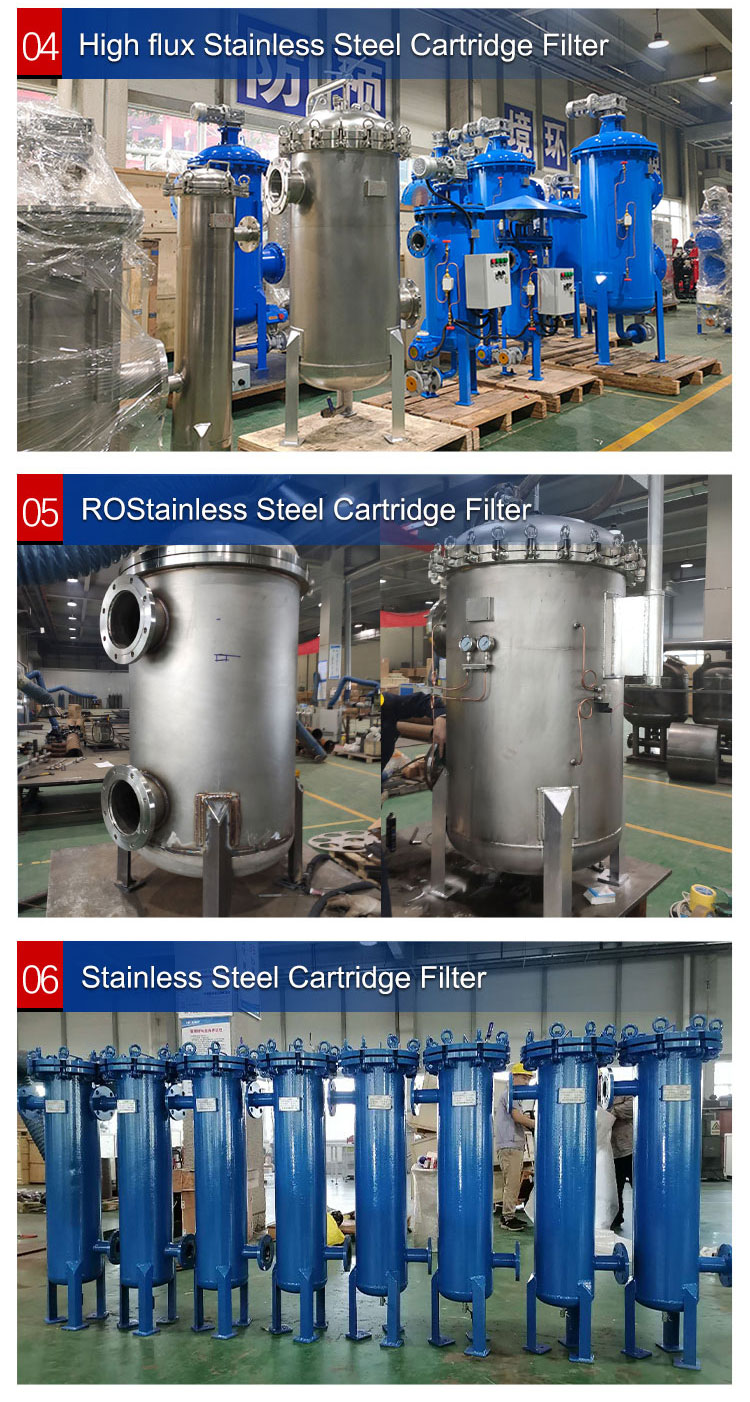
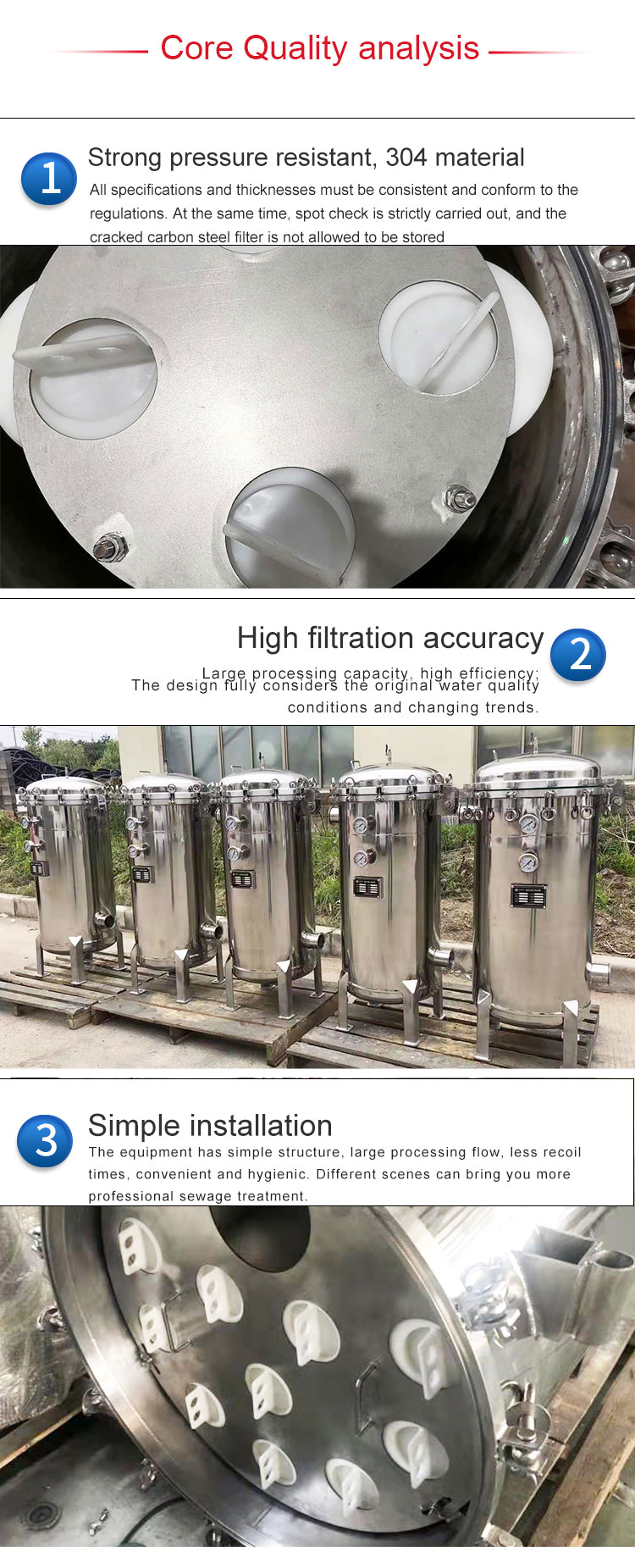
The shell of 3M high flow security filter is generally made of carbon steel and stainless steel. The 3M high-flow filter element is installed inside, which is used for solid-liquid separation of various suspensions. The environmental requirements are relatively high, and the filtration precision is relatively high. , a wide range of applications, suitable for pharmaceutical, food, chemical, water treatment and other industrial fields.
Product Description
3M High-Flow Security Filter is a high-performance industrial filtration system engineered
for reliable solid-liquid separation across a wide range of suspension applications.
The filter housing is constructed from durable carbon steel or stainless steel (options available),
designed to accommodate 3M high-flow filter elements internally. This system delivers superior
filtration precision and meets stringent environmental and operational requirements,
making it an ideal solution for pharmaceutical, food & beverage, chemical processing, water treatment,
and other industrial sectors.
The integrated design combines robust construction with high-efficiency filtration media,
ensuring consistent effluent quality, minimal maintenance downtime, and extended service intervals.
Equipment Performance Highlights
1. High Filtration Precision – Uniform pore structure ensures stable and reliable particle removal across the entire service life.
2. Low Resistance & High Flux – Optimized flow dynamics deliver large processing capacity with minimal pressure drop,
coupled with strong contaminant holding capacity and extended operational longevity.
3. High Media Cleanliness – Filter element materials are manufactured to high purity standards, preventing secondary
contamination of the process fluid.
4. Broad Chemical Compatibility – Resistant to acids, alkalis, and a wide range of chemical solvents, ensuring versatility
across diverse process streams.
5. Cost-Effective Operation – Low operating costs, easy maintenance, and convenient filter element replacement
reduce total cost of ownership.
Maintenance Guidelines
To ensure optimal performance and prolong equipment service life, please observe the following maintenance practices:
1. Protect the Filter Element – As the core component, the filter element is fragile and must be handled with
care during installation, operation, and replacement. Avoid impact or excessive mechanical stress.
2. Regular Cleaning Schedule – Extended operation leads to gradual contaminant accumulation,
which may reduce flow efficiency. Implement a routine cleaning schedule based on system pressure
differential monitoring. Clean the filter element concurrently with housing maintenance.
3. Careful Cleaning Procedures – During cleaning, exercise special caution with the filter element.
Do not use sharp tools or high-pressure jets that may deform or damage the media.
Any physical alteration can compromise filtration accuracy and fail to meet process quality requirements.
4. Timely Replacement – Inspect the filter element periodically. If deformation, cracks,
or other damage are detected, replace the element immediately to maintain system integrity and product quality.
FAQ
Q1: How do I know when the filter element needs replacement?
A: We recommend monitoring the differential pressure across the filter.
When the pressure drop reaches the set threshold (typically 0.15–0.25 MPa) or the flow rate drops significantly,
cleaning or replacement is required. Please refer to your system design parameters for specific values.
Q2: What filtration ratings are available for this filter?
A: The 3M high-flow filter elements are available in a wide range of precision grades,
typically covering 0.5 μm to 100 μm, with both absolute and nominal rating options to suit various process requirements.
Q3: How do I choose between carbon steel and stainless steel housings?
A: Carbon steel housings are cost-effective and suitable for general water treatment and standard industrial fluids.
Stainless steel housings (304/316L) offer superior corrosion resistance and are recommended for pharmaceutical,
food, chemical, and highly corrosive media applications.
Q4: Can the filter element be cleaned and reused?
A: Some element types (e.g., surface-filtration types) can be regenerated via backwashing or chemical cleaning,
but depth-filtration elements are generally recommended for single use. Please refer to the specific element specifications.
Always inspect for damage or deformation after any cleaning attempt.
Q5: What are the maximum operating pressure and temperature ratings?
A: The standard design operating pressure is typically ≤ 1.0 MPa, with an operating temperature range
of -10℃ ~ +80℃ (subject to housing material and seal material variations). Custom configurations are
available for high-temperature or high-pressure conditions.
Q6: What safety precautions should be taken during operation?
A: Always ensure the system is fully depressurized before opening the housing. Use proper tools and
follow recommended torque specifications during element replacement to prevent seal damage or housing leakage.
Never operate the filter without the element properly installed.
Q7: Is this filter suitable for potable water applications?
A: Yes, when equipped with food-grade compliant filter elements and appropriate housing materials
(stainless steel with sanitary connections), this system is suitable for potable water and beverage processing applications.
Q8: What is the typical lead time for replacement elements?
A: Standard elements are typically available from stock, with lead times of 3–7 business days depending
on quantity and specification. Custom orders may require additional lead time – please contact our
sales team for current availability.
Product Details
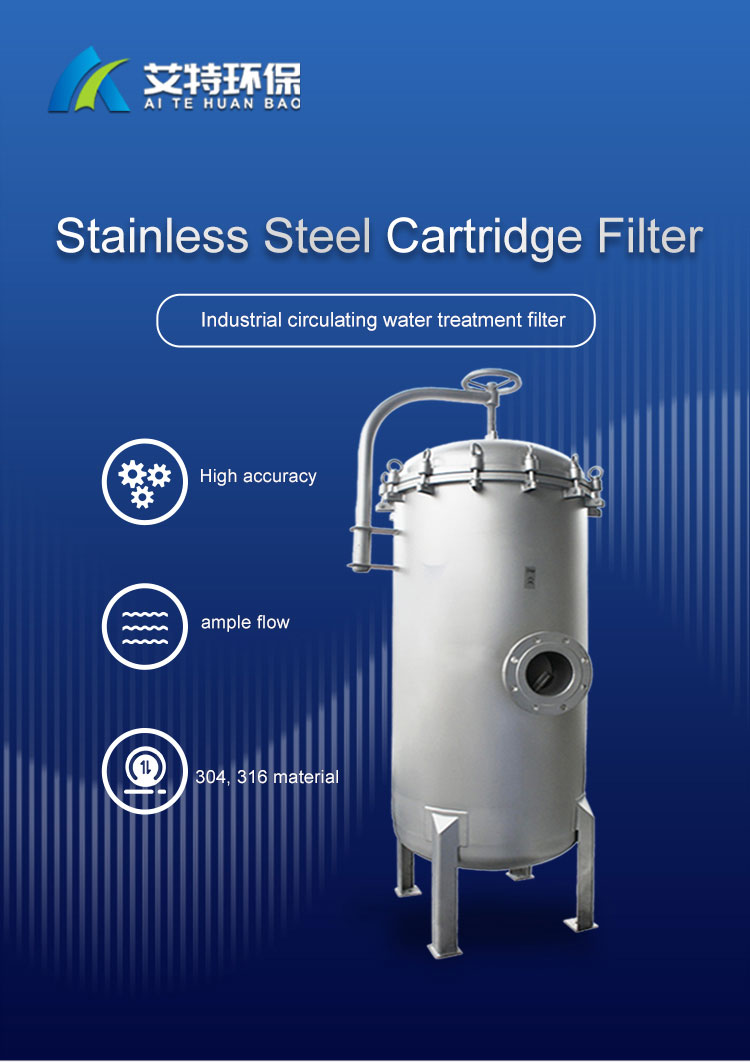
3M high flow security filter
Similar ProductsVIEW MORE >
WhatsApp / Wechat: +8613273719759
Factory Address: Zhengshang Navigation Square, South Hanghai Road, Erqi District, Zhengzhou City, Henan Province P.R.China.


 Export01@aiteeps.com
 ++8613273719759
