
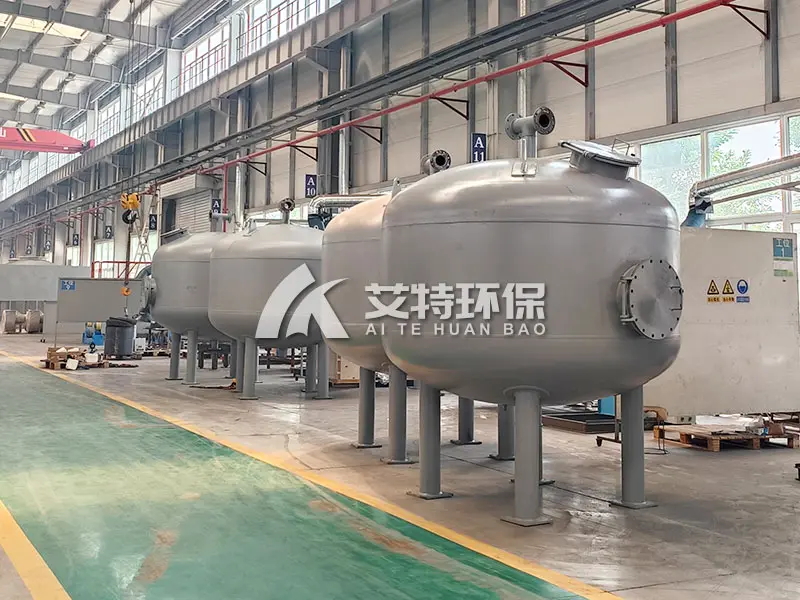
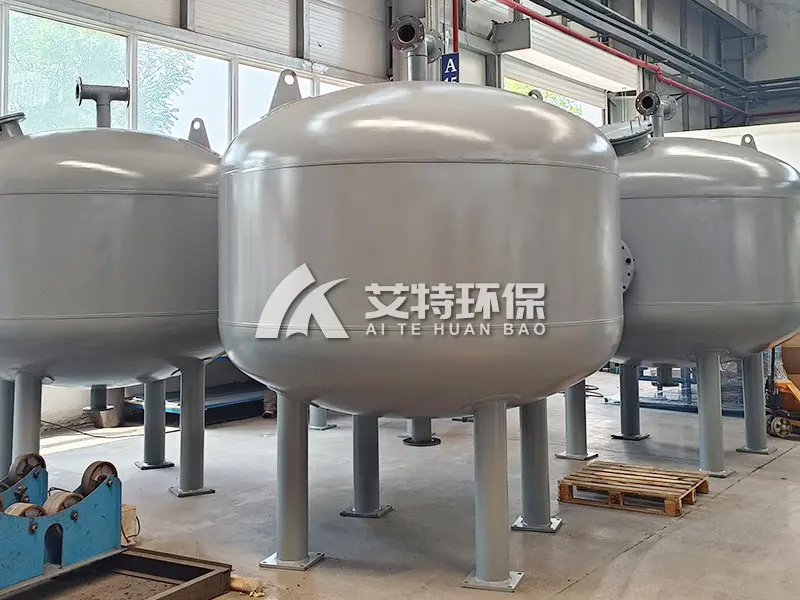
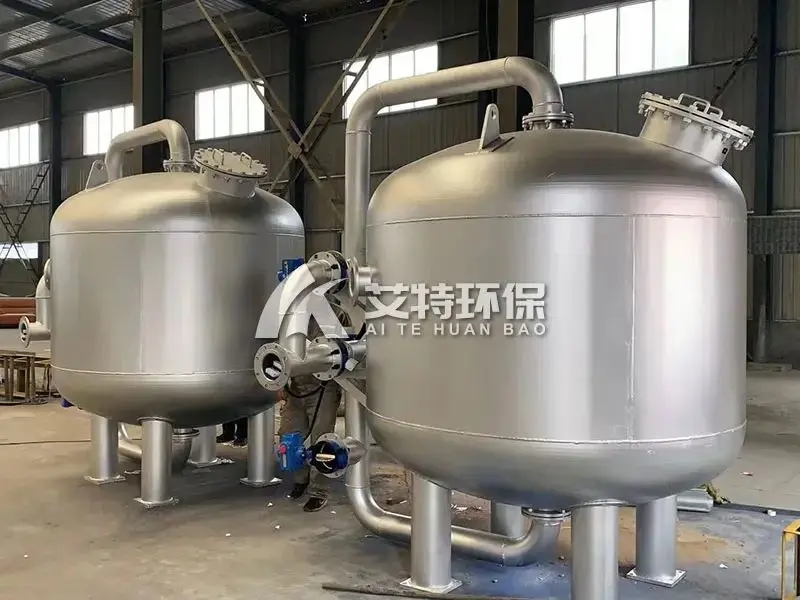
The high-speed shallow sand filter has a large amount of filtration water, good filtration effect, and fast filtration flow rate. The normal filtration rate can be about 40m/h, and it can reach 60m/h according to the water quality;
Product Overview
The high-speed shallow sand filter is a state-of-the-art filtration system engineered for applications requiring
high-flow-rate, high-efficiency particle removal with minimal operational intervention. Featuring exceptionally high
filtration flow rates—typically 40 m/h under normal conditions and up to 60 m/h depending on influent water
quality—this system delivers superior effluent clarity with turbidity levels below 0.5 NTU and impurity retention down
to 0.10 mm. Its innovative design utilizes product water for filter backwashing, eliminating the need for dedicated booster
pumps or backwash pumps. The backwash cycle lasts only 2–3 minutes and consumes less than 3 m³ of water, making
this one of the most water-efficient filtration systems available for industrial and municipal applications.
Filtration Mechanism and System Configuration
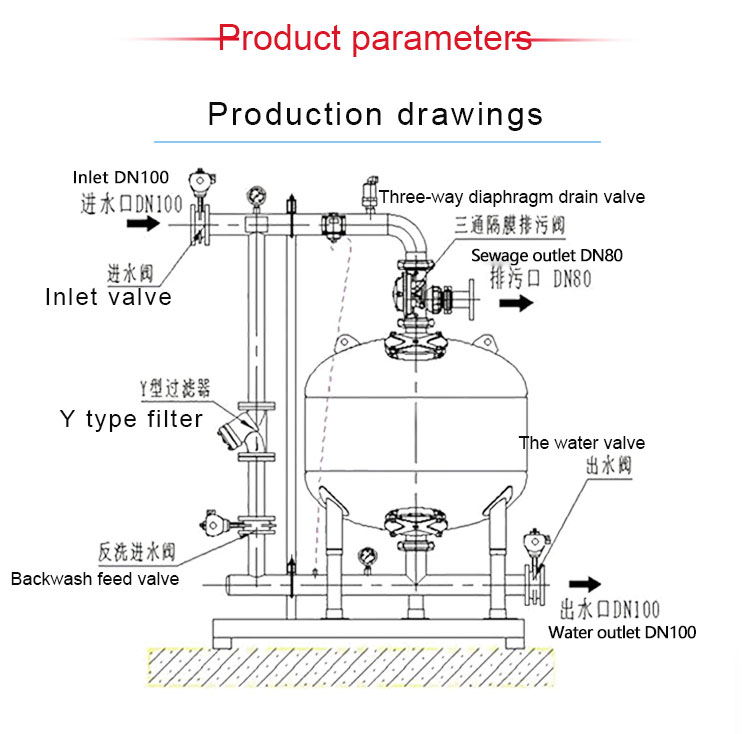
The high-speed shallow sand filter operates on a proven deep-bed filtration principle, where water passes downward
through a layered sand bed that captures suspended solids, particulates, and turbidity-causing materials. The
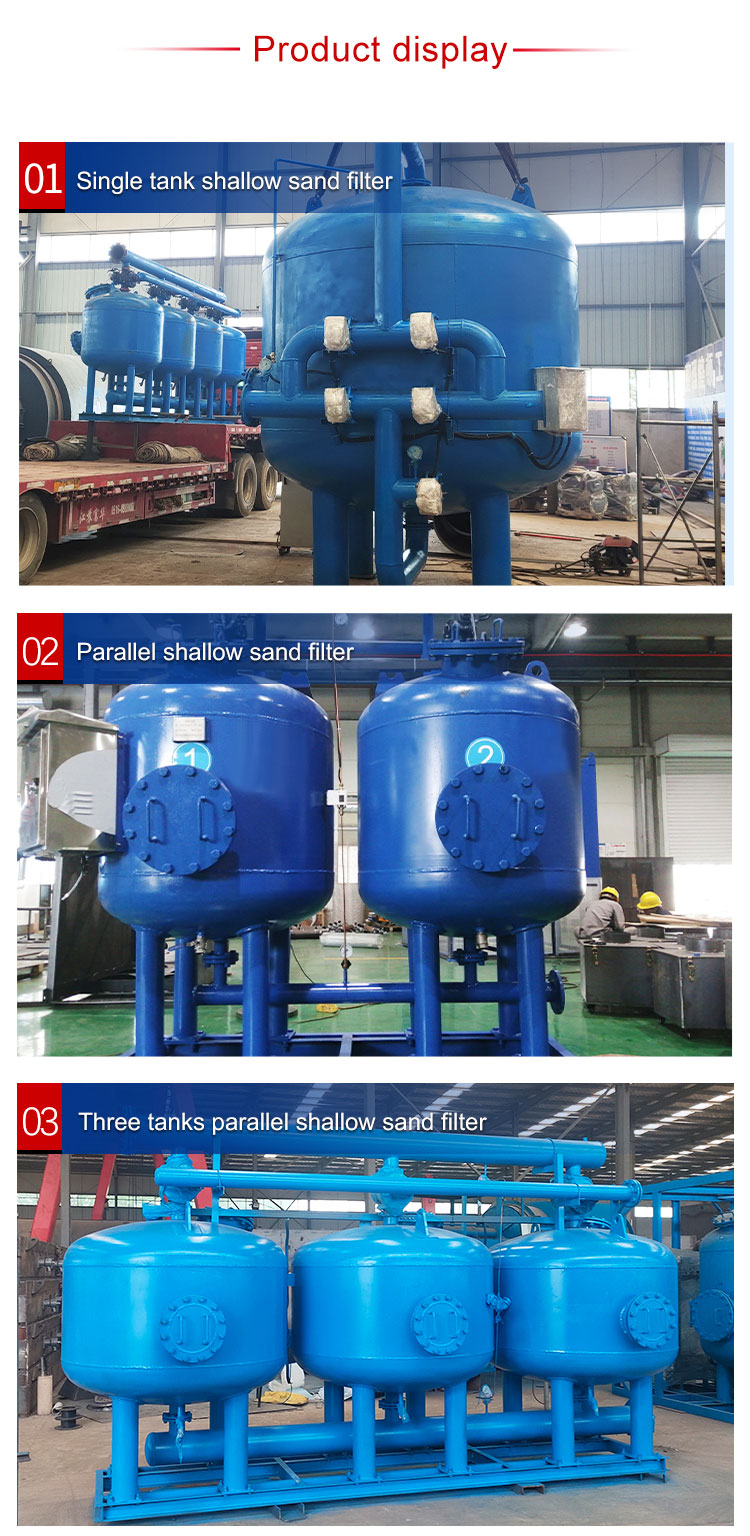
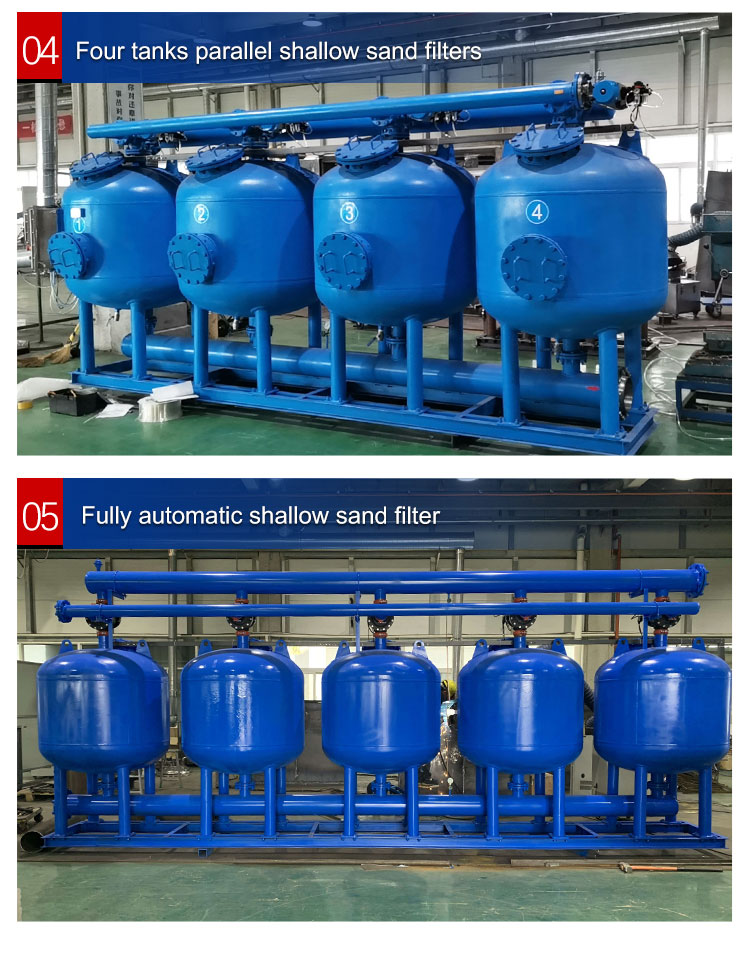
filtration system is configured from standard unit sand tanks, offering modular scalability from 30.6 m³/h to 2,500 m³/h to
accommodate a wide range of flow requirements.
Advanced Water Distribution and Collection: The system incorporates precision-engineered water distribution and
collection devices that ensure uniform flow distribution across the entire filter bed surface. This uniform distribution
prevents channeling, maintains a level sand bed plane throughout the filtration cycle, and ensures consistently
high effluent quality.
Continuous Filtration During Backwash: The filtration process is uninterrupted during backwash cycles. The system's
intelligent control sequencer ensures that when one filter tank undergoes backwashing, the remaining tanks continue
normal filtration, maintaining continuous water supply to downstream processes.
Intelligent Backwash System
The high-speed shallow sand filter features a fully automated backwash system that sets it apart from conventional filters:
Automatic Self-Diagnosis and Control: Backwashing is initiated automatically by the intelligent control system, which
monitors filter performance and triggers cleaning cycles without any manual intervention. The system adapts to
fluctuations in influent suspended solids concentrations, automatically adjusting backwash frequency to maintain optimal
filtration efficiency.
Sequential Backwash with Product Water: Backwashing is performed using filtered product water, eliminating the need
for a separate backwash pump. The backwash process is carried out sequentially—one tank at a time—while the
remaining tanks continue normal operation. This design ensures that the system supplies water without interruption,
even during cleaning cycles.
Efficient Backwash Duration and Water Consumption: Each backwash cycle lasts only 2–3 minutes and consumes less
than 3 m³ of water, representing minimal water loss compared to conventional sand filters that may require significantly
higher backwash volumes and longer durations.
Key Performance Characteristics
Parameter Specification
Normal Filtration Rate 40 m/h
Maximum Filtration Rate 60 m/h
Filtration Accuracy (Impurity Retention) ≤ 0.10 mm
Effluent Turbidity ≤ 0.5 NTU
Backwash Duration 2 – 3 minutes
Backwash Water Consumption < 3 m³ per cycle
Flow Capacity Range 30.6 – 2,500 m³/h
Application Scope
The high-speed shallow sand filter is a versatile solution suitable for a broad spectrum of water treatment applications:
Industrial Water Filtration
· Steel and Metallurgy: Filtration of oxygen lance cooling water, continuous casting spray water, and rolling mill cooling
systems to prevent nozzle clogging
· Power Generation: Boiler feedwater pre-treatment and heat exchanger cooling water filtration
· Chemical Processing: Process water clarification and cooling circuit purification
Municipal and Domestic Water Treatment
· Industrial water, domestic water, and municipal water supply systems requiring effluent turbidity ≤ 5 mg/L to meet
drinking water quality standards
· Urban subdivision water supply systems treating surface river water, lake water, seawater, reservoir water, well water,
and municipal tap water
Wastewater and Reuse Systems
· Removal of suspended solids from industrial sewage prior to discharge or reuse
· Pretreatment for ion exchange softening and desalination systems
· Rough filtration for industrial water supply where ultra-high water quality is not required
Specialized Applications
· Swimming pool circulation treatment systems
· Cooling circulating water purification systems
· Aquaculture and fish farming water treatment
· Agricultural irrigation water pre-filtration
Operational Advantages
Energy Efficiency: The system operates without the need for backwash booster pumps, reducing energy consumption and
simplifying system design.
Water Conservation: With backwash water consumption under 3 m³ per cycle, the system offers significant water savings
compared to conventional filters.
Reduced Maintenance: The automatic control system minimizes operator involvement, while the modular design simplifies
inspection and maintenance.
Space-Saving Design: The shallow bed design allows for a lower profile compared to deep-bed filters, reducing civil works
and installation costs.
Frequently Asked Questions
Q1: What is the difference between a shallow sand filter and a conventional deep-bed sand filter?
Shallow sand filters operate at higher flow rates (40–60 m/h) with a shallower sand bed depth, while deep-bed filters typically
run at 5–15 m/h. The shallow bed design reduces head loss, enables higher throughput, and allows for smaller footprint
systems. However, shallow sand filters are more dependent on uniform water distribution and precise media grading.
Q2: Does the filter require manual intervention for backwashing?
No. The intelligent control system automatically monitors filter performance and initiates backwashing when needed.
The system adapts to changes in influent quality, so manual intervention is not required for routine operation.
Q3: Can the filter maintain continuous water supply during backwashing?
Yes. The system's sequential backwash design ensures that when one tank is being cleaned, the other tanks continue
normal filtration, providing uninterrupted water supply.
Q4: What is the typical backwash frequency?
Backwash frequency depends on influent suspended solids concentration and flow rate. Under normal conditions,
backwashing may occur once or twice per day. The control system automatically adjusts the frequency based on actual
operating conditions.
Q5: What water quality can be achieved with this filter?
Effluent turbidity can be reduced to ≤ 0.5 NTU, and suspended solids retention is effective down to 0.10 mm.
This makes the system suitable for applications requiring high clarity, including potable water production.
Q6: What is the sand media specification for this filter?
The filter uses specially graded sand media with a specific effective size and uniformity coefficient to achieve optimal
filtration performance. Our engineering team will provide the media specification based on your specific application
and water quality.
Q7: Can the filter handle variable flow rates?
Yes. The system is designed to accommodate flow variations. The modular configuration allows operators to bring tanks
online or offline as demand changes, maintaining efficient operation across a broad flow range.
Q8: Is the filter suitable for seawater filtration?
Yes, with appropriate materials of construction (corrosion-resistant coatings or stainless steel components), the filter can
be used for seawater pre-treatment. Please specify seawater application when ordering.
Q9: What maintenance is required for the control system?
The control system requires minimal maintenance. Periodic inspection of sensors, valves, and electrical connections is
recommended. Annual calibration of pressure transmitters and level sensors will ensure optimal control system performance.
Q10: Can the filter be used for tertiary wastewater treatment?
Yes. The high-speed shallow sand filter is an effective tertiary treatment option for removing residual suspended solids
from secondary effluent, enabling water reuse or discharge compliance.
Q11: What is the typical sand replacement interval?
With proper operation and backwash management, the sand media can last 5–10 years. Sand loss during backwashing is
minimal when the system is correctly configured and operated.
Q12: Do you offer custom configurations for specific applications?
Yes. We provide custom solutions including special materials of construction, custom tank sizes, and integrated control
systems to meet your specific application requirements. Please contact our engineering team with your process parameters.
For technical support, custom configurations, or application-specific recommendations, please contact our technical team.
We provide complete solutions including design, supply, installation supervision, and after-sales service.
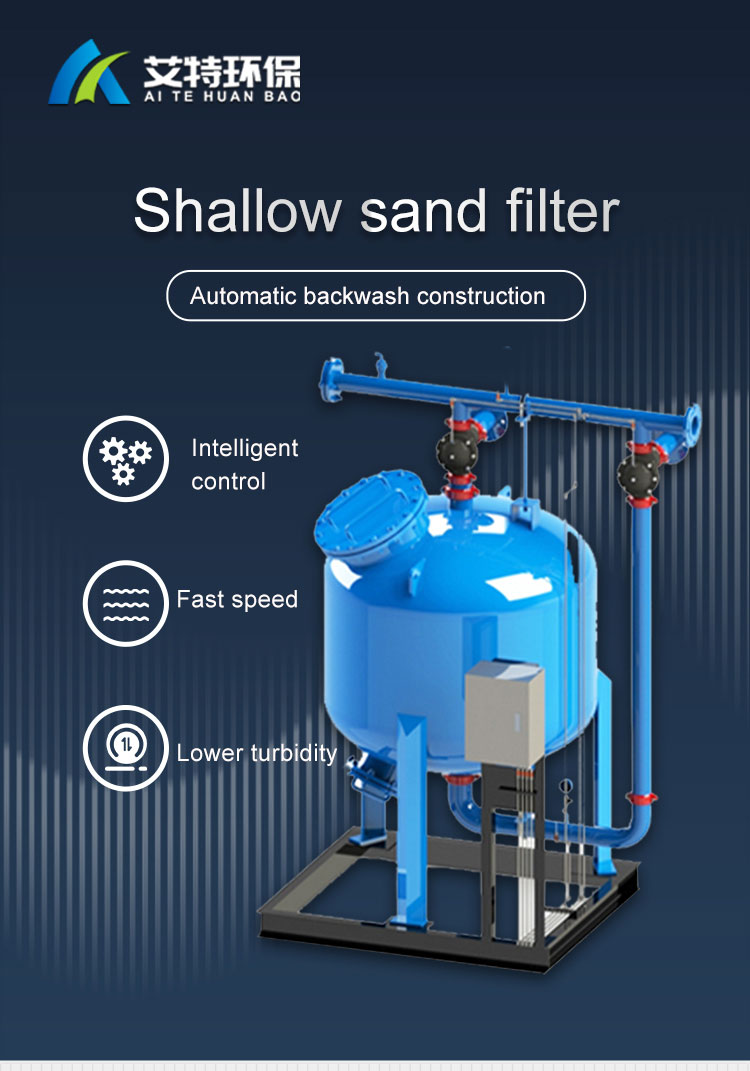
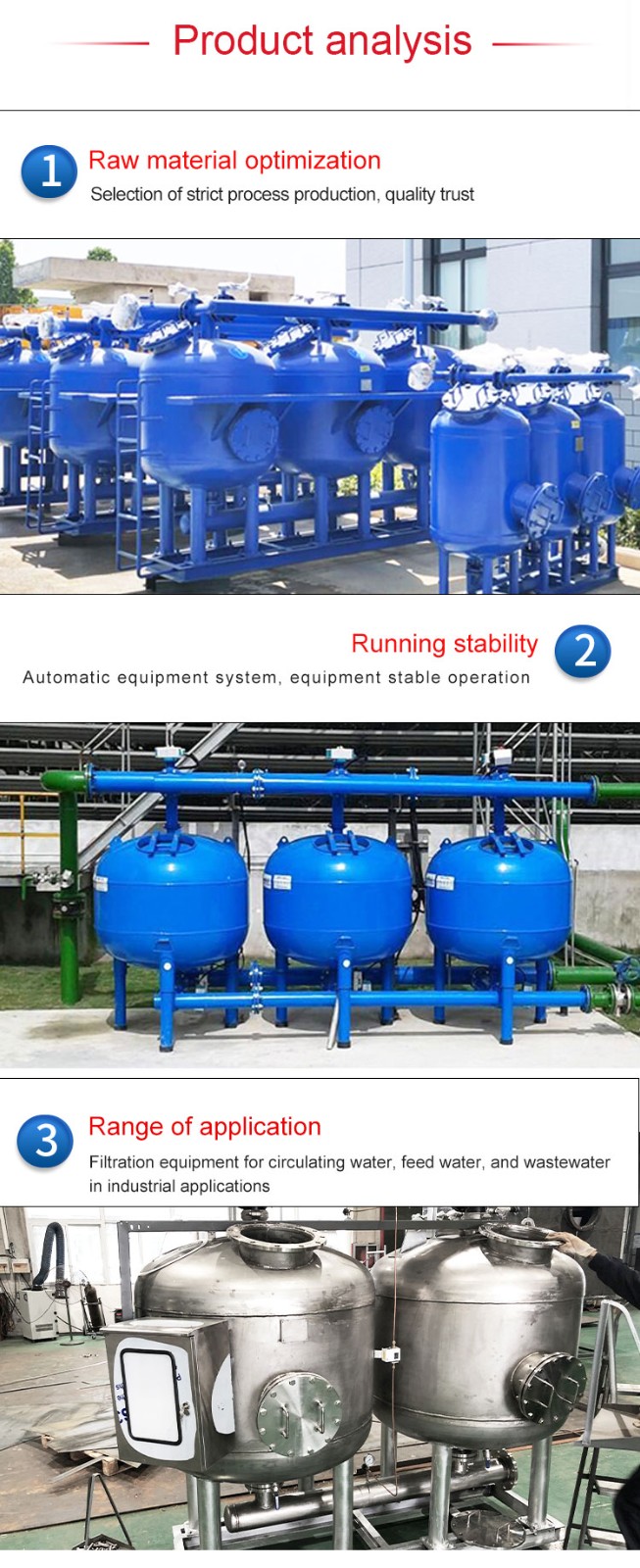
High-speed shallow sand filter
Similar ProductsVIEW MORE >
WhatsApp / Wechat: +8613273719759
Factory Address: Zhengshang Navigation Square, South Hanghai Road, Erqi District, Zhengzhou City, Henan Province P.R.China.


 Export01@aiteeps.com
 ++8613273719759
