
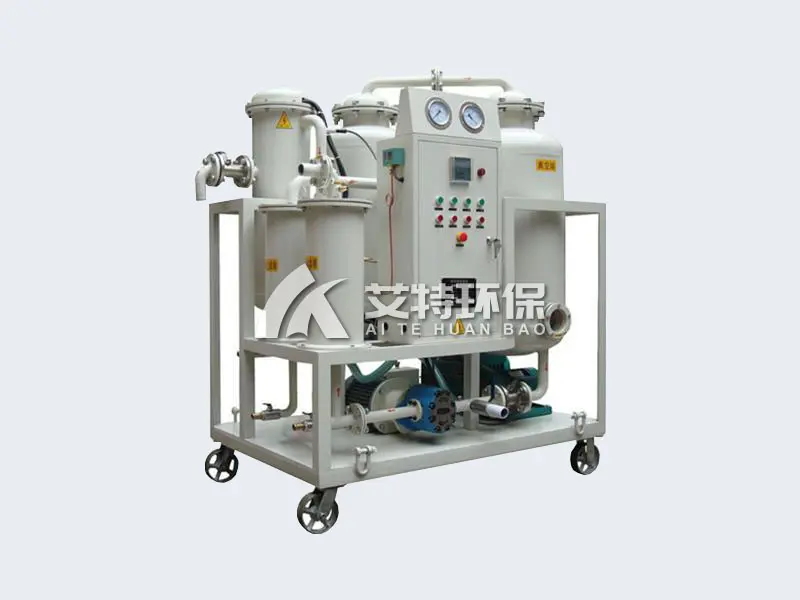
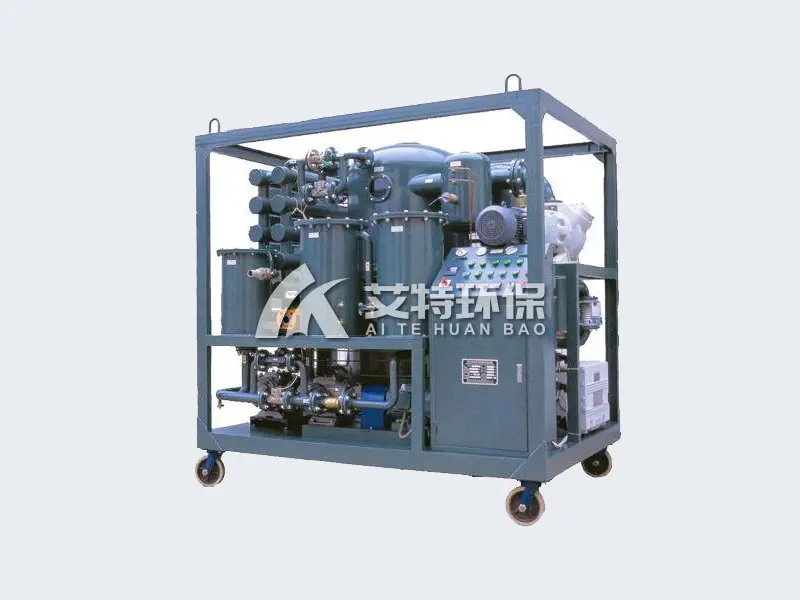
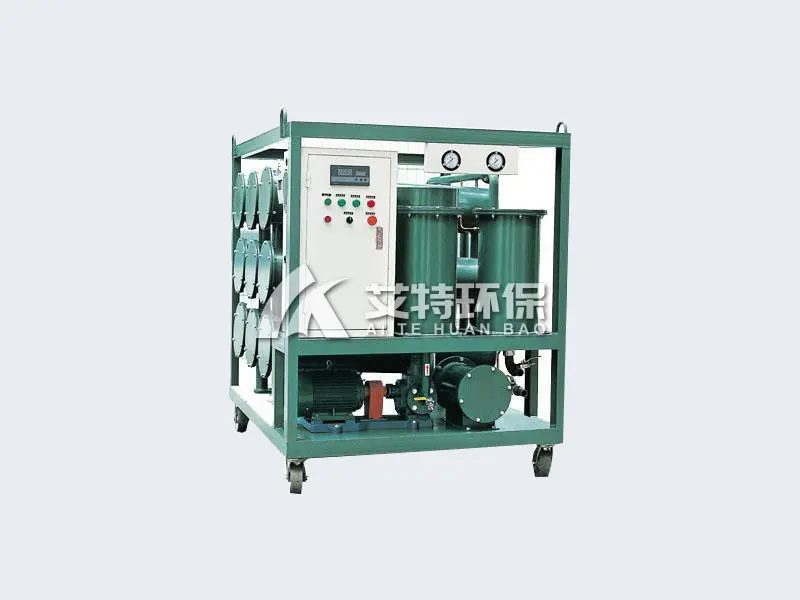
Our stainless-steel vacuum oil filter removes acid, moisture, gas, and particles from fire-resistant oils. No corrosion, no leaks – just restored oil quality, extended service life, and reliable transformer protection
Product Introduction
The anti-fuel oil vacuum oil filter is specifically engineered to remove acidity, moisture,
particulate impurities, dissolved gases, and pigment discoloration from fire-resistant oils,
particularly phosphate ester-based fluids. Given the highly corrosive and hygroscopic nature of fire-resistant oils,
the unit is constructed entirely from stainless steel materials to ensure full chemical compatibility,
eliminating any risk of leakage, corrosion, or fluid degradation during prolonged operation.
Working Principle
This vacuum dehydration system operates on the principle of differing boiling points between water and oil.
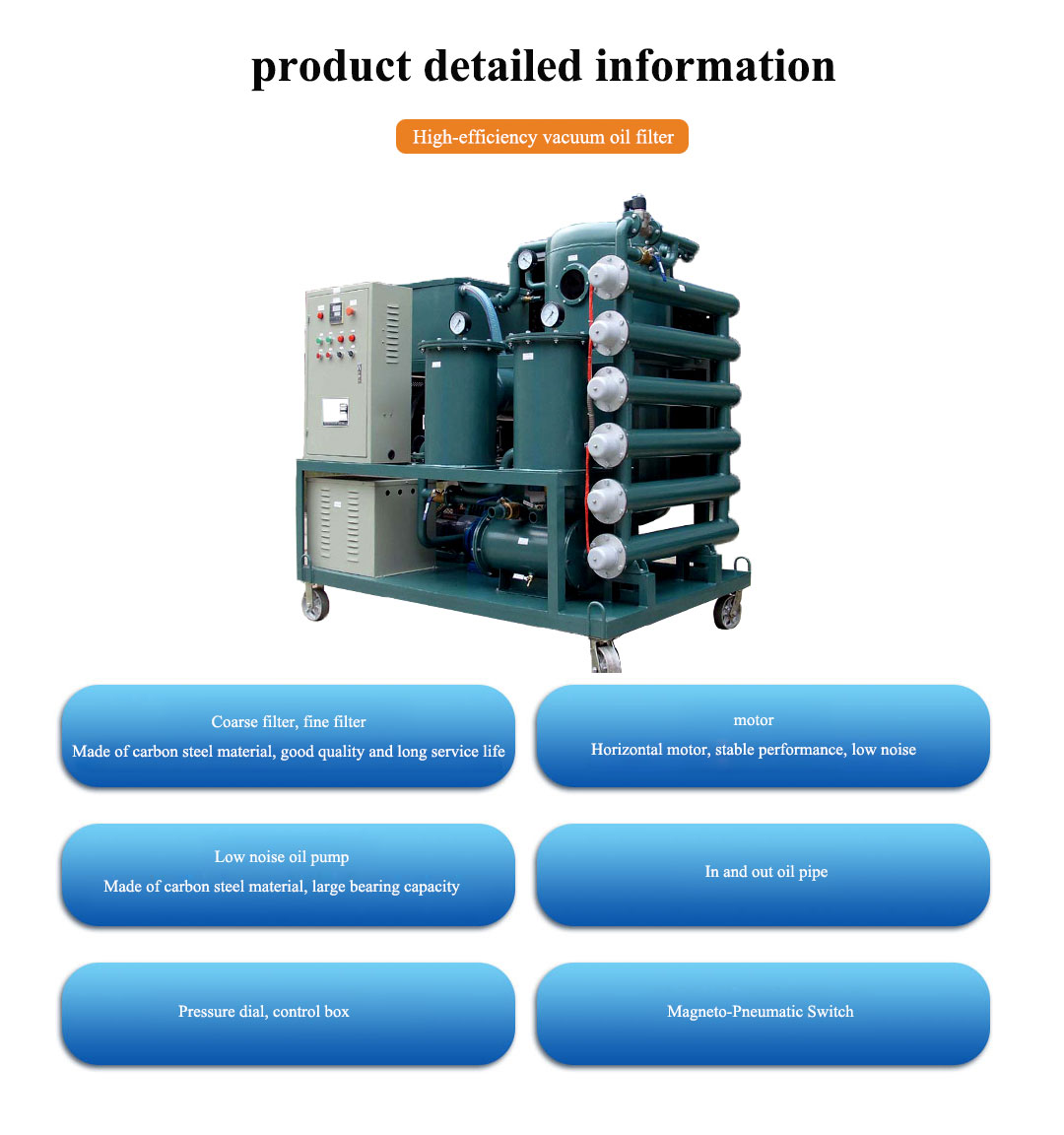
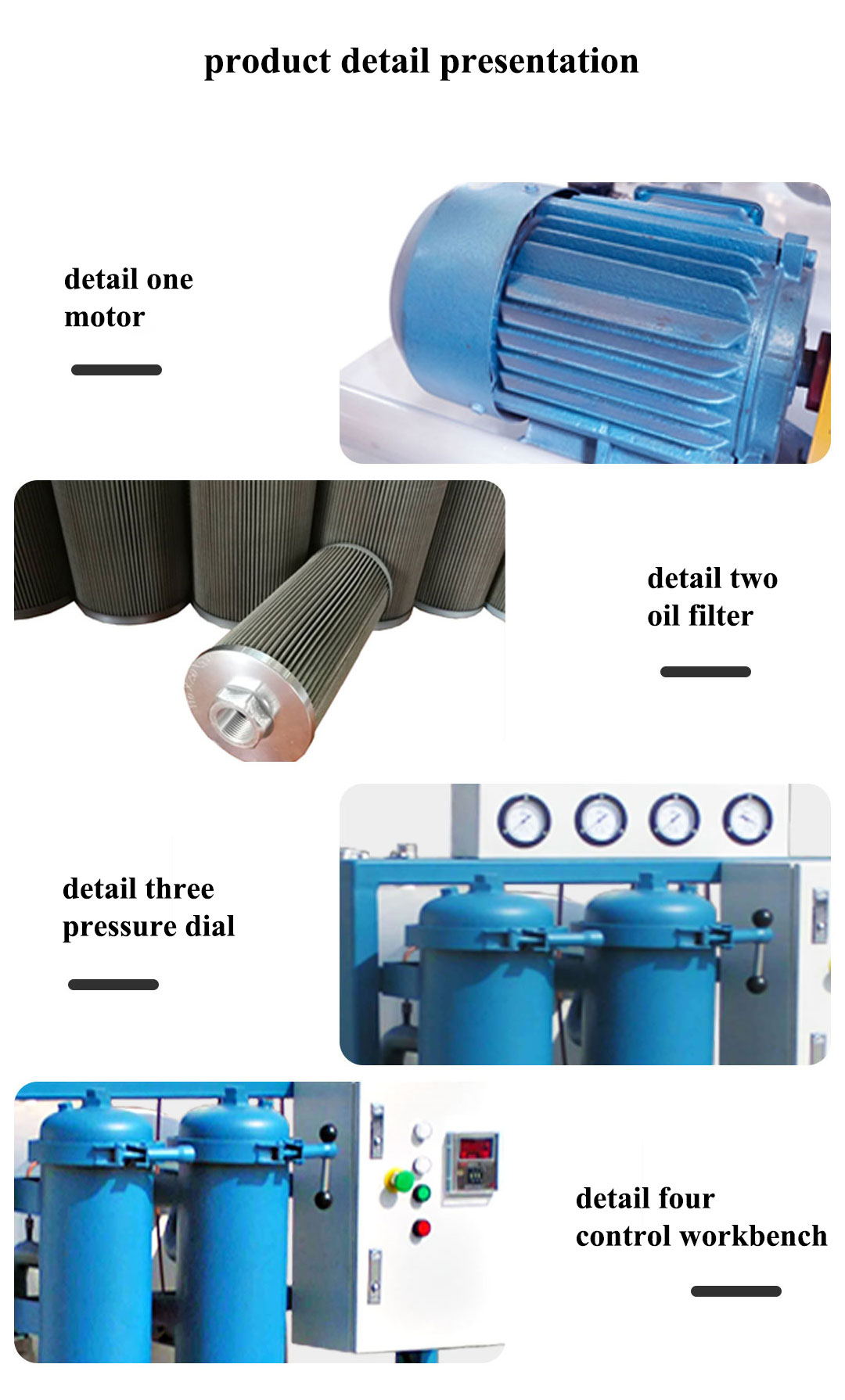
The unit integrates a vacuum heating tank, fine filter, condenser, pre-filter, water collection tank,
vacuum pump, oil discharge pump, and an electrical control cabinet.
The process begins as the vacuum pump evacuates air from the vacuum tank, creating a negative pressure environment.
Under atmospheric pressure, untreated oil enters the pre-filter via the inlet line, where larger particulates are removed.
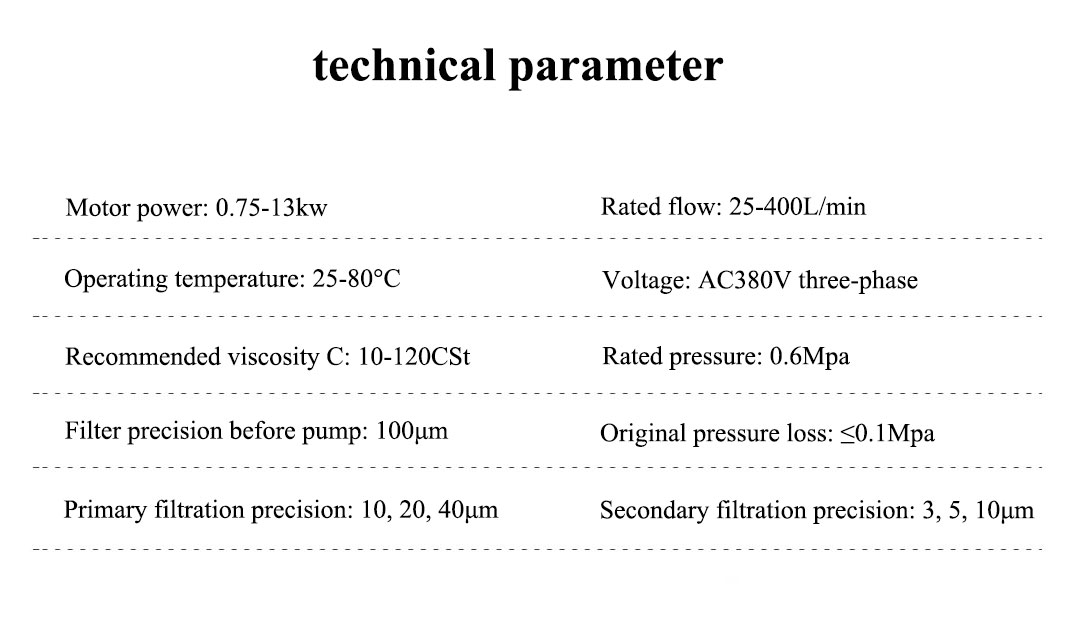
The oil then flows into the heating tank, where it is warmed to 40–75°C to reduce viscosity and enhance water vaporization.
The heated oil passes through an automatic float valve, which precisely maintains the balance
between incoming and outgoing oil flow within the vacuum tank. Upon entering the vacuum chamber,
the oil is rapidly dispersed into a semi-mist state via a high-speed rotating jet nozzle.
This maximizes the surface area, allowing moisture to evaporate instantly into water vapor.
The vapor is continuously extracted by the vacuum pump and directed into the condenser,
where it cools and returns to liquid water for collection and discharge.
Simultaneously, the dehydrated oil in the vacuum tank is pumped by the oil discharge pump through
a fine filter (using filter paper or precision elements) to remove remaining solid contaminants.
The result is a single-pass process that delivers clean, dry, degassed oil – discharged ready for reuse.
Product Applications
1. On-site filtration and oil replenishment for oil-immersed power transformers, current transformers (CTs),
voltage transformers (VTs), and high-voltage oil-less circuit breakers.
2. Hot oil circulation drying for the above equipment on-site, with particular suitability for CTs, VTs,
and oil-less breakers requiring thorough moisture removal.
3. Vacuum oil filling and replenishment, as well as equipment evacuation, for sealed oil-immersed apparatus.
4. Restoration of slightly deteriorated transformer oil, restoring its dielectric strength and physicochemical
properties to meet qualified oil standards.
5. Cross-industry applications – also widely deployed in power plants, substations, metallurgical facilities,
petrochemical plants, machinery manufacturing, transportation, and railway systems.
FAQ
Q1: What types of fire-resistant oils can this vacuum filter handle?
A: It is specifically designed for phosphate ester-based fire-resistant oils, as well as other synthetic or
water-glycol fire-resistant fluids. The all-stainless-steel construction ensures full chemical compatibility
without corrosion or leakage.
Q2: Why is stainless steel construction necessary for fire-resistant oil filtration?
A: Phosphate ester fire-resistant oils are highly corrosive to ordinary carbon steel.
Stainless steel prevents chemical reactions, material degradation, and contamination of the oil itself,
ensuring both equipment longevity and oil purity.
Q3: What is the maximum water content achievable after treatment?
A: The system can reduce moisture content to below 10 PPM (parts per million) after proper processing,
effectively restoring the oil's dielectric strength and oxidation stability.
Q4: Does the heating process damage the oil?
A: No. The oil is gently heated to only 40–75°C under vacuum conditions, which is well below the
thermal degradation threshold of fire-resistant oils. This ensures that the oil's chemical structure and
additive package remain intact.
Q5: How does the vacuum dehydration principle work?
A: By reducing the pressure inside the vacuum tank, the boiling point of water is significantly lowered.
At 40–75°C, water evaporates rapidly while the oil remains in liquid state, allowing efficient separation
without high-temperature stress.
Q6: Can this unit be used for transformer oil that is not fire-resistant?
A: Yes. While optimized for fire-resistant oils, the system can also purify standard transformer oils,
insulating oils, and other mineral oils, provided the viscosity and operating parameters fall within the recommended range.
Q7: Is the unit portable for on-site field service?
A: Yes. The system is designed with mobility in mind, featuring a compact skid-mounted structure with
casters or towing options, making it ideal for on-site maintenance at transformer stations and substations.
Q8: How often do the filter elements need replacement?
A: Replacement frequency depends on the contamination level of the oil being processed.
Regular monitoring of the inlet/outlet pressure differential is recommended. Typically,
filter elements last for multiple batches under normal operating conditions.
Q9: Can the system operate continuously for extended periods?
A: Absolutely. The unit is engineered for continuous duty operation, with automatic controls and
safety interlocks to ensure stable performance over long processing cycles.
Q10: What is the typical processing time for a standard transformer oil volume?
A: Processing time varies based on oil volume, initial water content, and desired final quality.
As a general reference, a standard power transformer oil batch (approx. 5,000–10,000 liters) can
be fully processed within 8–24 hours of continuous operation.
Q11: Does the system remove dissolved gases as well?
A: Yes. The vacuum environment effectively strips dissolved gases (including oxygen, nitrogen, and hydrocarbons)
from the oil, improving its dielectric strength and reducing the risk of gas-related faults.
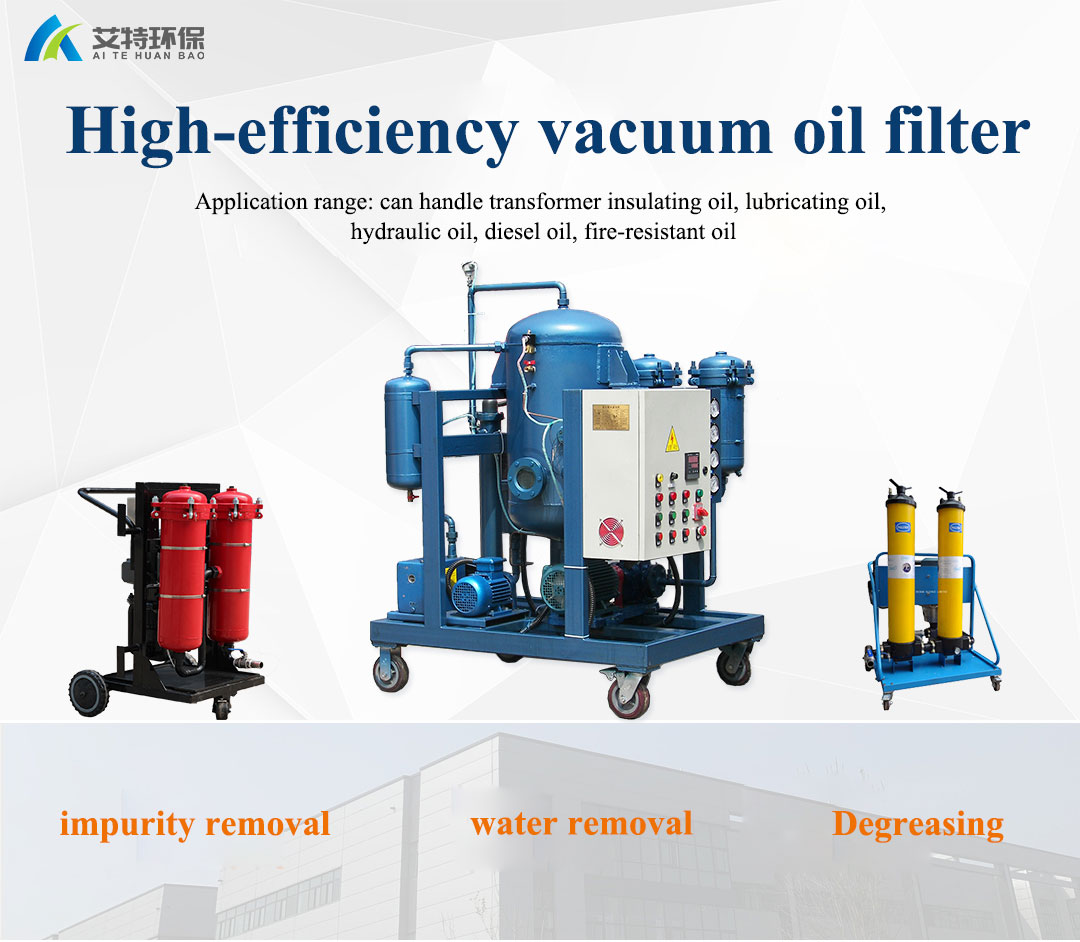
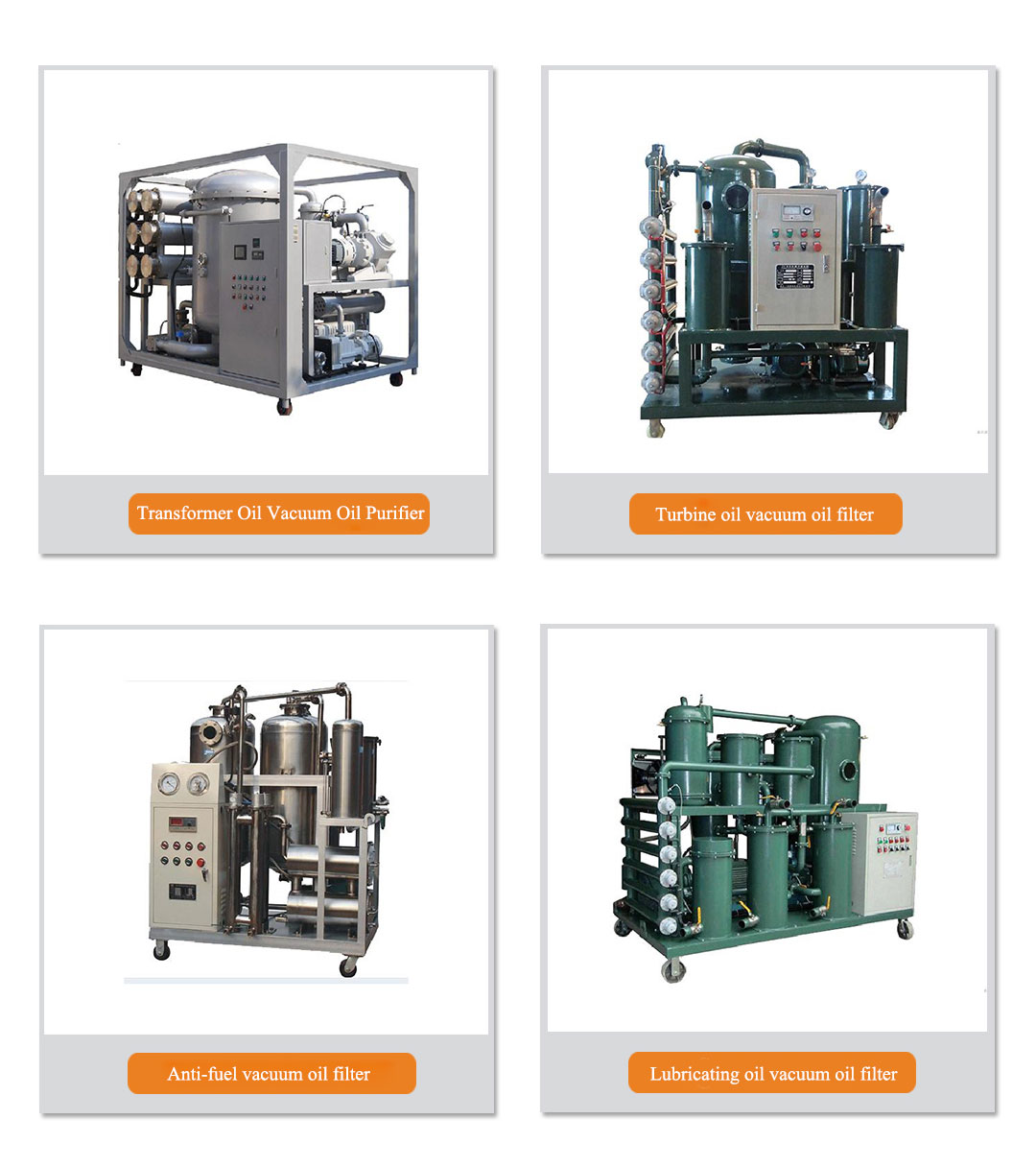
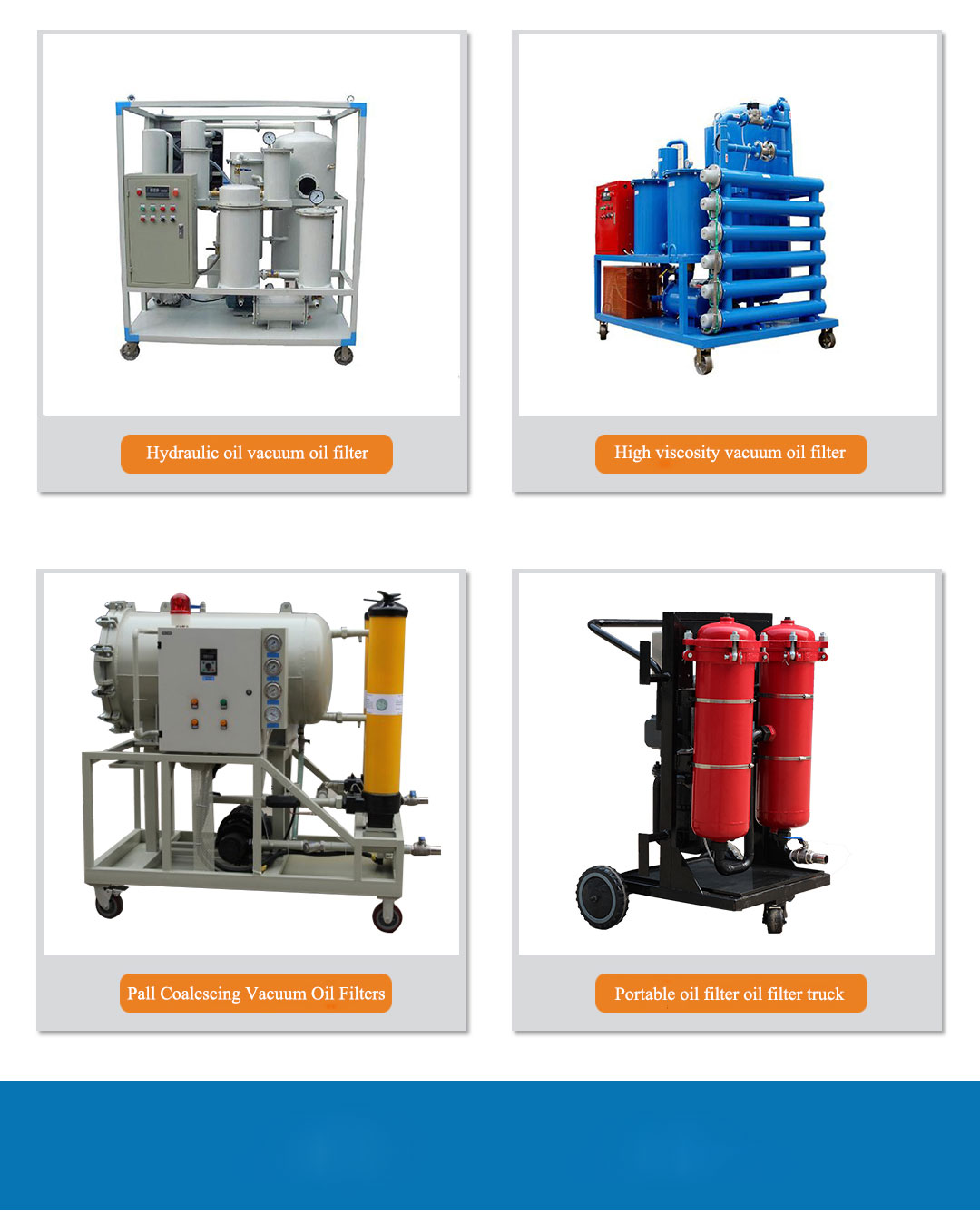
Our vacuum oil filter – stainless, corrosion-free, reliability built-in.
Similar ProductsVIEW MORE >
WhatsApp / Wechat: +8613273719759
Factory Address: Zhengshang Navigation Square, South Hanghai Road, Erqi District, Zhengzhou City, Henan Province P.R.China.


 Export01@aiteeps.com
 ++8613273719759
