
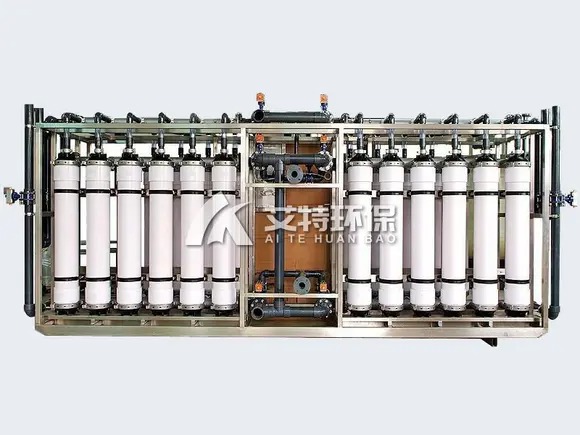
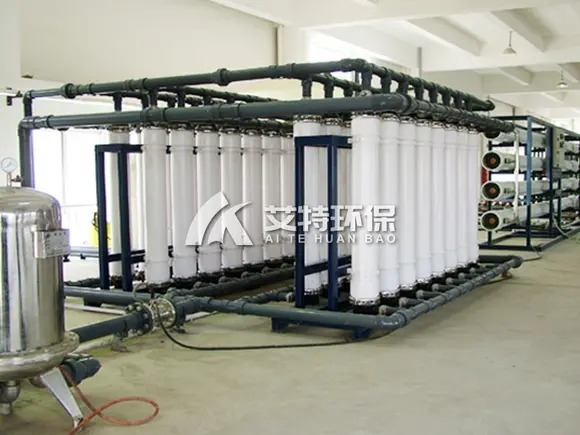
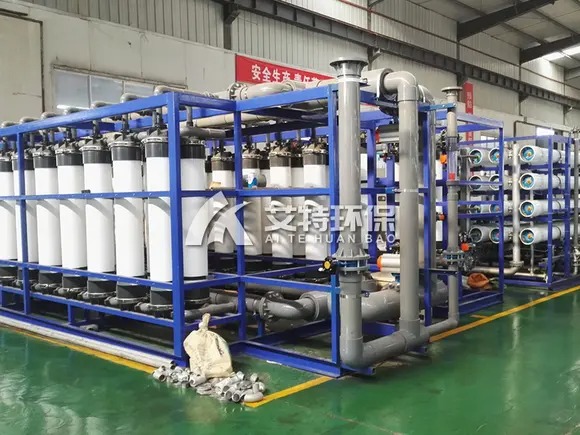
Softening water equipment, that is, reducing water hardness equipment, mainly remove calcium and magnesium ions in the water, in the case of deep well water or water hardness is very large, the use of softening water equipment is to remove the content of calcium and magnesium ions in the water, so that calcium and magnesium ions in the water are reduced.
performance and shorten service life. It is important to note, however,
that Softening Water Equipment primarily exchanges hardness ions with sodium ions and
does not reduce the total dissolved solids (TDS) or overall salt content of the treated water.
Despite this limitation, Softening Water Equipment has become an indispensable component
in a wide range of water-dependent systems, including hot water boiler plants, heat exchange networks,
industrial cooling circuits, central air conditioning systems, and various other water equipment
installations where scale control is critical to operational efficiency.
Softening Water Equipment offers a host of performance advantages that make it the preferred choice for
industrial and commercial water treatment. First and foremost, Softening Water Equipment features a
high degree of automation, ensuring stable and uninterrupted water supply conditions with minimal operator intervention.
The fully automatic control valve monitors water usage and initiates regeneration cycles precisely when needed,
guaranteeing consistent treated water quality around the clock. Additionally, Softening Water Equipment is
engineered for high efficiency and low consumption, significantly reducing salt, water, and energy usage
compared to conventional manual systems. This translates directly into labor savings and lower operating costs,
as Softening Water Equipment eliminates the need for frequent manual monitoring and regeneration scheduling.
Softening Water Equipment is built with durable, pressure-resistant and corrosion-protected tanks that
withstand harsh operating environments. The resin tanks are constructed from high-strength composite
materials or lined steel, providing excellent resistance to internal pressure fluctuations and chemical attack
from brine solutions. This robust construction ensures that Softening Water Equipment delivers reliable
performance over many years of continuous service, even under demanding conditions. Furthermore,
Softening Water Equipment is designed with a compact structural layout that occupies minimal floor space,
making it ideal for installations where room is at a premium. The small footprint of Softening Water
Equipment helps save on capital construction investment, while its straightforward design simplifies installation,
commissioning, and day-to-day operation. All moving parts and control components of Softening Water
Equipment are selected for stable, long-lasting performance, reducing maintenance frequency and downtime.
Softening Water Equipment demonstrates exceptional versatility across a broad spectrum of industrial and
commercial applications. It is widely deployed in steam boiler systems, hot water boilers, heat exchangers,
condensers, central air conditioning plants, gas turbines, and other thermal equipment that require softened
feedwater to prevent scaling on heat transfer surfaces. Beyond heavy industry, Softening Water Equipment is
also extensively used in hotels, restaurants, office buildings, apartment complexes, and other commercial
establishments for domestic hot water treatment. In the food and beverage sector, Softening Water Equipment
ensures product quality by providing consistent water chemistry for brewing, bottling, and food processing.
The textile, printing, and dyeing industries rely on Softening Water Equipment to prevent hardness-related
spotting and improve fabric finish. Laundry facilities, chemical plants, hospitals, and pharmaceutical
manufacturers all benefit from the reliable performance of Softening Water Equipment in their daily operations.
In fact, Softening Water Equipment is recognized as the most widely adopted hard water softening solution
for industrial boilers, cooling circulating water systems, steelmaking and rolling mills, large power transformers,
and civil hot water heating systems.
Softening Water Equipment is available with customizable specifications to meet diverse site requirements.
Typical operating parameters include an inlet water pressure range of 0.2–4.0 MPa, an operating temperature
window of 1–50°C, and the ability to handle raw water hardness up to 10 mmol/L. Softening Water Equipment
operates in fully automatic mode as standard, delivering treated water with a residual hardness of ≤0.03
mmol/L – well within the requirements of most boiler and heat exchange systems. For regeneration,
Softening Water Equipment uses sodium chloride (NaCl), commonly available as raw salt or industrial salt,
which is economical and easy to procure. The regeneration process is triggered either by time clock,
water meter, or manual override, depending on the control system selected. Softening Water Equipment
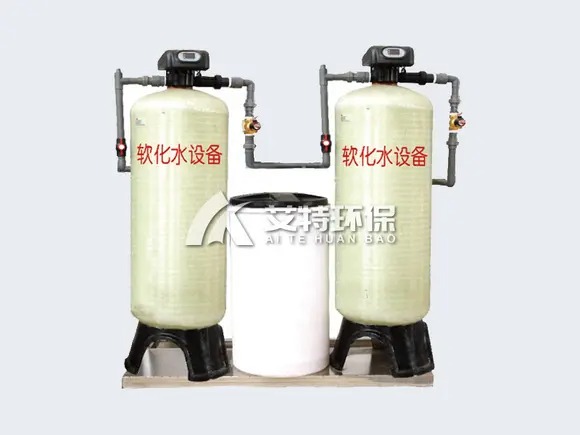
can be supplied in single-tank, twin-tank alternating, or multi-tank parallel configurations to suit continuous
or intermittent operation patterns, ensuring that there is always a Softening Water Equipment solution
that matches your specific flow rate and water quality objectives.
Frequently Asked Questions (FAQ) – Softening Water Equipment
Q1: Does Softening Water Equipment reduce the total salt content of water?
A: No. Softening Water Equipment operates on the principle of ion exchange, where calcium and
magnesium ions are replaced with sodium ions. The total dissolved solids (TDS) remain essentially unchanged.
If TDS reduction is also required, a reverse osmosis (RO) system or deionizer should be used in series after
the Softening Water Equipment.
Q2: How often does Softening Water Equipment need to regenerate?
A: The regeneration frequency of Softening Water Equipment depends on your water hardness,
daily consumption, and the resin volume in the tank. It can be set to regenerate based on time (e.g., every night),
metered volume (e.g., every 50 tons), or manual demand. Most automatic Softening Water Equipment systems
include a programmable controller that initiates regeneration only when necessary, optimizing salt and water usage.
Q3: What type of salt should be used for regeneration of Softening Water Equipment?
A: Softening Water Equipment typically uses sodium chloride (NaCl) in the form of high-purity rock salt,
solar salt, or evaporated salt. We recommend using salt with a purity of at least 99.5% to prevent impurities
from fouling the resin bed or clogging the brine valve. Avoid using salt containing additives such as iodine
or anti-caking agents, as these can damage the Softening Water Equipment resin.
Q4: What is the recommended maintenance schedule for Softening Water Equipment?
A: Routine maintenance for Softening Water Equipment includes checking the salt level in the brine tank weekly,
inspecting the control valve and connections monthly, and performing an annual resin bed cleaning with
a resin cleaner to remove iron or organic fouling. The resin in Softening Water Equipment typically has a
service life of 5–10 years, depending on influent quality and regeneration frequency.
Q5: Can Softening Water Equipment handle hot water or steam directly?
A: Standard Softening Water Equipment is designed for cold water operation at temperatures between 1–50°C.
For high-temperature applications, special high-temperature resin and upgraded tank materials are available.
Please consult our technical team if your Softening Water Equipment will be exposed to feedwater above 50°C.
Q6: What happens if the inlet pressure is outside the specified range for Softening Water Equipment?
A: If the inlet pressure is too low (below 0.2 MPa), Softening Water Equipment may not backwash effectively,
leading to poor regeneration and shortened resin life. If the pressure is too high (above 4.0 MPa),
it could damage the control valve or piping. A pressure regulator or booster pump should be installed
to ensure your Softening Water Equipment operates within the recommended pressure window.
Q7: How do I know when the resin in my Softening Water Equipment needs replacement?
A: Signs that the resin in your Softening Water Equipment needs replacement include gradually increasing
hardness in the treated water despite proper regeneration, excessive salt consumption, reduced flow rate,
or darkening/discoloration of the resin beads. Regular water testing and pressure monitoring will help you
determine the optimal replacement timing for your Softening Water Equipment resin.
Q8: Is Softening Water Equipment suitable for drinking water applications?
A: Yes, Softening Water Equipment can be used for potable water treatment, provided that food-grade
resin and certified control valves are specified. However, please note that Softening Water Equipment
increases sodium content in the water, which may be a concern for individuals on sodium-restricted diets.
For such cases, a separate drinking water tap with reverse osmosis treatment is often recommended in
addition to the Softening Water Equipment.
Q9: What is the difference between single-tank and twin-tank Softening Water Equipment?
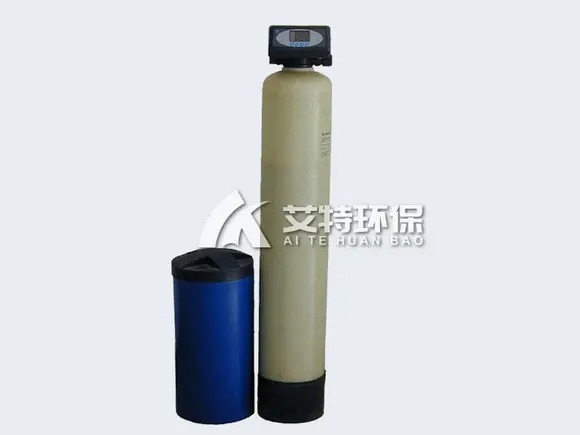
A: Single-tank Softening Water Equipment requires a regeneration pause where softened water is not
available (typically 1–2 hours). Twin-tank Softening Water Equipment alternates between the two
tanks – while one regenerates, the other continues supplying soft water, ensuring 24/7 uninterrupted operation.
The choice depends on whether your process can tolerate intermittent soft water supply.
Q10: Can Softening Water Equipment be installed outdoors?
A: Yes, but Softening Water Equipment should be protected from freezing, direct sunlight, and heavy rain.
If installed outdoors, we recommend providing a weatherproof enclosure and insulating all piping connected
to the Softening Water Equipment to prevent winter freeze damage.
Softening Water Equipment – Efficient Hardness Reduction for Diverse Water Systems
Similar ProductsVIEW MORE >
WhatsApp / Wechat: +8613273719759
Factory Address: Zhengshang Navigation Square, South Hanghai Road, Erqi District, Zhengzhou City, Henan Province P.R.China.


 Export01@aiteeps.com
 ++8613273719759
