
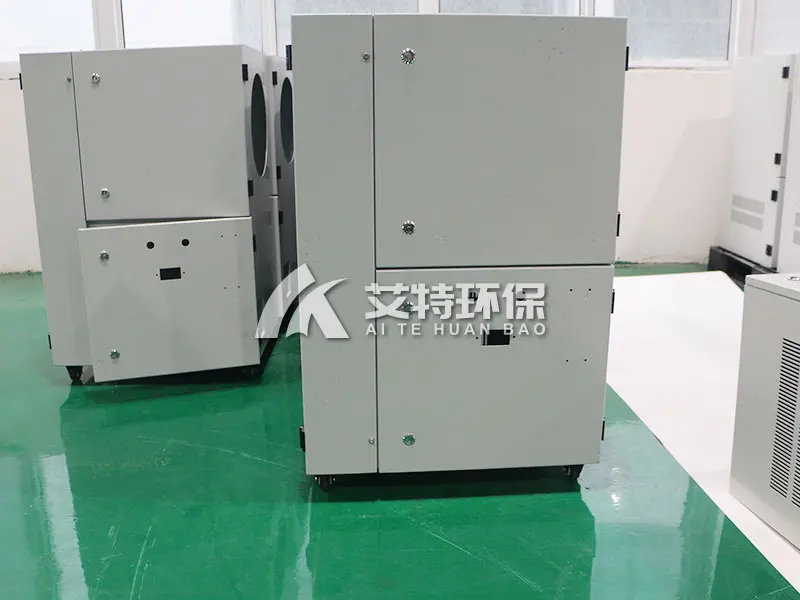
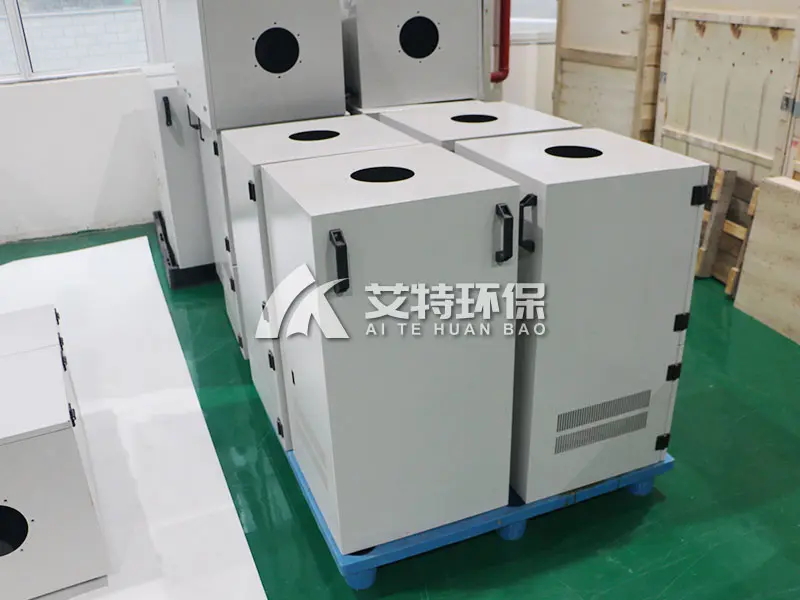
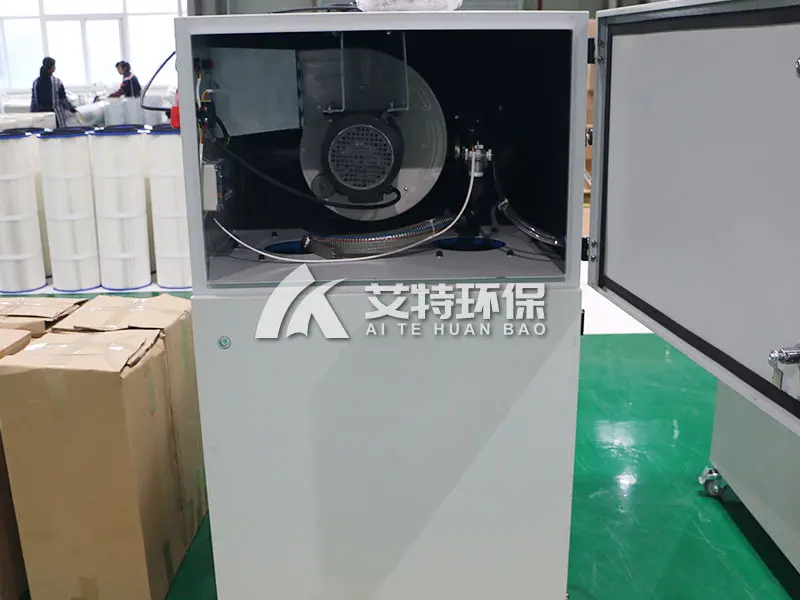
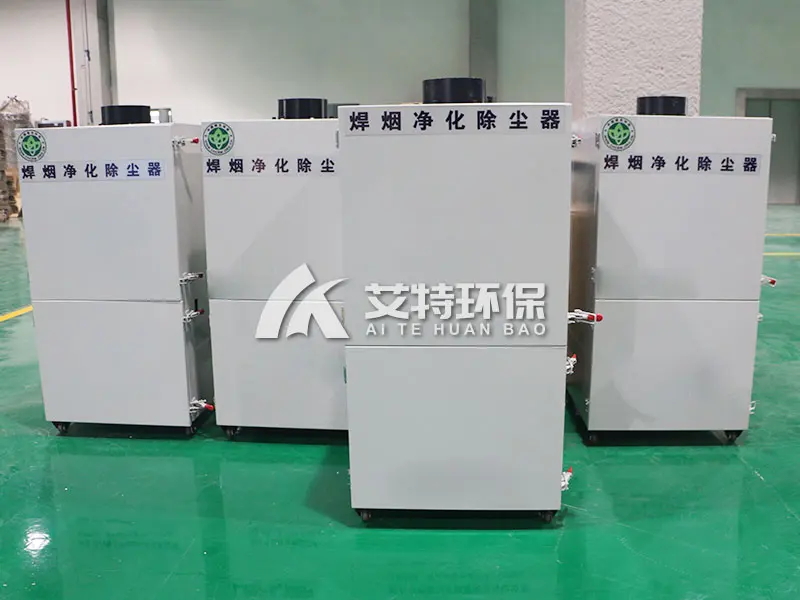
Welding fume purifier, also known as metal welding purification equipment, also known as welding fume purifier.
The Ultimate Guide to Welding Fume Purifiers: Technology, Applications, and Smart Selection
In modern industrial production, welding operations are indispensable. However,
the welding process generates large amounts of harmful fumes, dust, and oil mist,
which not only pollute the working environment but also pose serious threats to the respiratory health of operators.
As environmental regulations become increasingly stringent and awareness of occupational health grows,
the Welding Fume Purifier (also known as metal welding purification equipment or fume extractor) has become
essential safety equipment in workshops worldwide. Choosing the right welding fume purifier is no longer a
luxury—it is a necessity for compliant and responsible manufacturing.
This article provides a comprehensive overview of the latest welding fume purification technologies,
their diverse applications, and answers to frequently asked questions, helping you make an informed decision
for your facility.
1. Product Portfolio: Tailored Solutions for Every Workshop
Our company offers a full range of welding fume purification equipment designed to meet the needs of different
scales and types of welding operations. Our main product lines include:
· Cutting Platform Purifiers: Specifically designed for large-format CNC cutting tables, featuring wide air intakes
and high negative pressure to efficiently capture fumes generated by plasma and laser cutting. This welding fume
purifier variant ensures that even the most intense cutting operations remain clean and safe.
· Metal Welding & Grinding Workshop Systems: Centralized or distributed welding fume purification systems for
large workshops, capable of handling high-concentration smoke and dust generated by multiple workstations simultaneously.
· Metal Welding & Grinding Workbenches: Integrated workstations that combine a working surface with built-in
downward suction, effectively capturing fumes at the source without interfering with the operator's movements.
This type of welding fume purifier is ideal for precision welding tasks.
· Split Welding Purification Workbenches: A modular design that separates the purification unit from the workbench,
offering flexible placement and easier maintenance. This welding fume purifier configuration is ideal for workshops
with limited space.
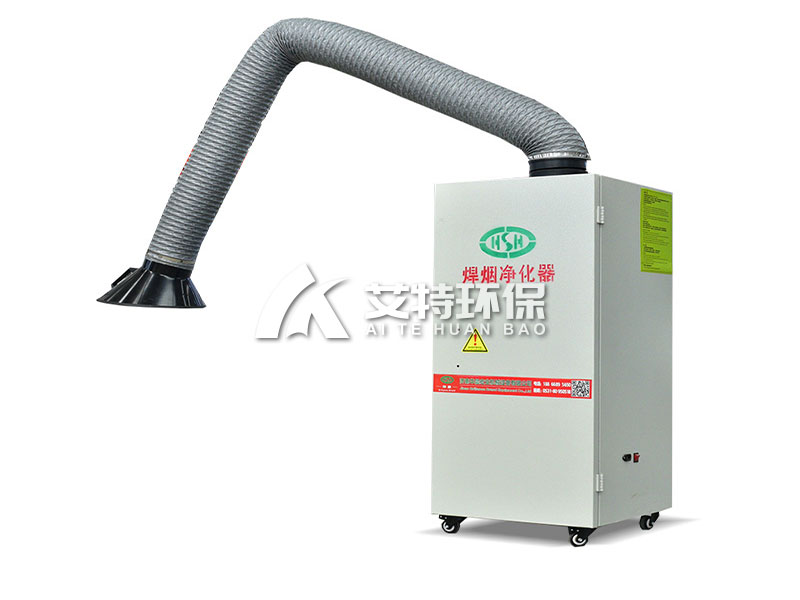
· Mobile Welding Fume Purifiers: Our best-selling series, equipped with casters and flexible extraction arms,
allowing operators to move the unit directly to the welding point. This portable welding fume purifier is perfectly
suited for maintenance plants, assembly lines, and field repair jobs.
· High-Vacuum Centralized Fume Extractors: For large-scale industrial facilities, we offer high-power stationary
welding fume purifier units that can be piped to dozens of extraction points, ensuring a clean environment
across the entire plant.
2. Advanced Working Principle: How Your Welding Fume Purifier Works
Understanding the working principle helps users appreciate the efficiency and reliability of our welding fume
purification equipment. The purification process involves a multi-stage filtration mechanism:
Step 1: Smoke Capture and Spark Arresting
Under the powerful suction generated by the high-efficiency fan, welding fumes and exhaust gases are drawn
into the air inlet of the welding fume purifier through a flexible universal dust hood or side suction slot.
The equipment's inlet is fitted with a high-quality flame arrester. This stainless-steel mesh screen effectively
blocks hot sparks and slag particles produced during welding, preventing them from entering the filter chamber
and reducing the risk of fire—a critical safety feature of every reliable welding fume purifier.
Step 2: Gravity Settling and Primary Separation
After passing through the flame arrester, the smoke and dust-laden air enters the purification chamber of the
welding fume purifier. Here, we utilize the principles of gravity and upward airflow dynamics. The airflow velocity
is deliberately reduced, causing coarse dust particles (larger than 20 microns) to lose momentum and drop directly
into the dust collection drawer at the bottom due to their own weight. This primary separation step significantly
reduces the load on the main filter element, extending the service life of your welding fume purifier.
Step 3: High-Efficiency Filtration
The remaining fine particulate dust (including harmful metallic oxides) is carried upward with the airflow to the
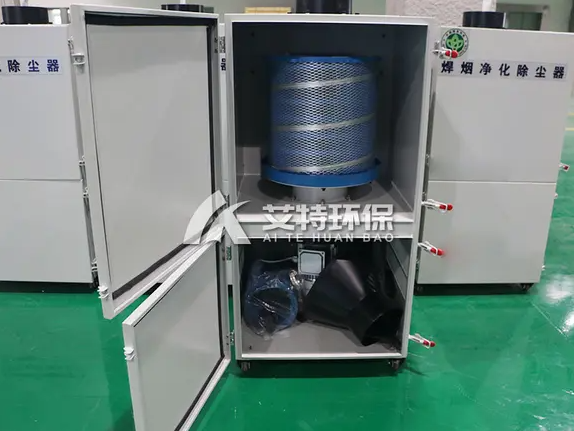
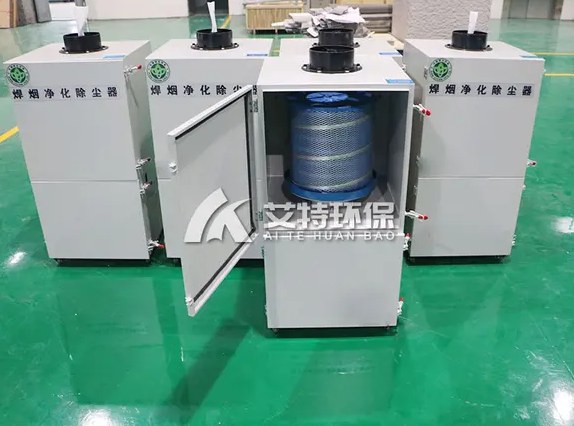
core component—the cartridge filter element. Our welding fume purifier filter elements are made of advanced
PTFE-coated nano-fiber or flame-retardant synthetic media. The fine dust is trapped on the outer surface of the
filter element through mechanisms such as interception, inertial collision, and diffusion, ensuring that your
welding fume purification system delivers exceptional air quality.
Step 4: Clean Air Discharge
After being filtered and purified, the clean, dust-free gas flows into the inner chamber (clean room) from the center
of the filter element. Finally, the purified air is safely discharged into the workshop or connected to an external exhaust system,
meeting the most stringent indoor air quality standards (e.g., OSHA, NIOSH, and GBZ/T 189.7). This is the ultimate proof
of a high-performance welding fume purifier.
Advanced Pulse Jet Cleaning (Optional): For heavy-load applications, our welding fume purifier units can be
equipped with an automatic pulse back-flush system. High-pressure compressed air is injected in reverse through the
filter element, blowing accumulated dust off the surface and into the collection drawer, thereby extending the filter's
service life and reducing maintenance downtime.
3. Extensive Application Places for Welding Fume Purifiers
Welding fume purifiers are no longer limited to metal fabrication. Their versatility makes them invaluable across a
wide spectrum of industries for dust removal, material recovery, and air filtration:
· Tobacco and Food Processing: Removing fine organic dust and ensuring hygiene standards with a dedicated welding
fume purifier or dust collector.
· Pharmaceutical and Chemical Industries: Capturing toxic chemical vapors and active pharmaceutical ingredients (APIs)
during mixing and packaging, where a high-grade welding fume purification system is essential.
· Building Materials and Metallurgy: Collecting heavy metal dust, slag, and abrasive particles using robust welding fume
purifier units.
· Electric Power and Machinery Manufacturing: Purifying the air in transformer welding, turbine maintenance,
and general assembly lines with reliable welding fume purification equipment.
· Cast Iron and Foundries: Extracting resin sand dust and high-temperature fumes through heavy-duty welding fume purifiers.
· Automotive Repair and Maintenance: Removing paint mist and exhaust gases in confined spray booths or repair
pits using mobile welding fume purifier units for maximum flexibility.
4. Frequently Asked Questions (FAQ) About Welding Fume Purifiers
Q1: How often do I need to replace the filter element in my welding fume purifier?
A: The replacement cycle depends on the welding material, operation duration, and dust concentration. Generally,
with regular pulse cleaning, a cartridge filter in a welding fume purifier can last 6 to 12 months.
We recommend checking the pressure gauge weekly; when the differential pressure reaches a certain level (e.g., >1500 Pa),
it indicates that the filter is clogged and needs cleaning or replacement.
Q2: Can this welding fume purifier handle both dry dust and wet oil mist?
A: Our standard welding fume purifier models are designed for dry dust and smoke. For applications involving wet oil
mist or emulsified coolant mist, we offer special oil-resistant filter elements and coalescing pre-filters for your
welding fume purification system. Please specify your working conditions when ordering.
Q3: Is the mobile welding fume purifier noisy?
A: We prioritize user comfort. Our mobile welding fume purifier units are equipped with sound-dampening materials
and optimized fan impellers. The noise level is typically kept below 75 dB(A), which is comparable to normal
conversation levels and well within occupational safety limits.
Q4: What is the recommended suction arm length and diameter for a welding fume purifier?
A: Standard extraction arms for a welding fume purifier range from 2 to 4 meters with a diameter of 150mm to 200mm.
The arm is designed with a friction-lock mechanism, allowing it to be positioned and hold its shape in any direction.
We can customize longer arms for special applications.
Q5: How do I handle sparks to ensure safety with my welding fume purifier?
A: All our welding fume purifier units are fitted with a built-in flame arrester. Additionally, for heavy spark applications
(e.g., gouging or carbon arc cutting), we recommend adding a cyclonic spark trap before the main inlet of the welding
fume purifier. Our electrical panels also feature thermal overload protection to prevent overheating.
Q6: Can I connect multiple welding stations to one large welding fume purifier?
A: Yes! Our centralized welding fume purification systems are designed for this purpose. We can design a piping
network with dampers at each branch, allowing you to open or close suction at specific stations as needed,
saving energy and maximizing the efficiency of your main welding fume purifier.
Q7: Does the purified air from the welding fume purifier meet environmental emission standards?
A: Absolutely. Our standard filter media in every welding fume purifier achieves a filtration efficiency of over 99.9% for
particles as small as 0.3 microns. The outlet air concentration is typically below 1 mg/m³, which complies with both
Chinese (GB) and international environmental regulations.
Q8: How do I choose the right welding fume purifier model for my workshop?
A: Selection depends on three key factors: 1) The number of simultaneous welding operators, 2) The type of welding
(MIG, TIG, Stick, or Plasma), and 3) The material (mild steel, stainless steel, or aluminum). Please contact our sales engineers;
we will conduct a free on-site or online survey to recommend the optimal air volume (CFM/m³/h) and welding fume
purifier configuration for your needs.
Conclusion
Investing in a high-quality welding fume purifier is not just a regulatory requirement—it is a commitment to your
workforce's health and productivity. With our advanced welding fume purification technology and tailored solutions,
you can create a cleaner, safer, and more compliant working environment. For more technical data or a customized
quote on our welding fume purifier lineup, please reach out to our team today.
Welding fume purifier
Similar ProductsVIEW MORE >
WhatsApp / Wechat: +8613273719759
Factory Address: Zhengshang Navigation Square, South Hanghai Road, Erqi District, Zhengzhou City, Henan Province P.R.China.


 Export01@aiteeps.com
 ++8613273719759
