
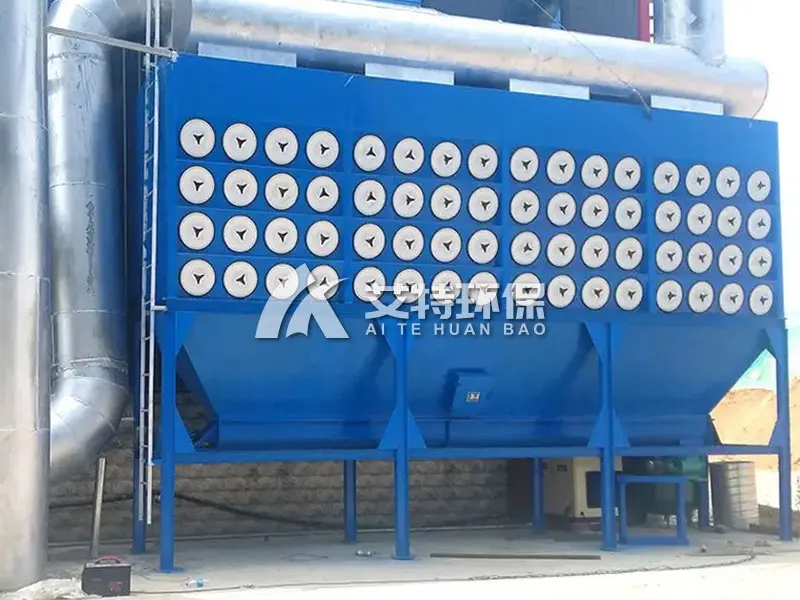
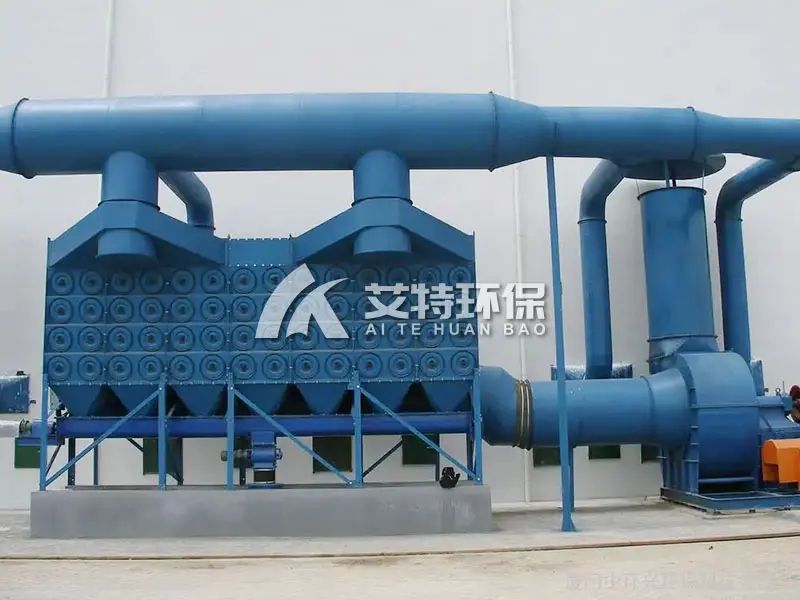
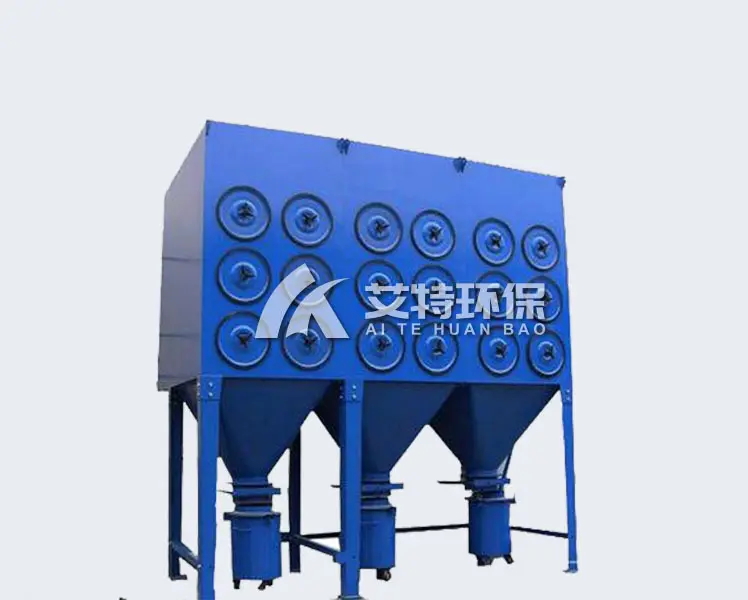
The pleated filter cartridge dust collector is composed of a filter cartridge as a filter element or a pulse jet dust collector.
The Pleated Filter Cartridge Dust Collector is a high-efficiency pulse-jet cleaning system that utilizes pleated
filter cartridges as the primary filtration element. This design offers significantly higher filtration area per
unit volume compared to traditional baghouse systems, resulting in compact equipment footprint and
superior dust collection performance.
The filter cartridges are available in a range of materials to suit various application conditions: long-fiber polyester,
composite fiber, anti-static, flame-retardant, and PTFE membrane-coated options. These material variants
enable optimal performance across diverse dust characteristics and operating environments.
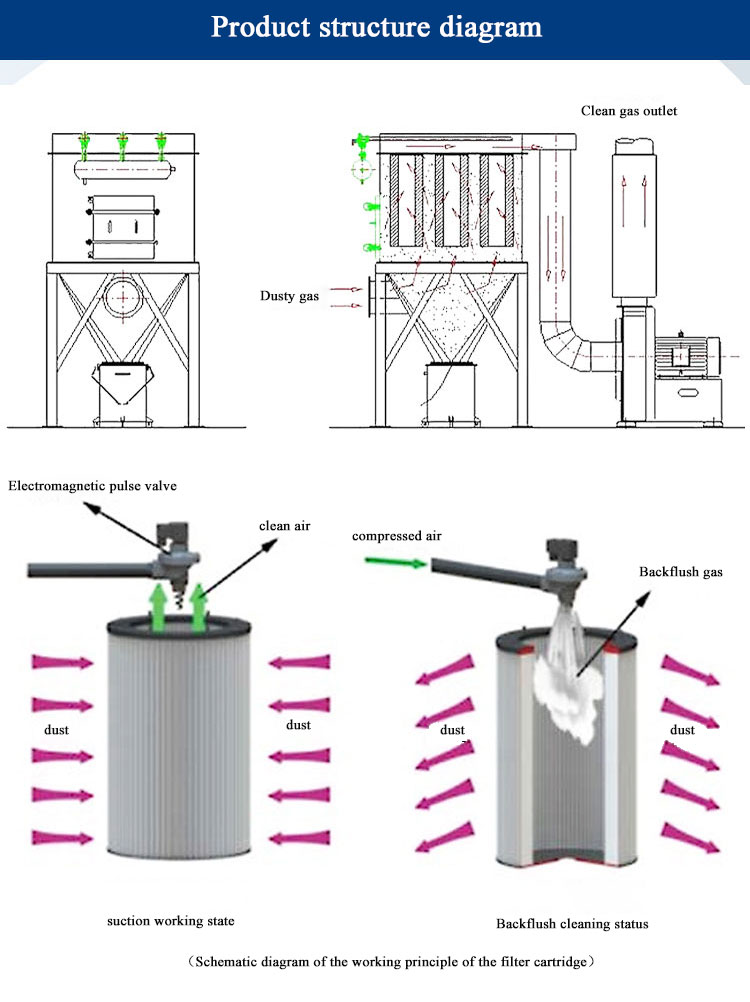
Product Structure
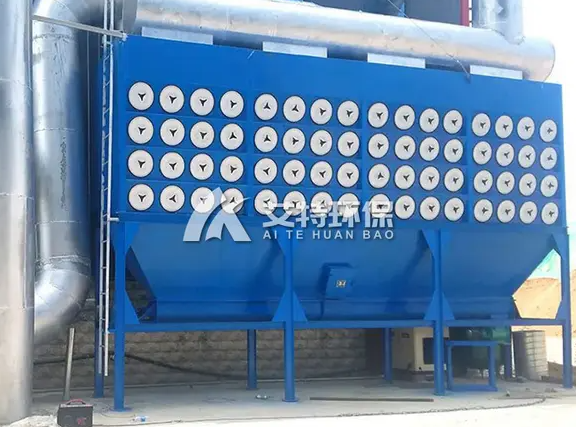
The pleated filter cartridge dust collector comprises the following main components:
Component Function
Air inlet duct Directs dust-laden gas into the collector
Exhaust duct Discharges purified gas to atmosphere or process
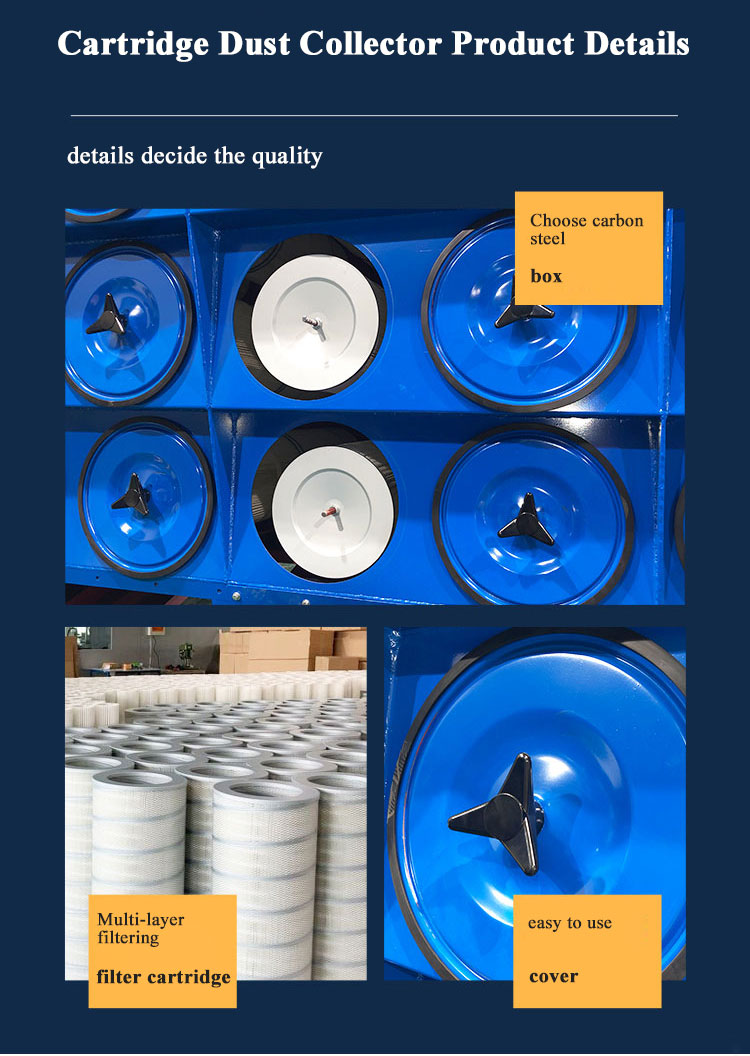
Box/housing Encloses the filtration system, supports internal components
Ash hopper Collects and stores separated coarse dust particles
Pulse-jet cleaning system Periodic compressed air bursts to remove accumulated dust from cartridge surfaces
Flow distribution plate Evenly distributes inlet airflow to all filter cartridges
Filter cartridges Primary filtration media – pleated design maximizes surface area
Electric control system Automates pulse cleaning cycles and monitors system operation
The overall configuration is similar to an air-box pulse-jet baghouse but utilizes rigid pleated cartridges instead of fabric bags,
offering improved dust release and extended service life.
Working Principle
Dust-laden gas enters the ash hopper through the air inlet, where the sudden expansion of the airflow cross-section,
combined with the flow distribution plate, causes coarse particles to settle under the action of gravity and inertial forces.
The remaining finer dust-laden gas then passes through the filter cartridges. Dust particles are deposited on the filter
medium surface through the combined mechanisms of Brownian diffusion, direct interception, and inertial impaction.
The purified gas passes through the cartridge media into the clean-air chamber and is discharged via the exhaust duct
and induced-draft fan.
Periodically, the pulse-jet cleaning system releases high-pressure compressed air bursts in reverse direction,
flexing the cartridge pleats and dislodging accumulated dust, which falls into the ash hopper for disposal or material recovery.
Key Features
1. High Filtration Area – Pleated cartridge design provides 2–3× the filtration area of conventional bags in the same volume,
enabling lower filtration velocity and extended service life.
2. Compact Footprint – Reduced equipment size compared to baghouses, saving valuable plant floor space.
3. Excellent Dust Release – Rigid pleated structure and membrane coating options ensure superior dust cake release
during pulse cleaning.
4. Versatile Media Selection – Multiple cartridge materials available for different dust characteristics
(combustible, hygroscopic, abrasive, high-temperature, etc.).
5. Low Operating Resistance – Maintains stable differential pressure over extended operating cycles.
6. Easy Maintenance – Top-access or side-access cartridge replacement options minimize maintenance downtime.
Product Specifications
Parameter Specification
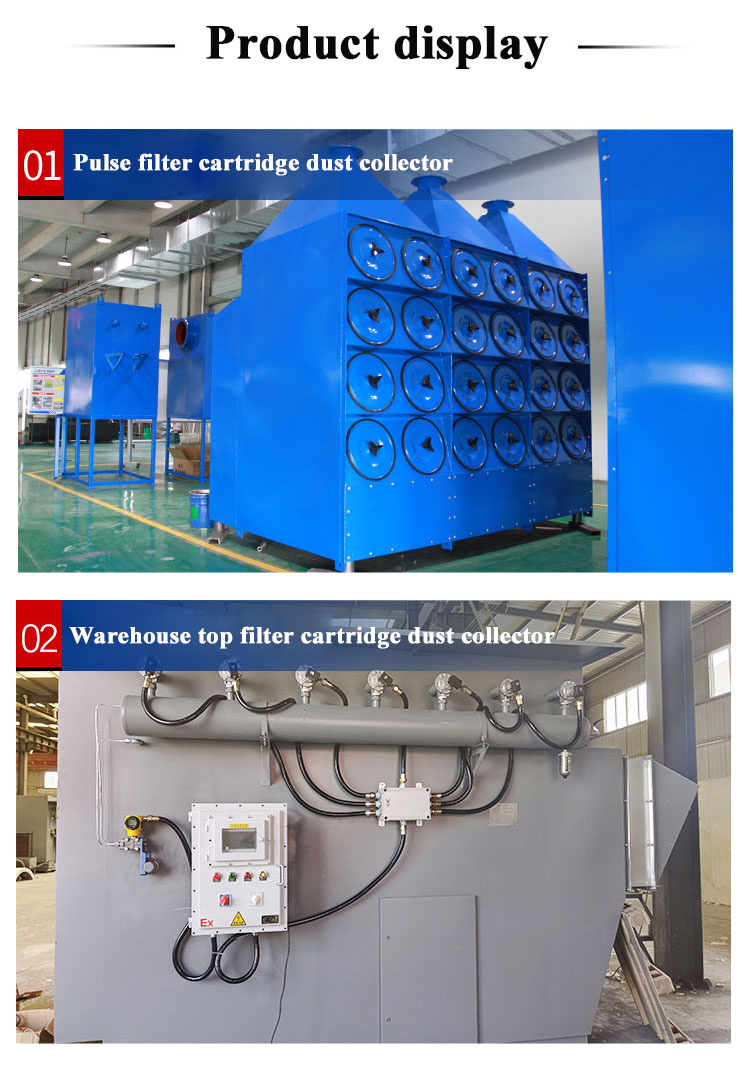
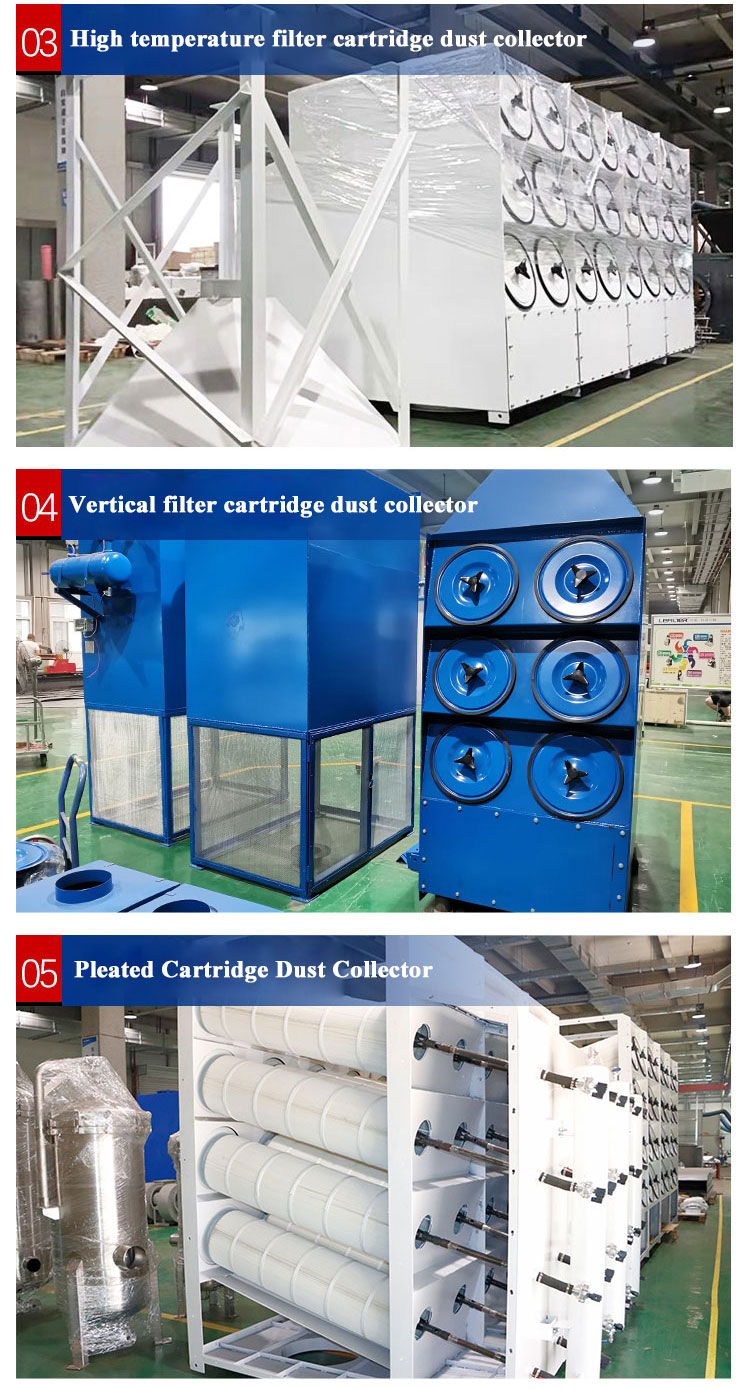
Installation types Oblique insertion, side-mount, top-mount, hoist/suspension
Cartridge media options Long-fiber polyester, composite fiber, anti-static, flame-retardant, PTFE membrane-coated
Cleaning method Pulse-jet (compressed air reverse flow)
Control system PLC or relay logic with differential pressure and time-based cleaning
Housing material Carbon steel (standard); stainless steel available
Applications Dust control, product/material recovery
Applications
1. Metallurgical Industry – Dust collection in steelmaking blast furnace systems, sintering plants, ferroalloy production,
and non-ferrous metal smelting.
2. Building Materials Industry – Cement production (kiln and mill exhaust), lime kilns, gypsum processing,
and glass manufacturing.
3. Power Generation – Coal-fired boiler flue gas dust removal, biomass boiler systems, and coal handling dust control.
4. Chemical Industry – Process gas purification, product recovery from pneumatic conveying, and reactor vent filtration.
5. Carbon Black & Asphalt – Carbon black collection, asphalt concrete mixing plant exhaust, and bituminous material
processing.
6. General Industrial – Welding fume extraction, woodworking dust collection, food processing,
and pharmaceutical powder recovery.
FAQ
Q1: What is the advantage of pleated filter cartridges over traditional bag filters?
A: Pleated cartridges offer 2–3 times the filtration area of bags in the same volume, resulting in a more compact collector,
lower filtration velocity (which extends media life), and improved dust cake release during pulse cleaning.
They also eliminate bag cage requirements and reduce maintenance complexity.
Q2: What filtration precision can these cartridge dust collectors achieve?
A: Depending on the selected media, pleated cartridges can achieve filtration efficiency of 99.9% for particles
down to 0.3–1μm. PTFE membrane-coated cartridges offer the highest efficiency (≥99.99%) for sub-micron dust.
Q3: How do I select the correct cartridge material for my application?
A: Selection depends on dust characteristics: anti-static for combustible/explosive dust, flame-retardant for
high-temperature or spark-laden streams, PTFE membrane for sticky/hygroscopic dust,
and polyester for general applications. Please consult our technical team with your dust properties and operating conditions.
Q4: What is the typical cleaning pressure for the pulse-jet system?
A: Standard cleaning pressure is 0.4–0.6 MPa (4–6 bar). For membrane-coated cartridges, we recommend
lower pressure (0.3–0.4 MPa) to prevent membrane damage. A refrigerated air dryer and oil-water separator
are mandatory to ensure clean, dry compressed air.
Q5: How often should the filter cartridges be replaced?
A: Cartridge service life depends on dust loading, operating temperature, and cleaning efficiency.
Under normal conditions, cartridges typically last 12–24 months. Monitor differential pressure—when
it exceeds the replacement threshold (typically 1.5–2.0 kPa) even after cleaning, replacement is required.
Q6: Can these cartridges handle high-temperature flue gas?
A: Standard polyester cartridges handle up to 120°C. For higher temperatures, we offer high-temperature
media options (Nomex®/aramid up to 200°C, PPS up to 160°C, PTFE up to 260°C). Please specify your flue
gas temperature when ordering.
Q7: What is the recommended inlet dust concentration range?
A: The pleated cartridge collector handles inlet dust concentrations up to 500 g/m³ for coarse dust and
100 g/m³ for fine dust. For concentrations above these levels, we recommend a pre-separation cyclone
ahead of the cartridge collector to reduce loading and extend cartridge life.
Q8: How does the pulse-jet cleaning sequence work?
A: The control system activates solenoid valves in sequence, releasing short bursts of compressed air into
the clean-air chamber. This reverse airflow flexes the pleated cartridges, dislodging accumulated dust cakes
which fall into the ash hopper. Cleaning can be triggered by time intervals, differential pressure, or both.
Q9: Can this dust collector recover valuable product materials?
A: Yes. When used in product recovery applications (e.g., food powders, chemicals, carbon black),
the collected material can be discharged from the ash hopper and returned to the production process,
reducing waste and improving yield.
Q10: What safety features are available for combustible dust applications?
A: For combustible dust (e.g., coal, wood, grain, carbon black), we offer anti-static cartridges,
explosion-relief vents (NFPA-compliant), spark arrestors, and inerting systems. Our engineering team
can design a fully compliant dust collection system for your hazardous environment.
Q11: What is the typical pressure drop across the filter cartridges?
A: Clean cartridge pressure drop is typically 300–500 Pa. The system is designed for operating drop up to 1,500 Pa.
We recommend initiating pulse cleaning at 1,000–1,200 Pa for optimal performance.
Q12: Do you offer turnkey installation and commissioning support?
A: Yes. We provide complete engineering support, including system design, equipment supply, installation guidance,
and on-site commissioning. After-sales service and spare parts supply are also available upon request.
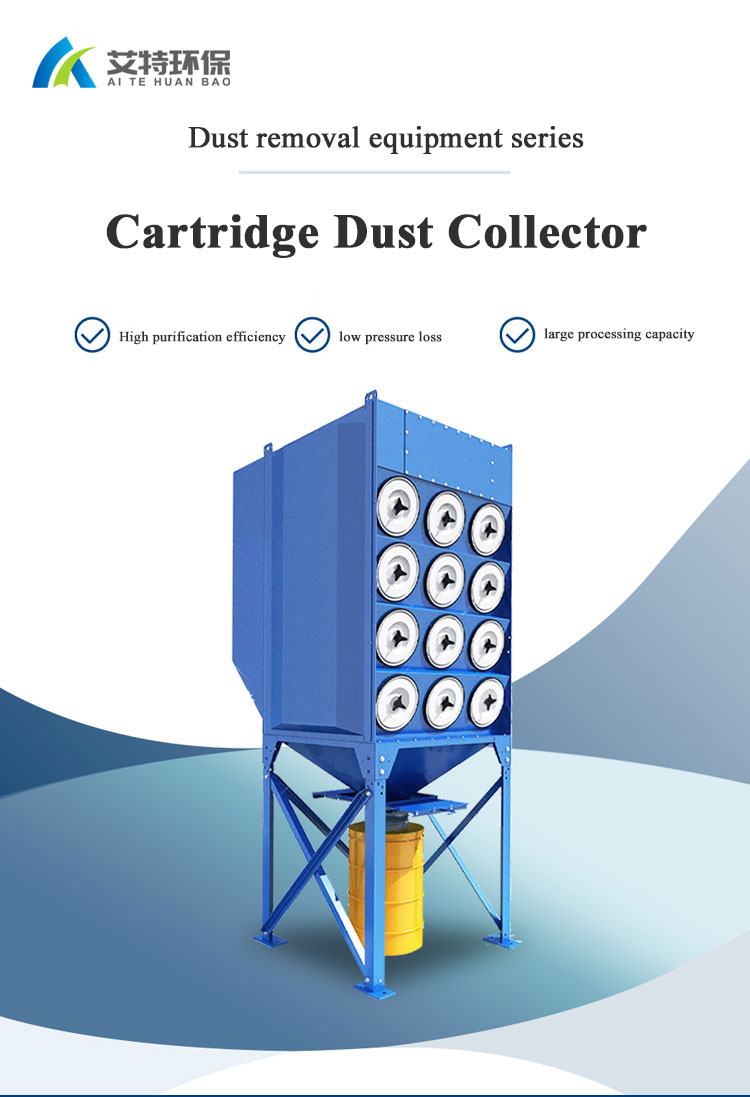
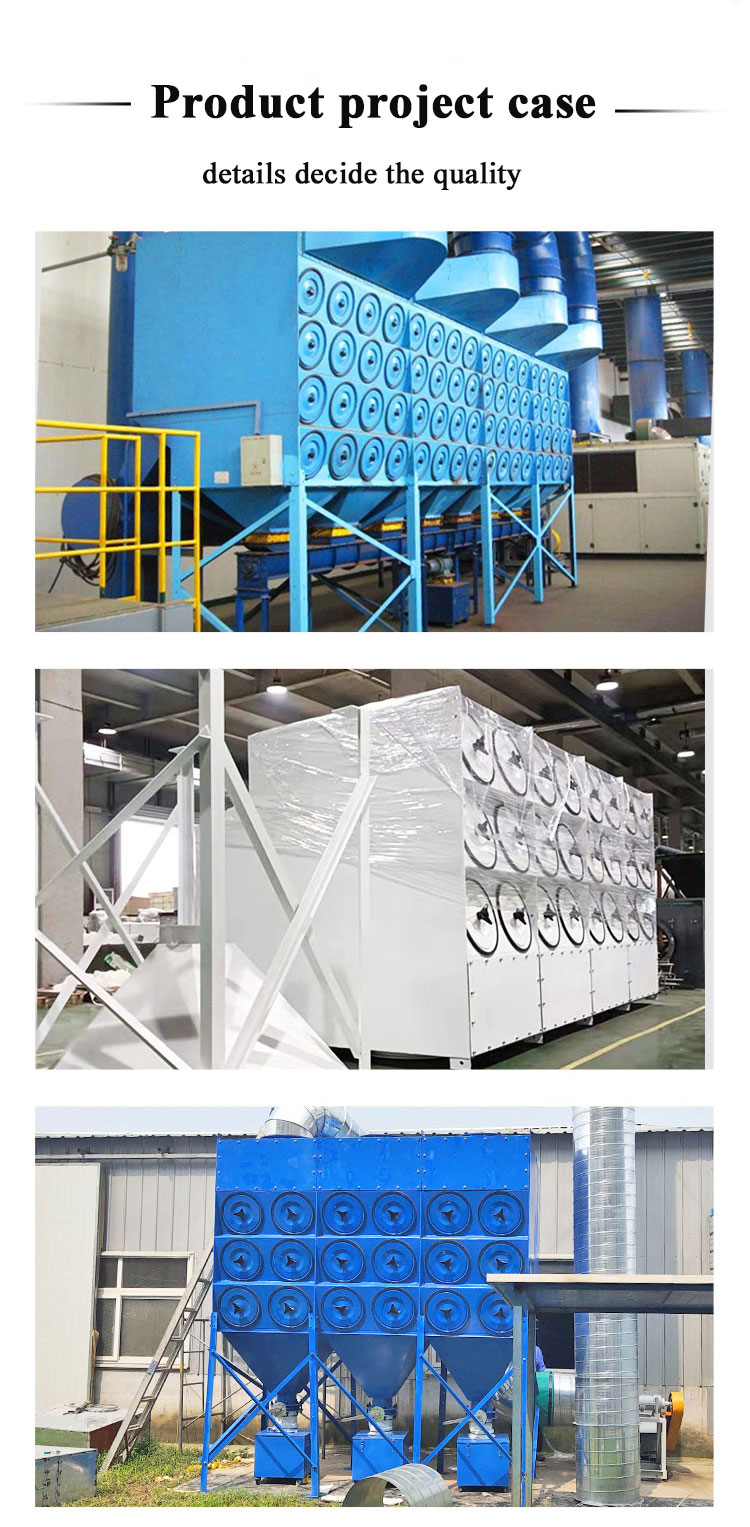
Pleated Cartridge Dust Collector
Similar ProductsVIEW MORE >
WhatsApp / Wechat: +8613273719759
Factory Address: Zhengshang Navigation Square, South Hanghai Road, Erqi District, Zhengzhou City, Henan Province P.R.China.


 Export01@aiteeps.com
 ++8613273719759
