
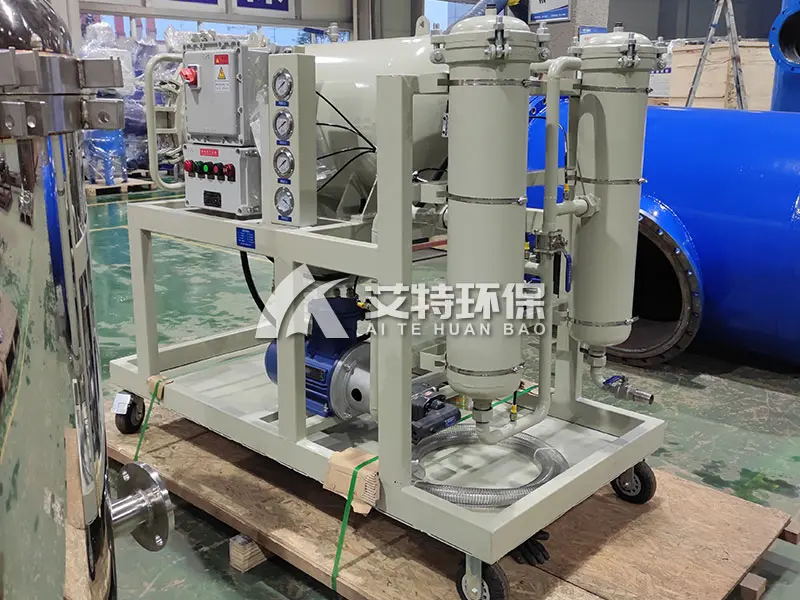
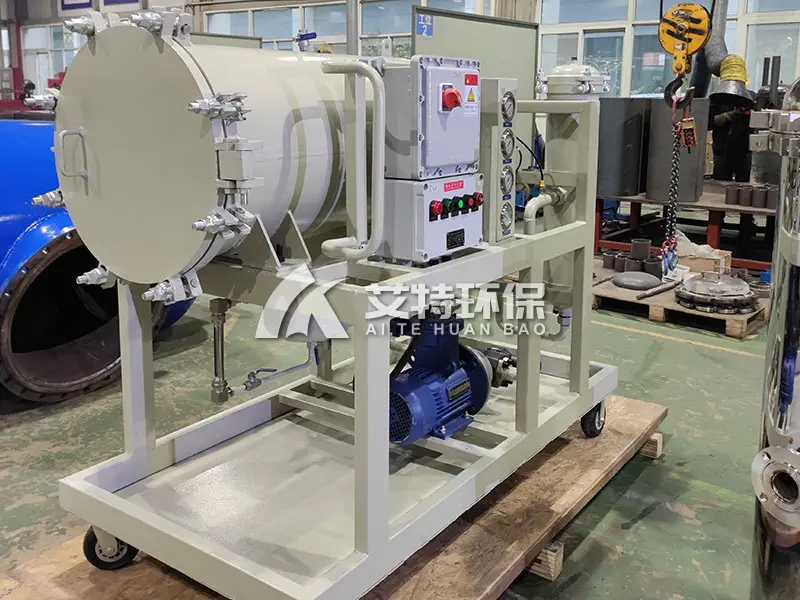
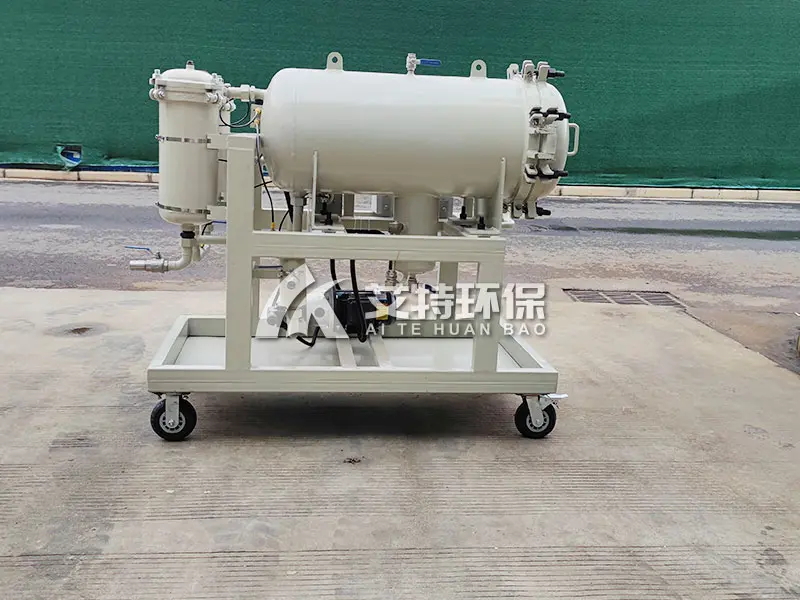
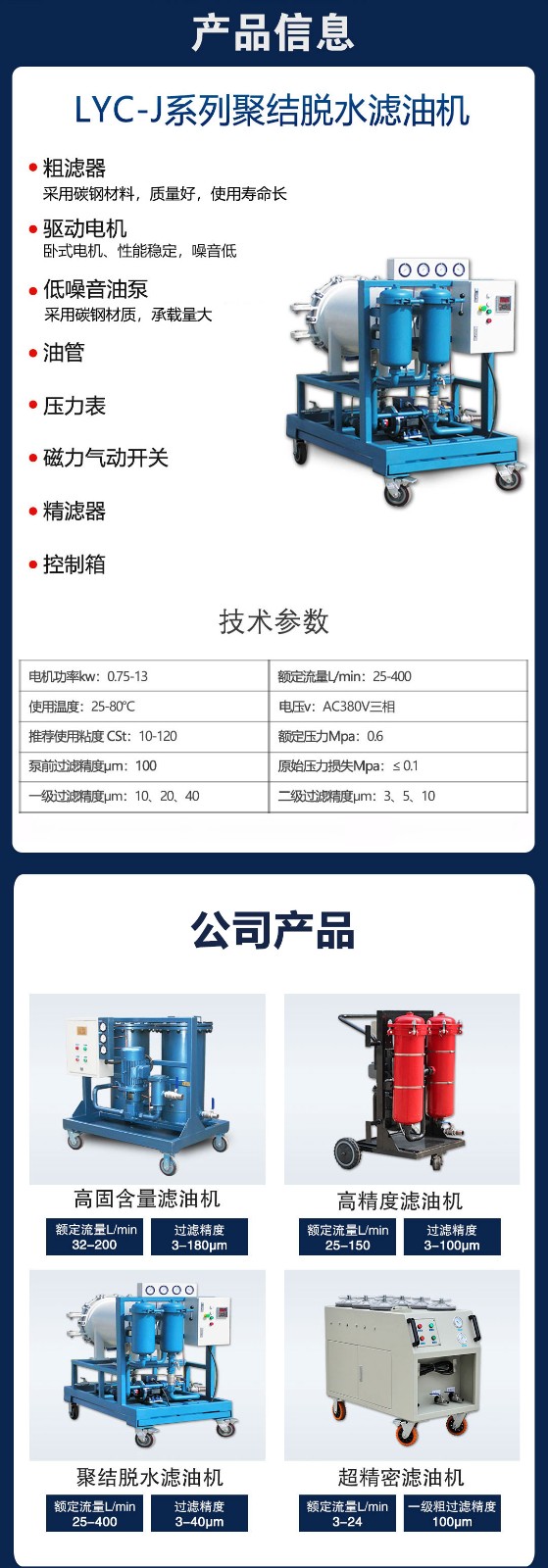
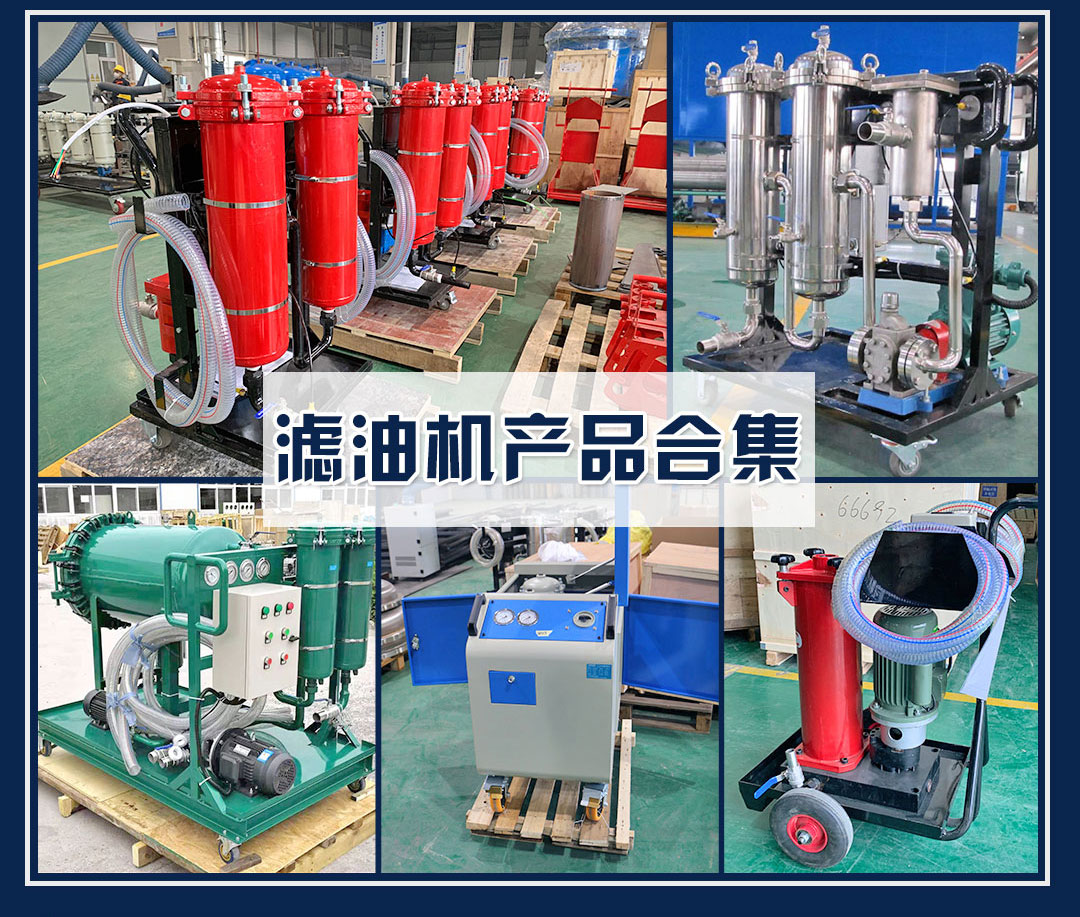
The explosion-proof coalescing dehydration filter applies advanced "coalescing separation" technology for dehydration, dehydration efficiency is high, strong ability, especially for the separation of a large number of water in the oil, has the advantages of vacuum method, centrifugal method can not compare, can break all the oil and water emulsification structure in the medium
1. Product Overview
The Explosion-Proof Coalescing Dehydration Oil Filter applies advanced "coalescing separation" technology
for efficient dehydration. This specialized filtration system delivers exceptional water removal capability,
particularly for separating large volumes of water from oil—offering advantages that vacuum and centrifugal methods
cannot achieve.
Key capabilities include:
· Breaks all oil-water emulsification structures in the medium
· Stable cleanliness control through particle filtration systems
· No alteration of oil's physical and chemical properties – extending oil service life
· Low operating costs with excellent continuous performance
· Explosion-proof design suitable for hazardous environments
· Strong online operation capability for continuous industrial processes
2. Working Principle
2.1 Particle Filtration System
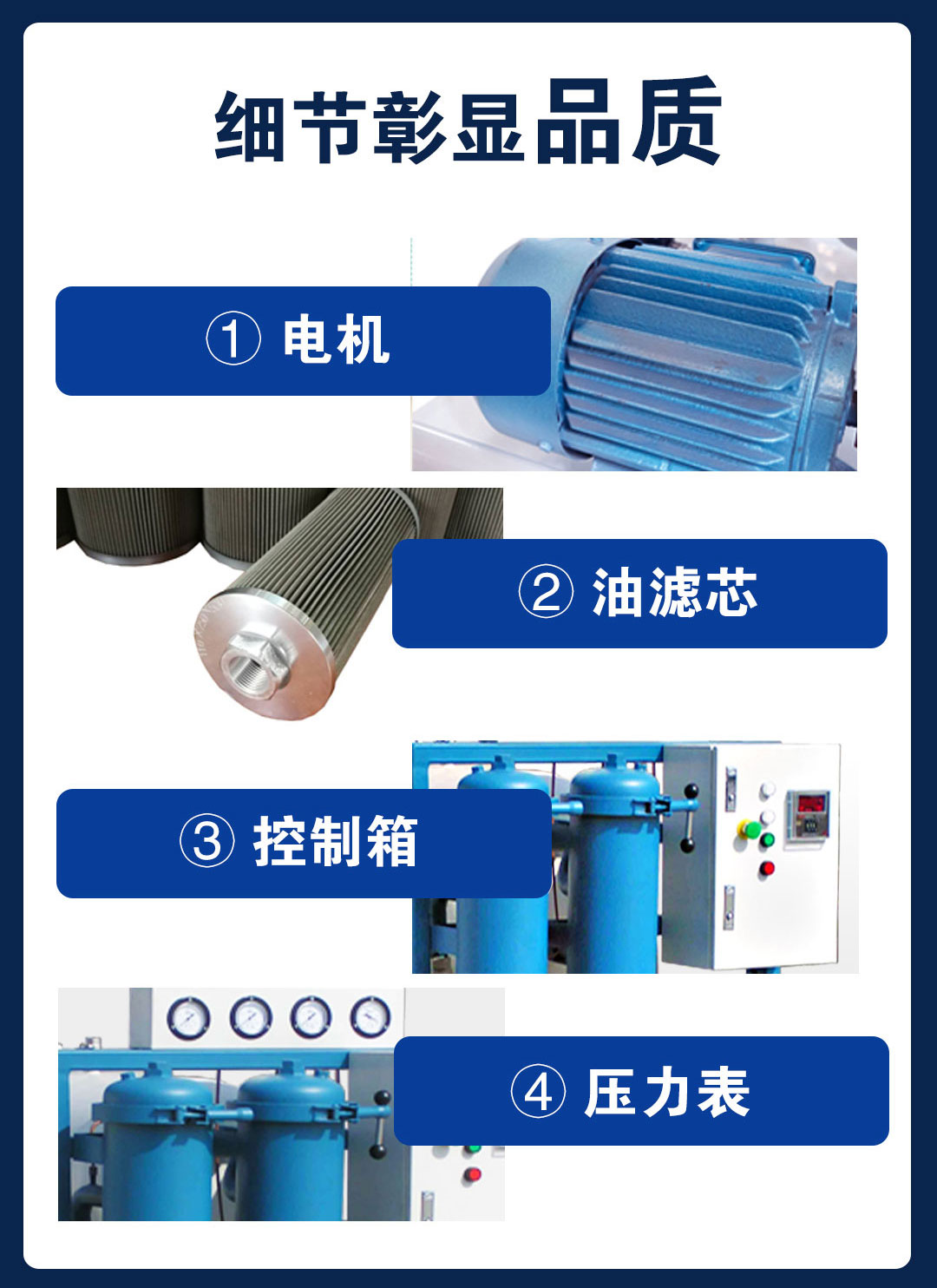
The system features a large filtration area design using imported filter media as the filtration medium.
This configuration effectively filters out extremely fine particle impurities, enabling the oil to achieve a high
degree of cleanliness before entering the coalescing stage.
2.2 Coalescing System
The coalescing system consists of a group of specially designed coalescing filter elements. These elements employ
polar molecular structure technology. As oil passes through:
· Free water and emulsified water are captured on the coalescing fibers
· Tiny water droplets collide, adsorb, and coalesce into larger water droplets
· Coalesced droplets grow until gravity overcomes fluid drag
· Large water droplets settle to the water storage tank by gravity
2.3 Separation System
The separation filter element is manufactured from highly hydrophobic (water-repellent) material. During operation:
· Oil passes through the separation element freely
· Water droplets are blocked on the outer surface of the filter element
· Blocked droplets coalesce with each other on the surface
· Coalesced water droplets settle into the water storage tank by gravity
· Clean, dehydrated oil exits the system
2.4 Drainage System
Separated water accumulates in the water storage tank. The drainage system operates automatically:
· Interface level monitoring detects water height
· When interface reaches the preset high level, the discharge valve opens
· Water is drained until the level drops to the lower set point
· Valve closes automatically to stop drainage
· Continuous, unattended operation is achieved
3. Technical Specifications
Parameter Specification
Technology Coalescing separation + particle filtration
Dehydration mechanism Coalescer (hydrophilic) + Separator (hydrophobic)
Particle filtration Large area, imported filter media
Emulsion breaking Complete destruction of oil-water emulsification structures
Oil property impact None – physical/chemical properties preserved
Explosion-proof rating EX-rated (suitable for hazardous areas)
Operation mode Continuous online operation supported
Water removal efficiency Superior to vacuum and centrifugal methods
Operating cost Low (no heating or chemical additives required)
Drainage Automatic level-sensing discharge
Applicable media Hydraulic oil, lubricating oil, turbine oil, diesel, etc.
4. Key Product Characteristics
4.1 Superior Coalescing Dehydration Technology
The explosion-proof coalescing dehydrating oil filter uses imported filter media with a large filtration area design.
This configuration effectively filters out extremely fine particle impurities, enabling the oil to achieve a high degree
of cleanliness. Unlike conventional filters, the system actively breaks emulsified water structures that standard filters
cannot separate.
4.2 Efficient Coalescing System
The coalescence system consists of a group of coalescing filter elements with polar molecular structure.
This advanced design ensures:
· Free water and emulsified water in the oil are efficiently captured
· Water droplets are coalesced into larger, heavier droplets
· Gravity settling occurs naturally in the storage chamber
· Continuous water removal without chemical additives
4.3 High-Performance Separation System
The separation filter element is manufactured from specially formulated hydrophobic materials. When oil passes through:
· Water droplets are completely blocked on the outer surface
· Droplets coalesce with each other until they are large enough to settle
· Gravity separates the water into the storage tank
· Only clean, dehydrated oil continues downstream
4.4 Automatic Drainage System
The separated water is stored in the water storage tank with automatic level control:
· When the water-oil interface reaches the set high level, the valve opens automatically
· Water is discharged until the level drops to the lower set point
· The valve closes to stop drainage and maintain normal operation
· No manual intervention required for continuous operation
4.5 Explosion-Proof Configuration
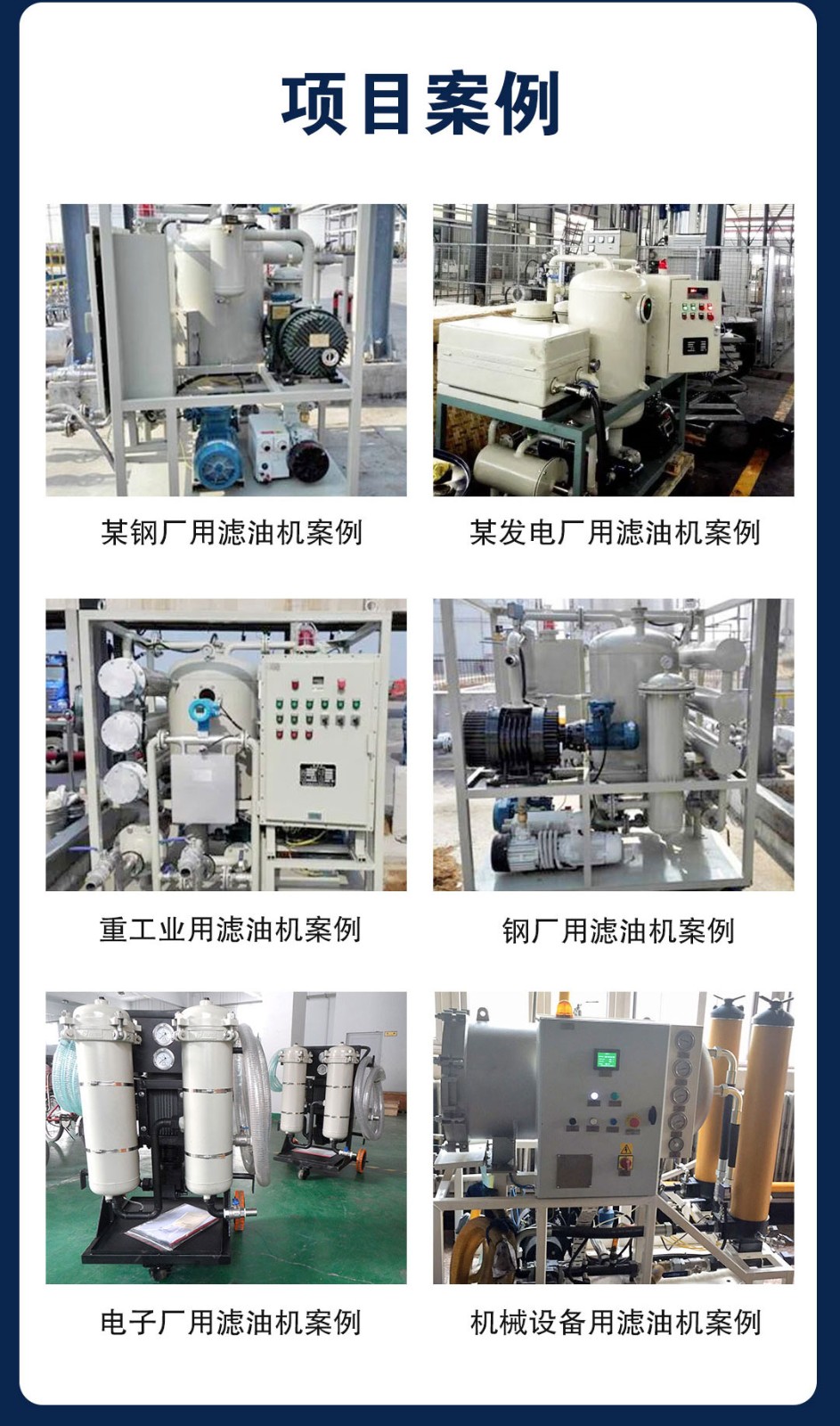
The explosion-proof design makes this system suitable for:
· Petroleum and petrochemical facilities
· Aerospace and aviation fuel handling
· Marine and offshore platforms
· Pharmaceutical and chemical processing
· Any hazardous area requiring ATEX or equivalent certification
5. Unique Advantages Over Alternative Methods
Feature Coalescing Dehydration Vacuum Method Centrifugal Method
Emulsion breaking Complete Partial Limited
Large water volume removal Excellent Good Moderate
Oil property alteration None Possible (heat) None
Continuous operation Excellent Good Moderate
Energy consumption Low High Moderate
Explosion-proof capability Available Limited Available
Maintenance complexity Low High Moderate
6. Application Scenarios
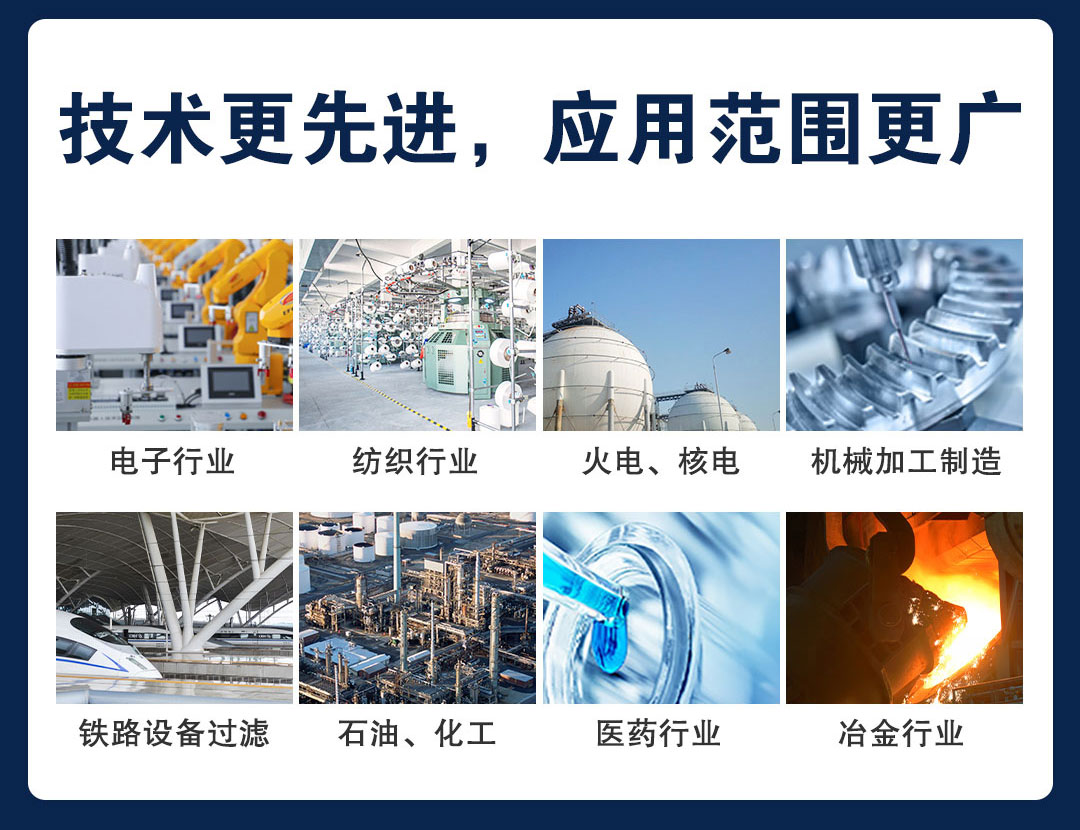
· Petrochemical refineries – Crude oil and process fluid dehydration
· Power generation – Turbine oil and transformer oil purification
· Hydraulic systems – Removing water contamination from circulating oil
· Marine applications – Shipboard fuel and lube oil conditioning
· Aviation fuel handling – Jet fuel dehydration and filtration
· Pharmaceutical manufacturing – Process fluid purification
· Offshore platforms – Produced water and oil separation
7. Operation & Maintenance Guidelines
1. Differential Pressure Monitoring – Monitor pressure drop across coalescer and separator elements. Replace elements
when differential pressure reaches recommended change-out value.
2. Drainage System Check – Verify automatic drainage operation during daily inspections. Ensure level sensors and valves
function correctly.
3. Water Quality Monitoring – Periodically test outlet oil water content to verify separation efficiency. Establish baseline and
trend data.
4. Element Replacement – Replace coalescer and separator elements simultaneously for balanced performance.
Use only recommended replacement elements.
5. Explosion-Proof Safety – Ensure proper grounding and bonding. Follow hazardous area safety protocols. Use only
approved maintenance tools.
6. Pre-Filter Maintenance – Clean or replace pre-filter elements as indicated by pressure differential to protect the coalescer
elements.
8. FAQ (Frequently Asked Questions)
Q1: What is the principle of coalescing dehydration technology?
A: The process uses two-stage filtration: coalescer elements capture and merge tiny water droplets into large water beads,
then separator elements (hydrophobic) block water droplets while allowing oil to pass. Water settles by gravity and is
automatically drained.
Q2: How does this filter compare to vacuum dehydration?
A: Coalescing dehydration achieves superior emulsion breaking, handles larger water volumes, requires no heating
(preserving oil properties), and has lower energy consumption. It is particularly effective for oils with significant water
contamination.
Q3: Can this filter break all oil-water emulsions?
A: Yes. The polar molecular structure of the coalescing media effectively breaks all oil-water emulsification structures,
separating both free and emulsified water from the oil.
Q4: What filtration precision can the particle filtration system achieve?
A: The large filtration area design using imported media effectively filters out extremely fine particle impurities,
ensuring high oil cleanliness matching your system requirements.
Q5: Is this filter suitable for flammable or explosive environments?
A: Yes. The explosion-proof configuration makes it ideal for petroleum, chemical, and aerospace applications handling gasoline,
diesel, kerosene, and other flammable media.
Q6: Does the coalescing dehydration process alter oil properties?
A: No. The process is purely physical—coalescing and separation occur without heat or chemical additives.
Oil physical and chemical properties remain unchanged, extending oil service life.
Q7: What is the typical maintenance frequency?
A: Maintenance intervals depend on operating conditions and contamination levels. Monitor differential pressure—replace
elements when recommended thresholds are reached. The automatic drainage system requires minimal operator attention.
Q8: Can this system be used for online continuous operation?
A: Yes. The system configuration is excellent for continuous performance, supporting online operation without interruption.
Automatic drainage ensures unattended operation.
Q9: What are the operating costs?
A: Operating costs are low because no heating, vacuum generation, or chemical additives are required. Only periodic filter
element replacement and minimal electrical power for the pump are needed.
Q10: Is training required for operation?
A: Basic training is recommended for safe and efficient operation. The system is designed for straightforward operation with
clear monitoring indicators and automatic controls.
Q11: What documentation is provided with the equipment?
A: Each unit is supplied with operation manual, certificate of conformance, factory test report, dimensional drawings,
and parts list. Explosion-proof certifications are available upon request.
Q12: Can this filter handle high-viscosity oils?
A: The system is designed for hydraulic and lubricating oils with standard viscosity ranges. For high-viscosity applications,
please consult our technical team for customized configurations.
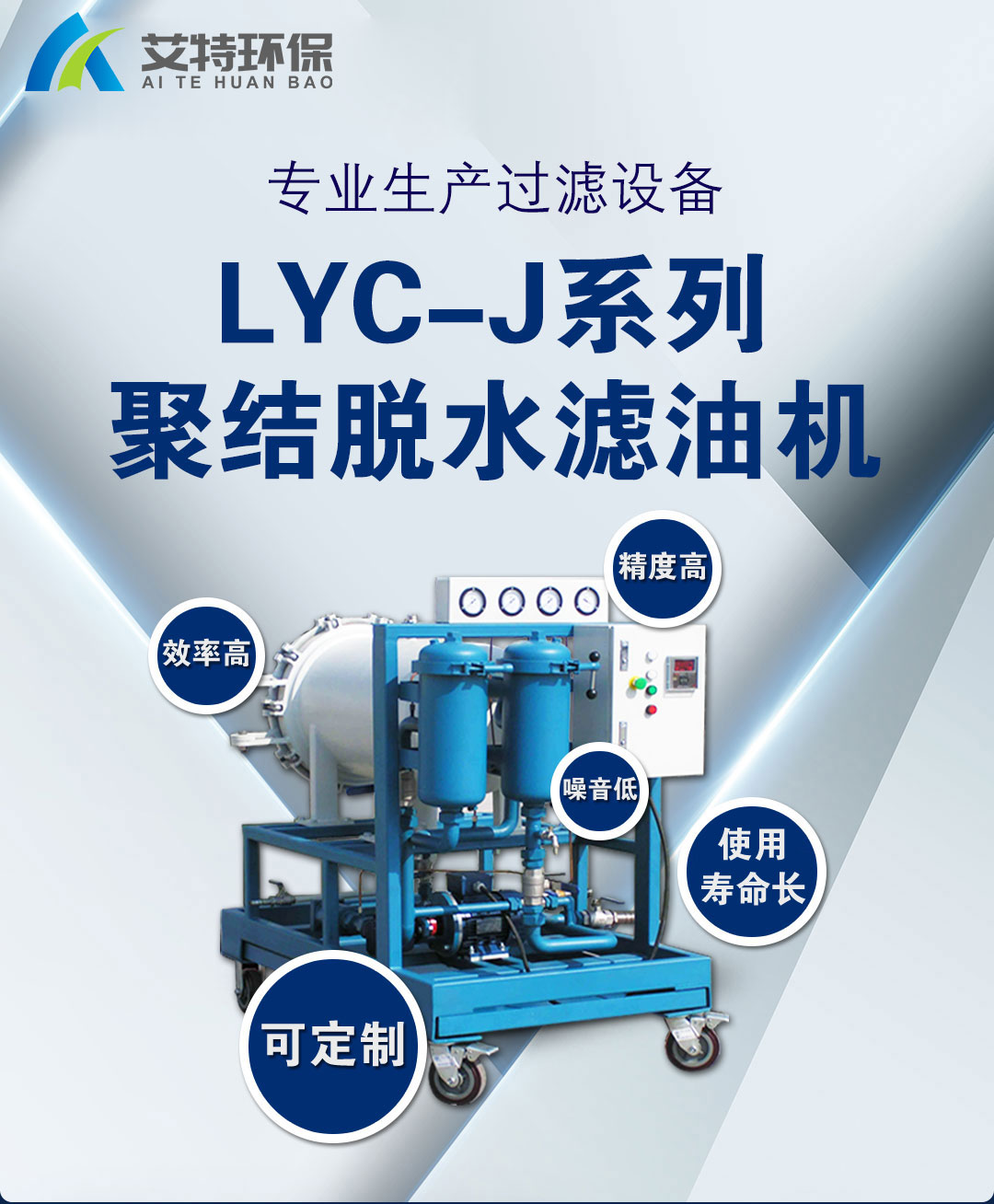
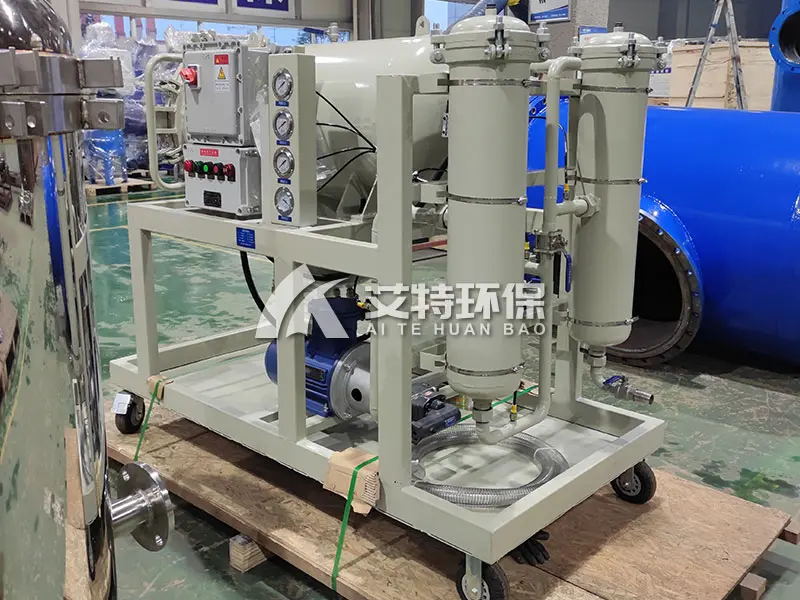
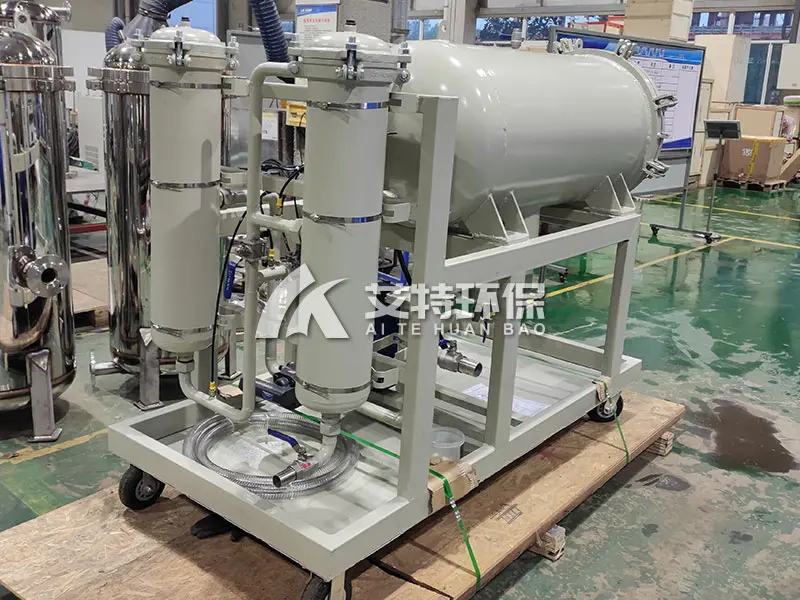
Explosion-proof coalescing dehydrating oil filter
Similar ProductsVIEW MORE >
WhatsApp / Wechat: +8613273719759
Factory Address: Zhengshang Navigation Square, South Hanghai Road, Erqi District, Zhengzhou City, Henan Province P.R.China.


 Export01@aiteeps.com
 ++8613273719759
